How Does ASL Use Space to Show Time Past Present and Future

American Sign Language (ASL) uses a fascinating system of spatial references to show time. Rather than having separate words for "past," "present," and...
Answers to the most common parent and educator questions about baby sign language and toddler ASL – when to start, when to stop, whether it delays speech, how to handle resistance, and what to do when signs do not stick. Practical, evidence-based guidance.
American Sign Language (ASL) uses a fascinating system of spatial references to show time. Rather than having separate words for "past," "present," and...

ASL classifiers are handshapes and movements that represent objects, animals, or people in space.

In American Sign Language, you ask a yes or no question using a raised eyebrow paired with a slight forward head tilt and a questioning facial expression.

Topic-comment structure is the way American Sign Language organizes information by first establishing what you're talking about (the topic), then...

American Sign Language (ASL) does not follow the same word order as English. While English typically follows a Subject-Verb-Object (SVO) pattern—for...
The fastest way to learn sign language at home is to hire a private tutor, combined with daily 15-minute practice sessions using apps, instructional...

Yes, you can learn foundational sign language skills in six months with consistent, focused practice—enough to communicate basic ideas with your child and...
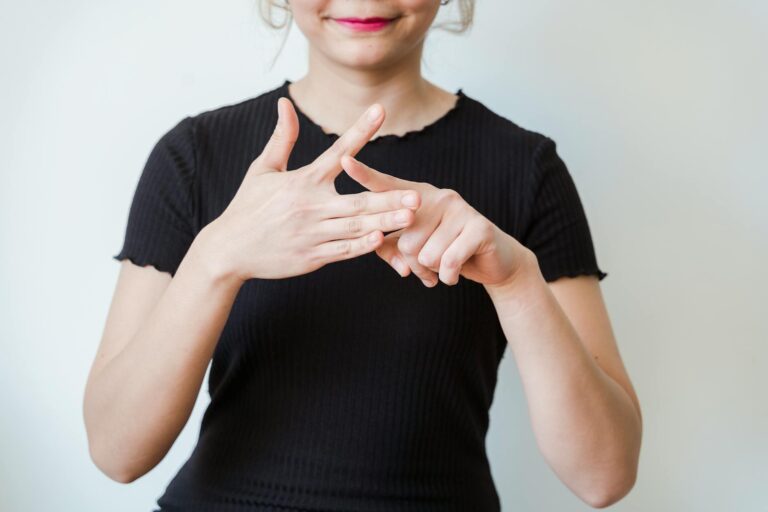
Learning sign language as an adult over 50 is entirely possible and many older adults successfully acquire basic to intermediate fluency.
Learning sign language fluently typically takes three to five years of consistent, regular exposure and practice for most learners, though young children...

The long-term benefits of baby sign language extend far beyond early communication. Children who learn sign language from infancy develop stronger...