How Does Reading Level Differ Between Deaf School and Mainstream Students

Reading levels for deaf students differ significantly from their hearing peers during elementary and middle school years, but these differences are much...
Assistive technology that Deaf and hard-of-hearing people use every day – from vibration alerts and captioning services to AI accessibility tools, smart-home automations, and wearables. Guides for choosing the right tool and adapting to evolving deaf-tech.
Reading levels for deaf students differ significantly from their hearing peers during elementary and middle school years, but these differences are much...

Deaf students in mainstream schools graduate high school at lower rates than their hearing peers, with 84% of deaf students completing high school...

Deaf schools teach math, science, and history through American Sign Language (ASL) by adapting curriculum content into visual, spatial concepts that...
The controversy over cochlear implants in deaf education centers on a fundamental disagreement about whether these devices should be the primary tool for...
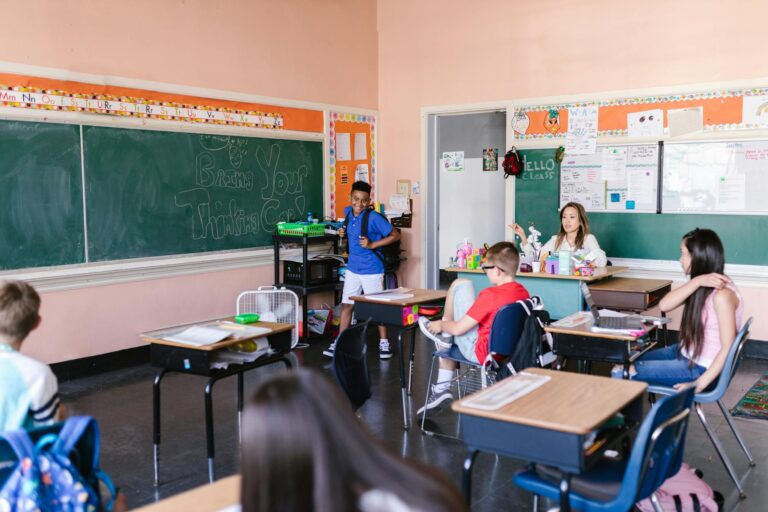
The American School for the Deaf, founded in Hartford, Connecticut in 1817, transformed deaf education in America by creating the first permanent...

The American Asylum for the Deaf in Hartford, Connecticut, was the first permanent school for deaf students in the United States, founded in 1817.

Before American Sign Language became the foundation of deaf education in America, deaf children had virtually no formal educational opportunities.

Mainstreaming—the practice of educating deaf students in regular hearing classrooms rather than specialized deaf schools—significantly impacts the social...

Auditory Verbal Therapy (AVT) is a listening and spoken language approach designed to help deaf and hard of hearing children develop listening skills and...

The bilingual bicultural approach for deaf students is an educational framework that uses both sign language (such as American Sign Language) and the...