Baby Sign Language No

The "no" sign in baby sign language is made by extending your thumb, index, and middle fingers together and tapping them repeatedly.
Step-by-step ASL guides for the signs babies and toddlers learn first – eat, drink, more, please, milk, sleep, and dozens more. Each guide shows the exact handshape and motion with real photos, plus the age window when most children pick up the sign.
The "no" sign in baby sign language is made by extending your thumb, index, and middle fingers together and tapping them repeatedly.

The stop sign in baby sign language is one of the most practical gestures you can teach your child: a sharp, open-handed motion held up in front of your...

The "thank you" sign is one of the easiest and most practical signs you can teach your baby, making it an ideal starting point for sign language learning.
Baby sign language "please" refers to teaching your baby or toddler the sign for the word "please"—a fundamental courtesy word expressed with a specific...
Baby sign language help refers to teaching your baby simple hand signs to communicate before they develop spoken language—typically starting as early as 6...
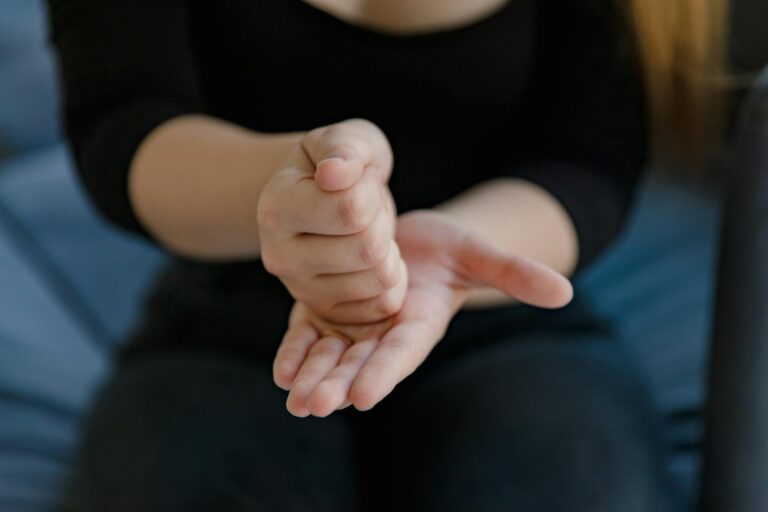
Teaching your baby to sign the word "hurt" is one of the most practical early communication tools you can introduce.

Baby sign language is experiencing unprecedented momentum in early childhood education, and for good reason.
The sign for "sad" is performed by holding both hands with fingers outstretched and pulling them down from above the eyes to about chest level, mimicking...
The happy sign in baby sign language is a simple, joyful gesture that brings immediate delight to both infants and parents alike.
Yes, babies can learn to sign feelings and emotions like happy, afraid, calm, and angry—often months before they can speak these words.