
The ASL sign for “for” starts with an index finger at the side of the forehead and twists it forward to point out. It comes up constantly in family talk, from “this is for you” to “thank you for helping.”
How to Sign “For” in ASL
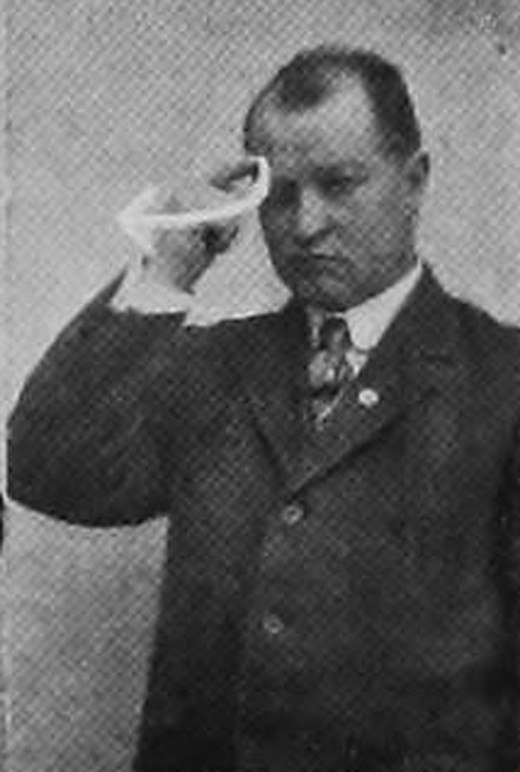
The signer touches the tip of his right index finger to the side of his forehead, with a curved white arrow leading away from the head. The arrow shows the finger twisting and swinging forward so it ends pointing out, away from the head.
Photo: J. Schuyler Long, The Sign Language: A Manual of Signs (1918), public domain, via Internet Archive. The white arrows are original to the book and show the movement.
- Touch the forehead: Place the tip of your dominant index finger at the side of your forehead near the temple, palm facing you.
- Twist out: Rotate your wrist so the finger swings away from your head.
- Point forward: Finish with the index finger pointing straight out in front, palm turned outward.
The twist is what makes it “for.” Touching the forehead without the twist looks like “think.”
This photo comes from a 1918 sign language manual. We publish a historical photo only when the sign it shows is the same one used in American Sign Language today.
When to Use It With Your Child
- Gifts: “This is for you!” when handing over a snack or present.
- Thank-yous: “Thank you for helping me.”
- Sharing: “One cookie for you, one for your brother.”
Tips for Success
- Point toward the person at the end of the movement when you mean “for you.”
- Use it during gift-giving and sharing so it is tied to something happy.
- Expect young children to drop the twist at first; model the full sign back gently.
Signs Related to “For”