
Learning how to sign no in ASL gives your child a way to communicate before words arrive. “No” is a sign your toddler will understand long before they sign it back. The two fingers snapping shut look like a mouth saying “no” — toddlers typically start producing it between 12 and 18 months, usually with great enthusiasm.
How to Sign “No” in ASL
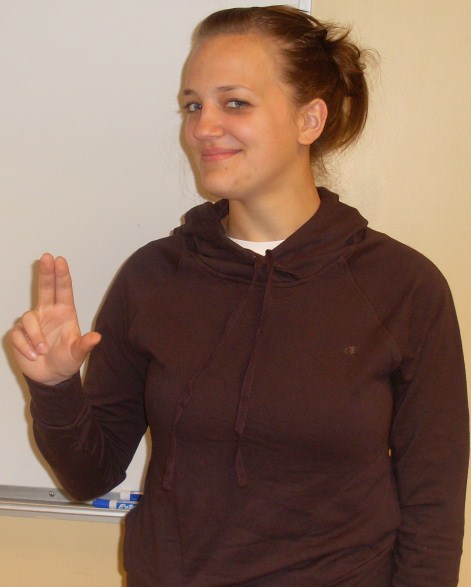

Photos: Rodasmith via Wikimedia Commons, CC BY-SA 3.0
- Make the handshape: Extend your index and middle fingers together, thumb out below them.
- Hold it up: Keep the hand at about shoulder height, palm facing forward.
- Snap closed: Bring the two fingers down to meet the thumb, once or twice — like a little mouth closing on the word “no.”
The sign is a compressed fingerspelling of N-O, collapsed into one quick snapping motion.
Step-by-Step Photos
Photos: Rodasmith via Wikimedia Commons, CC BY-SA 3.0
When to Use It With Your Child
- At gentle refusals: Sign “no” calmly as you move the dog food out of reach — sign and action together.
- At yes/no questions: “More banana?” If they turn away, model “no” for them, then respect it.
- During pretend play: Let a teddy “ask” for something silly and sign “no” with a laugh.
Tips for Success
- Keep your face neutral or warm when teaching it — the sign should not always mean trouble.
- Expect a whole-hand clap as the first version; the two-finger snap comes with practice.
- Honor their signed “no” when you reasonably can — the fastest way to grow signing is to make it work.
Signs Related to “No”
“Yes” (a fist nodding at the wrist) completes the pair, and “all done” (hands flipping outward) covers the mealtime version of refusal. Toddlers often prefer “all done” at the high chair and “no” everywhere else.
The ASL sign for “no” comes from the fingerspelled letters N and O blended together — one of several ASL signs built from compressed fingerspelling.
Learn more: National Association of the Deaf — ASL resources and advocacy from the National Association of the Deaf.
Frequently Asked Questions
When should I start teaching my baby how to sign no in ASL?
You can introduce the sign for no as early as 12–18 months. Babies understand signs before they can produce them, so start modeling it consistently and reward any attempt — even an approximation — with the item or action right away.
How long does it take for a baby to learn to sign no?
Most babies begin producing a recognizable version of the sign for no within two to four weeks of consistent daily modeling. Frequency matters more than perfect form at this stage — sign it every time the word comes up naturally in your routine.
Is the ASL sign for no the same in baby sign language programs?
Yes. Most baby sign language programs teach the authentic ASL sign for no. Using real ASL rather than invented gestures means your child’s signs will be understood by Deaf signers and build a foundation for learning more ASL as they grow.