
Learning how to sign move in ASL gives your child a way to communicate before words arrive. “Move” is two hands picking something up and setting it down somewhere else. It is a practical sign for cleanup, rearranging, and the constant toddler business of relocating objects.
How to Sign “Move” in ASL
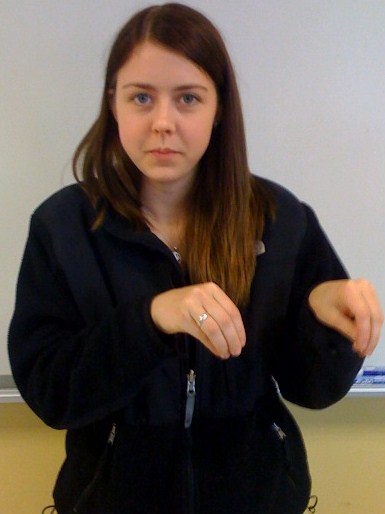
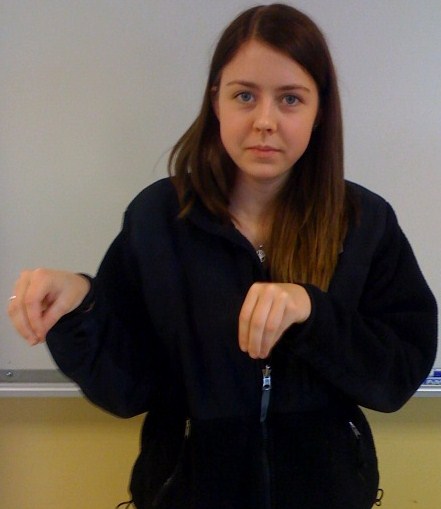
Photos: Rodasmith via Wikimedia Commons, CC BY-SA 3.0
- Make the handshapes: Flatten both hands into loose flattened-O shapes, palms down, as if each holds something small.
- Start on one side: Hold both hands together on one side of your body.
- Arc across: Lift both hands in a smooth arc and set them down on the other side.
The hands carry an invisible object from here to there — the arc is the journey.
Step-by-Step Photos
Photos: Rodasmith via Wikimedia Commons, CC BY-SA 3.0
When to Use It With Your Child
- At cleanup: “Move the blocks to the bin” with the sign, then do it together.
- At the table: Sign it as you move the cup away from the edge (a daily event).
- In requests: “Should we move teddy to the chair?” — toddlers love relocating their crew.
Tips for Success
- Sign it in the direction the thing actually moves — ASL uses real space.
- A two-handed scoop-and-plop counts as an early version.
- It works well in tidy-up songs as the action word.
Signs Related to “Move”
“Put” and “bring” use related carrying handshapes, and “go” covers when people rather than things relocate. Spatial verbs like “move” show off ASL’s ability to map real space directly.
In ASL grammar, “move” can be inflected dozens of ways — the same sign done slowly, sharply, or repeatedly means relocating carefully, abruptly, or item after item.
Learn more: National Association of the Deaf — ASL resources and advocacy from the National Association of the Deaf.
Frequently Asked Questions
When should I start teaching my baby how to sign move in ASL?
You can introduce the sign for move as early as 14–18 months. Babies understand signs before they can produce them, so start modeling it consistently and reward any attempt — even an approximation — with the item or action right away.
How long does it take for a baby to learn to sign move?
Most babies begin producing a recognizable version of the sign for move within two to four weeks of consistent daily modeling. Frequency matters more than perfect form at this stage — sign it every time the word comes up naturally in your routine.
Is the ASL sign for move the same in baby sign language programs?
Yes. Most baby sign language programs teach the authentic ASL sign for move. Using real ASL rather than invented gestures means your child’s signs will be understood by Deaf signers and build a foundation for learning more ASL as they grow.