
Learning how to sign happy in ASL gives your child a way to communicate before words arrive. “Happy” is usually the first feeling sign toddlers learn. The hands brush up the chest like joy bubbling out, and toddlers typically produce it between 14 and 20 months.
How to Sign “Happy” in ASL
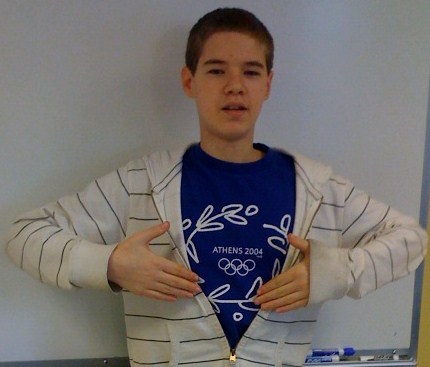
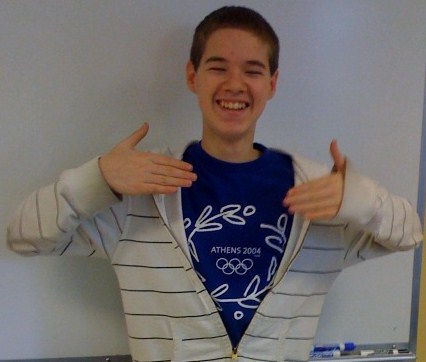
Photos: Rodasmith via Wikimedia Commons, CC BY-SA 3.0
- Make the handshape: Hold both hands flat, palms facing your chest.
- Place them: Rest the hands against your upper chest.
- Brush upward: Sweep both hands up and slightly outward, twice, like happiness rising.
One hand alone also works in casual signing — but two hands with a big smile is the version toddlers copy best.
Step-by-Step Photos
Photos: Rodasmith via Wikimedia Commons, CC BY-SA 3.0
When to Use It With Your Child
- At joyful moments: Sign it mid-giggle during tickles or peekaboo, when the feeling is live.
- Labeling others: “Look, the baby in the book is happy!”
- At reunions: Sign “happy” when a parent comes home — emotion plus routine equals fast learning.
Tips for Success
- Your face is half the sign — ASL grammar lives on the face, so beam while you sign it.
- Any upward chest pat counts at first.
- Once “happy” sticks, add “sad” so feelings come in pairs.
Signs Related to “Happy”
“Sad” (open hands sliding down in front of the face) is the natural opposite, and “excited” uses alternating middle fingers brushing up the chest. Feeling signs help toddlers name emotions long before they can talk them through.
Toddlers who can label feelings — by sign or word — have measurably fewer and shorter tantrums in toddler-emotion research.
Learn more: National Association of the Deaf — ASL resources and advocacy from the National Association of the Deaf.
Frequently Asked Questions
When should I start teaching my baby how to sign happy in ASL?
You can introduce the sign for happy as early as 14–20 months. Babies understand signs before they can produce them, so start modeling it consistently and reward any attempt — even an approximation — with the item or action right away.
How long does it take for a baby to learn to sign happy?
Most babies begin producing a recognizable version of the sign for happy within two to four weeks of consistent daily modeling. Frequency matters more than perfect form at this stage — sign it every time the word comes up naturally in your routine.
Is the ASL sign for happy the same in baby sign language programs?
Yes. Most baby sign language programs teach the authentic ASL sign for happy. Using real ASL rather than invented gestures means your child’s signs will be understood by Deaf signers and build a foundation for learning more ASL as they grow.