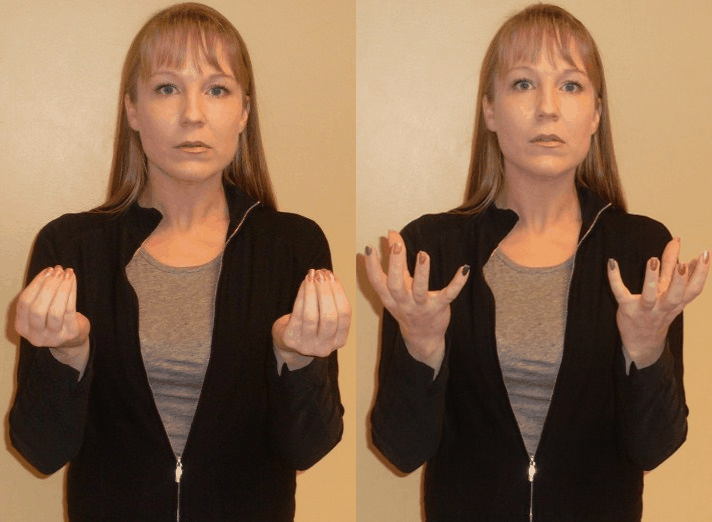
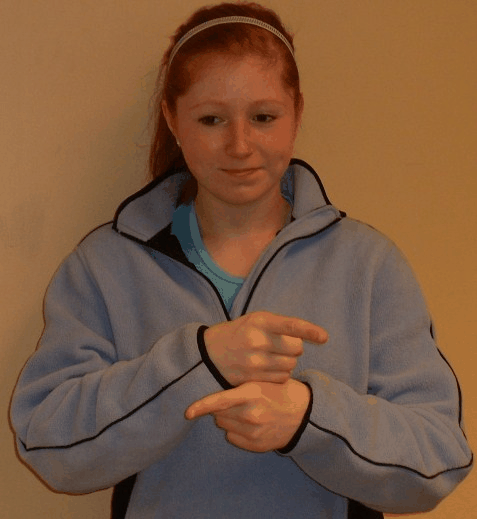
Essential ASL Signs Every Law Offices Worker Should Learn

Law office workers who interact with deaf and hard of hearing clients need to learn specific ASL signs that cover both everyday office communication and...

Law office workers who interact with deaf and hard of hearing clients need to learn specific ASL signs that cover both everyday office communication and...

Deaf individuals navigate courtrooms without interpreters by relying on a combination of accommodation requests, alternative communication methods, and...

The Americans with Disabilities Act (ADA) requires courtrooms and businesses to provide American Sign Language (ASL) interpreters for deaf and...

Courtroom employees need basic ASL training in 2026 because federal law and legal precedent now demand that courts provide effective communication to deaf...

Communicating with deaf customers in courtroom settings requires advance planning, qualified interpreters, and understanding of how deaf individuals...

Courtroom workers who interact with deaf and hard-of-hearing individuals need to know specific American Sign Language signs to communicate clearly and...

Deaf people navigating border patrol checkpoints face significant communication barriers, but they have legal rights and practical strategies to advocate...

The Americans with Disabilities Act (ADA) requires businesses of all types, including those involved in border patrol operations, to provide equal access...

Currently, there is no official 2026 requirement mandating basic American Sign Language (ASL) training for Border Patrol employees.

Communicating with deaf customers in Border Patrol settings requires visual clarity, professional interpretation, and a commitment to accessibility that...