
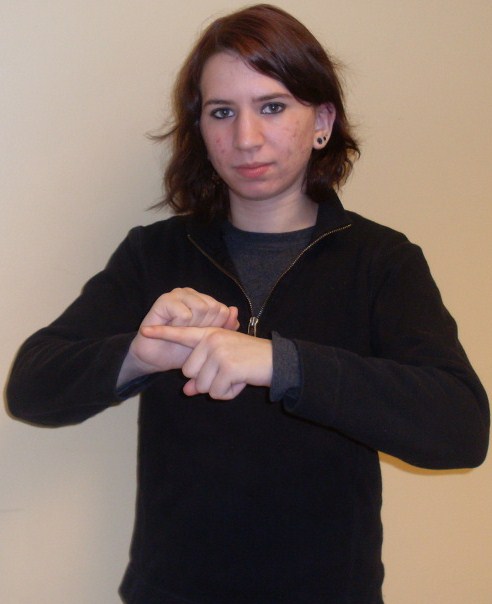
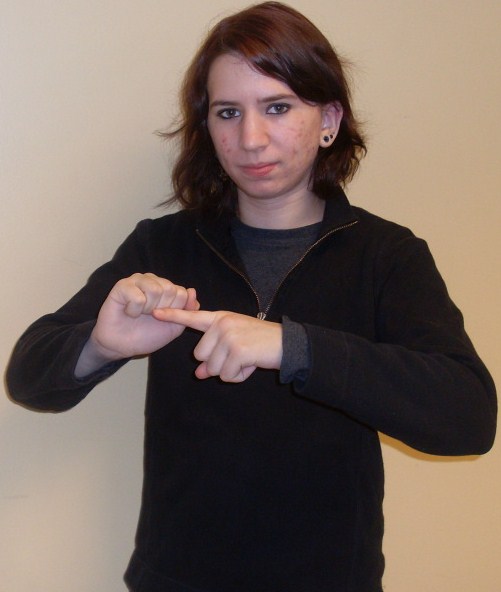
“Practice” looks like polishing something until it shines. A fist rubs back and forth along the index finger of the other hand. It is a useful word for piano, soccer, handwriting and the signs your family is learning together.
How to Sign “Practice” in ASL
Photos: Rodasmith via Wikimedia Commons, CC BY-SA 3.0
- Set the base hand: Point the index finger of your non-dominant hand across your body, palm down, other fingers curled.
- Make a fist: Close your dominant hand into an A-hand (a fist with the thumb resting along the side).
- Rub back and forth: Brush the knuckles of the fist along the top of the index finger, out toward the tip and back, a few times.
The repeated rubbing is the meaning: doing something over and over. One single stroke looks unfinished, so keep it going two or three times.
Step-by-Step Photos
Photos: Rodasmith via Wikimedia Commons, CC BY-SA 3.0
When to Use It With Your Child
- Before lessons and games: “Time to practice!” before piano, ball skills or swimming.
- Homework and handwriting: Sign it when your child traces letters or works on spelling words.
- Learning signs together: Use it when you review the signs you have learned as a family.
Tips for Success
- Children often rub a fist on a flat hand at first. Show the pointed index finger and let them copy.
- Pair it with praise for effort, not only results: “You practiced so much!”
- Keep practice playful and short. The sign works best when it comes before something fun.
Signs Related to “Practice”
“Learn,” “study” and “try” belong to the same school-time family, and “again” is the natural partner when one more go is needed.