Baby Sign Language for Hearing Babies

Understanding baby sign language for hearing babies is essential for anyone interested in baby and toddler sign language.
Step-by-step ASL guides for the signs babies and toddlers learn first – eat, drink, more, please, milk, sleep, and dozens more. Each guide shows the exact handshape and motion with real photos, plus the age window when most children pick up the sign.
Understanding baby sign language for hearing babies is essential for anyone interested in baby and toddler sign language.

Baby sign language offers children with Down syndrome a powerful communication bridge during the critical period when they understand far more than they...
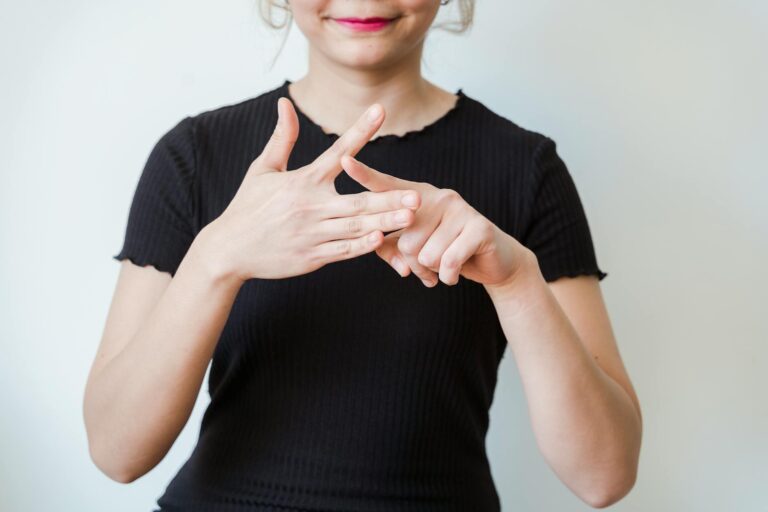
Baby sign language can be a valuable communication tool for children with autism, offering a visual and kinesthetic alternative when spoken language...

Baby sign language works remarkably well for bilingual families, and in many ways, it offers advantages that monolingual households do not experience.

Baby sign language works remarkably well for early talkers, often accelerating their verbal development rather than replacing it.
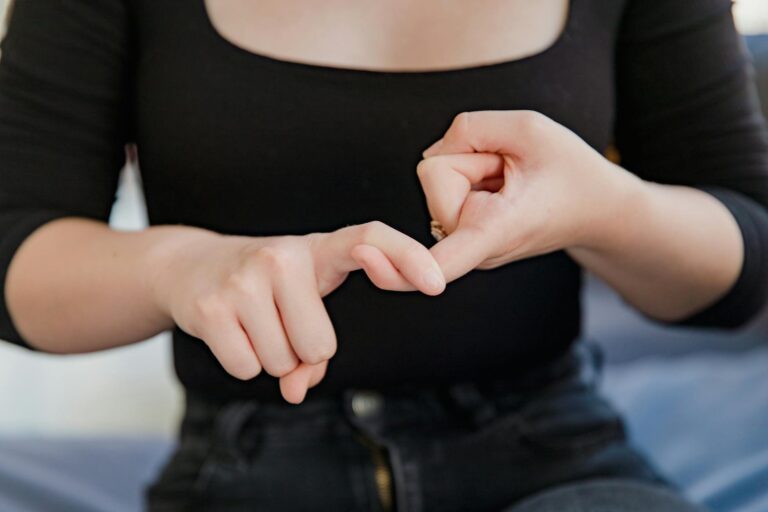
Baby sign language offers late talkers a bridge to communication that can reduce frustration and may actually support—rather than hinder—the development...
Baby sign language does not interfere with speech therapy or delay verbal development. In fact, speech-language pathologists frequently incorporate...
Baby sign language supports speech development by giving infants a way to communicate before their vocal abilities mature, which reduces frustration and...

The "thank you" sign in baby sign language is performed by starting with your dominant hand flat, fingers together, and palm facing you.

Understanding baby sign language please sign is essential for anyone interested in baby and toddler sign language.