
“Dance” is two little finger-legs dancing on a palm stage. Toddlers who love music pick it up fast, usually between 15 and 20 months, because the request pays off in music every time.
How to Sign “Dance” in ASL
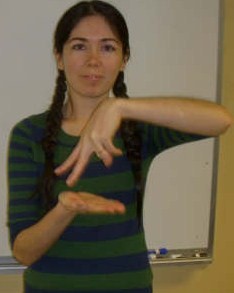
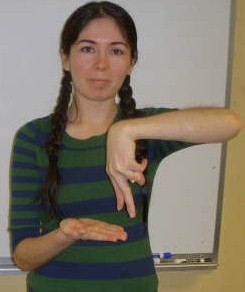
Photos: Rodasmith via Wikimedia Commons, CC BY-SA 3.0
- Make the stage: Hold one hand flat, palm up, in front of you.
- Make the legs: Point your index and middle fingers down over the palm, like a tiny person standing on it.
- Dance: Swing the fingers side to side over the palm without touching down.
The fingers are legs and the palm is the dance floor — the same finger-legs appear in “stand,” “jump,” and “fall.”
Step-by-Step Photos
Photos: Rodasmith via Wikimedia Commons, CC BY-SA 3.0
When to Use It With Your Child
- When music plays: Sign it, then dance — the sign predicts the fun.
- As a request: Wait for an attempt before starting the dance party.
- During songs: Pause a favorite song and sign “dance?” before resuming.
Tips for Success
- Music makes this self-rewarding — honor every attempt with an immediate boogie.
- Two fingers waved anywhere near the other hand counts.
- Pair it with “music” (an arm waving over the forearm like a conductor) as the set grows.
Signs Related to “Dance”
“Jump” uses the same finger-legs springing off the palm, and “stand” plants them still. This little family of palm-stage signs delights toddlers because each one is a tiny puppet show.
The V-legs-on-palm construction is a classifier in ASL grammar — the same two fingers represent a person’s legs across dozens of signs.