
In American Sign Language, you ask a yes or no question using a raised eyebrow paired with a slight forward head tilt and a questioning facial expression. This combination of facial movements, called non-manual markers, is essential to ASL grammar and tells your conversation partner you’re asking a question rather than making a statement. For example, if you sign “YOU SLEEP” with a neutral face, you’re simply stating that someone slept.
But if you sign “YOU SLEEP?” with raised eyebrows, a tilted head, and an inquisitive expression, you’re asking whether they slept. These facial expressions are not optional embellishments in ASL—they’re a core part of the language itself. Without the proper facial expression, your signed question may not be understood as a question at all. Babies and toddlers who are exposed to ASL naturally pick up these non-manual markers through observation and interaction, much the way hearing children learn the intonation patterns of spoken language.
Table of Contents
- Using Raised Eyebrows and Head Movement for Signed Questions
- The Critical Role of Non-Manual Markers in ASL Grammar
- Teaching Babies and Toddlers to Produce Questioning Expressions
- How Yes or No Questions Differ from Wh-Questions in Facial Expression
- Common Mistakes and Challenges in Non-Manual Marking
- How Facial Expressions Develop as Children Grow
- Building Confident Communicators Through Natural Signing Practices
- Conclusion
- Frequently Asked Questions
Using Raised Eyebrows and Head Movement for Signed Questions
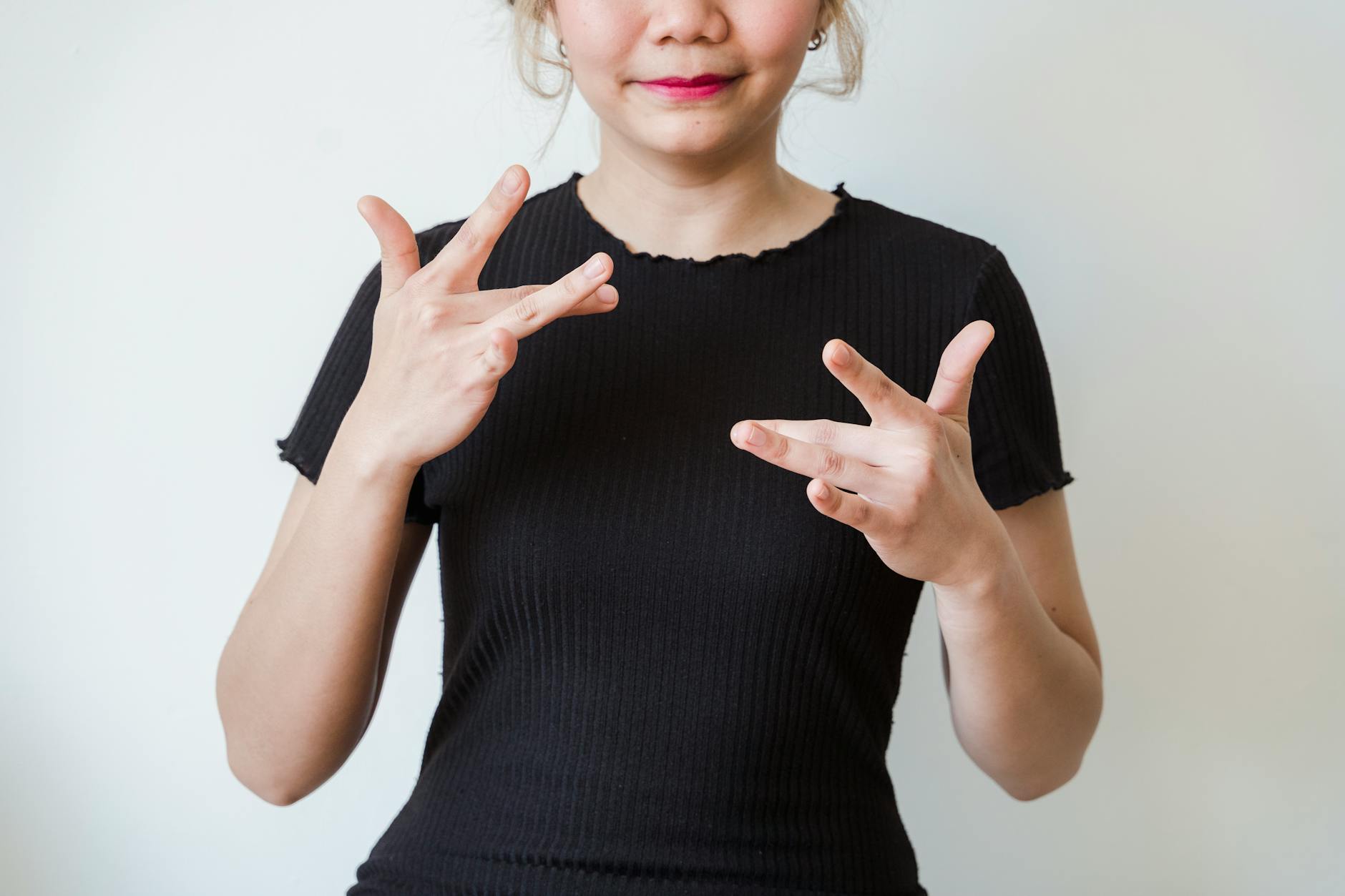
The primary facial expression for yes or no questions in asl involves raising your eyebrows while slightly tilting your head forward or to the side. This distinctive movement signals to your conversation partner that you’re asking for information or confirmation, not sharing a fact. The eyebrow raise typically starts just before you sign the question and continues through the key word in your question, then returns to neutral as the question ends. Head tilt often accompanies the raised eyebrows, with many signers tilting slightly forward or to one side.
This movement adds emphasis and reinforces the questioning intent. The combination of both features—eyebrows and head position—creates a clear, unambiguous signal that a response is expected. Young children in deaf families learn this pattern intuitively through daily interactions. When a parent consistently pairs specific signs with the raised eyebrow expression, toddlers begin to associate the facial movement with the concept of asking a question. This learning happens naturally without formal instruction, similar to how hearing children absorb question patterns from the speech they hear around them.
The Critical Role of Non-Manual Markers in ASL Grammar
Non-manual markers are facial expressions and body movements that convey grammatical information in ASL. For yes or no questions, the raised eyebrow is one of the most important non-manual markers, functioning similarly to the rising intonation at the end of a spoken English question. Without this marker, ASL lacks a clear way to distinguish statements from questions. The timing of these expressions matters significantly. The eyebrow raise should coincide with the question itself, not after the signing is complete.
If you sign “YOU SLEEP” and then raise your eyebrows too late, the question becomes unclear and may be misinterpreted. One limitation parents should be aware of is that this requires precise facial control, and young signers may struggle initially to synchronize their facial expressions with their hand movements. A warning for parents and caregivers: never correct a child’s non-manual markers harshly or draw excessive attention to them. Children develop these naturally through exposure and modeling. Overemphasis on “correct” facial expressions can make signing feel unnatural and may discourage a child from communicating freely.
Teaching Babies and Toddlers to Produce Questioning Expressions
When teaching young children to ask yes or no questions in ASL, modeling is the most effective approach. Consistently use the raised eyebrow expression yourself when asking questions, and your child will gradually internalize the pattern. For babies, simply being in an environment where ASL is used naturally—with all its facial expressions intact—is enough for them to begin absorbing these patterns.
For toddlers who are beginning to sign, you can encourage questioning by asking them simple yes or no questions with exaggerated facial expressions: “YOU HUNGRY?” (with very obvious raised eyebrows), “YOU WANT JUICE?” These repetitions help children connect the facial movement with the act of asking a question. Over time, they’ll begin to use the expression themselves, initially perhaps too exaggerated, then gradually refining it to match natural adult signing. A specific example: when a toddler signs “COOKIE?” while naturally raising their eyebrows to ask if they can have a cookie, they’ve successfully combined the hand sign with the appropriate facial grammar. This moment—when a child first produces a questioning expression spontaneously—indicates they’ve grasped a fundamental aspect of ASL structure.

How Yes or No Questions Differ from Wh-Questions in Facial Expression
Yes or no questions use raised eyebrows as their primary non-manual marker. In contrast, wh-questions (those beginning with what, where, when, why, or who) typically use lowered eyebrows instead. This distinction is crucial for clear communication. A child who learns to differentiate these two patterns gains a powerful tool for expressing different types of questions.
The practical implication is that children exposed to both yes/no and wh-questions will develop nuanced questioning skills more quickly than children who experience only one type. The tradeoff, however, is that this requires caregivers to be aware of the grammatical differences themselves and to use them consistently. A parent who sometimes forgets to use the proper facial expressions may inadvertently slow their child’s language development. Comparison-wise, this is more complex than English, where the same rising intonation can sometimes work for multiple question types. In ASL, the grammar is encoded specifically in the face, requiring more deliberate attention to facial movements.
Common Mistakes and Challenges in Non-Manual Marking
One of the most frequent mistakes parents and caregivers make is using a neutral or expressionless face while signing questions. Some hearing parents who are learning ASL may focus so intently on their hand shapes and movements that they neglect their facial expressions entirely. This severely impairs communication because the question intent is lost. A signed question without appropriate facial expression may be perceived as a flat statement, leaving the conversation partner confused. Another common challenge is inconsistency.
A caregiver who sometimes uses raised eyebrows for questions and sometimes doesn’t creates confusion for a young learner. Children need consistent patterns to build language competence. This inconsistency is particularly problematic in mixed hearing-deaf households where not everyone may be equally fluent in ASL and its grammatical requirements. A warning worth emphasizing: some hearing adults feel self-conscious about making exaggerated facial expressions and may instinctively pull back on their non-manual markers. This self-consciousness directly interferes with language transmission. Children benefit from clear, visible, confident facial expressions, even if they initially feel overstated to an adult speaker.
How Facial Expressions Develop as Children Grow
Infants exposed to ASL from birth typically begin showing interest in facial expressions around three to four months old. By six months, babies often start tracking and imitating facial movements. Toddlers between eighteen months and three years typically begin producing their own questioning expressions, though they may be exaggerated at first.
As children enter preschool and school years, their non-manual markers become more refined and naturalistic. The exaggerated eyebrow raise of a three-year-old gradually becomes the more subtle raising characteristic of adult signers. This developmental trajectory mirrors how children refine pronunciation and intonation in spoken language. An example of this progression: a two-year-old might scrunch their entire face while raising eyebrows to ask a question, whereas a six-year-old will have learned to isolate the eyebrow movement while keeping the rest of the face relatively neutral.
Building Confident Communicators Through Natural Signing Practices
The foundation for confident ASL use in yes or no questioning is established during infancy and toddlerhood through natural, unselfconscious signing. Families that treat ASL as a complete language—using it for all communication, including questions—create an environment where children develop naturally fluent signing patterns. As children grow beyond the toddler years, they’ll encounter diverse signers with slightly different non-manual marking styles.
This variation is normal and healthy, reflecting the natural diversity of any language community. Children raised in ASL-rich environments develop the flexibility to understand these variations while maintaining their own natural signing patterns. This prepares them for real-world communication beyond their immediate family.
Conclusion
Asking yes or no questions in ASL requires pairing your hand signs with a raised eyebrow expression and often a slight forward head tilt. These non-manual markers are grammar, not decoration—they carry essential meaning. For babies and toddlers, the best teaching approach is simple: model clear, consistent questioning expressions consistently, and let children absorb the pattern naturally through daily interaction.
By understanding the importance of facial expressions in ASL, parents and caregivers can support their children’s language development more effectively. Prioritize showing clear facial expressions, maintain consistency, and avoid self-consciousness about exaggerating your movements. These practices lay the groundwork for fluent, confident communication that will serve your child throughout their life.
Frequently Asked Questions
At what age do toddlers typically start using the raised eyebrow expression for questions?
Children exposed to ASL from birth often begin producing questioning expressions between eighteen months and three years old. Every child develops at their own pace, so variation is normal. Consistent modeling by caregivers significantly supports earlier development of these expressions.
Can I use just my hands to ask questions without facial expressions?
Technically, no. Without proper non-manual markers, a signed question may be misunderstood as a statement. Relying only on hand movements leaves out a critical grammatical component of ASL and makes communication less clear to your conversation partner.
Do I need to exaggerate my facial expressions when signing to young children?
Exaggeration in the early years is actually beneficial. Clear, pronounced facial movements help young children notice and learn the patterns. As children develop, they’ll naturally learn to recognize more subtle variations.
What if I’m hearing and learning ASL—will my facial expressions be “wrong”?
Fluency in non-manual markers develops with practice and exposure to deaf signers. Focus on being consistent and clear. Deaf signers and deaf children are generally patient with learners and will understand your intent even if your expressions aren’t perfectly naturalistic.
How do I know if my child understands the difference between a question and a statement?
Observe whether they respond appropriately. If you ask a yes or no question and they respond with a yes or no answer, they’ve understood. Early responses might be simple nods or shakes of the head, which is developmentally appropriate.
Should I correct my toddler’s facial expressions when they sign questions?
Gentle modeling is better than direct correction. Continue using proper expressions yourself, and your child will refine their own patterns over time. Harsh corrections can make children self-conscious about signing and discourage communication.