How Do You Express Passive Voice in ASL

Passive voice in American Sign Language (ASL) isn't expressed through auxiliary verbs or word order like it is in English.
Passive voice in American Sign Language (ASL) isn't expressed through auxiliary verbs or word order like it is in English.
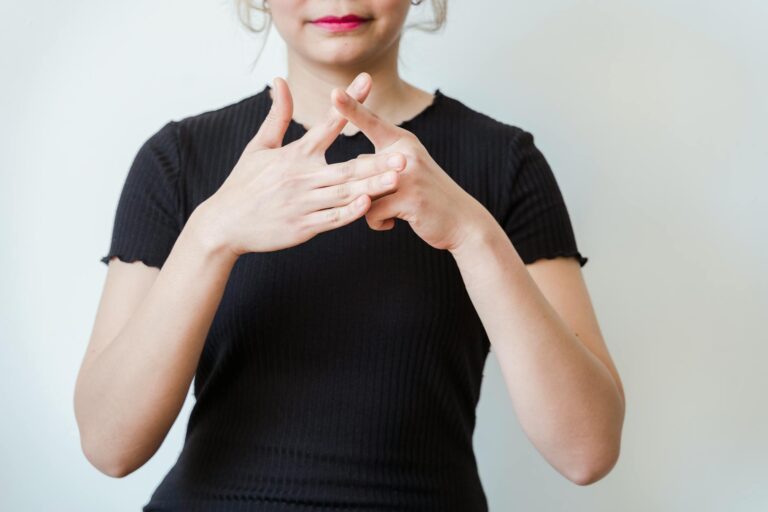
Eyebrow position is one of the most fundamental grammatical tools in American Sign Language, functioning as what linguists call a non-manual marker—a...
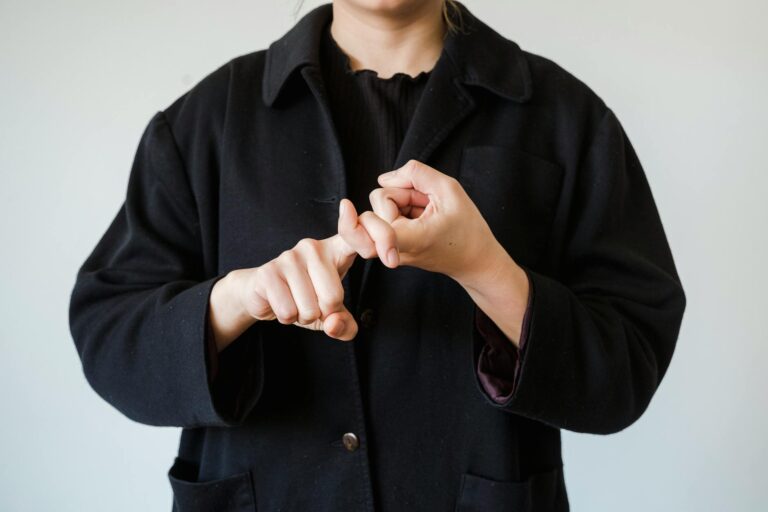
American Sign Language (ASL) expresses sarcasm through a combination of facial expressions, body language, and specific hand positioning that replaces the...

Depicting verbs in American Sign Language are verbs that show action through the actual movement and positioning of the hands, rather than using a...

In ASL conversation, comparison and contrast are shown through a combination of spatial mapping, facial expressions, body shifts, and directional signs...

The main difference between sequential and simultaneous grammar in American Sign Language (ASL) comes down to how grammatical information is packaged...
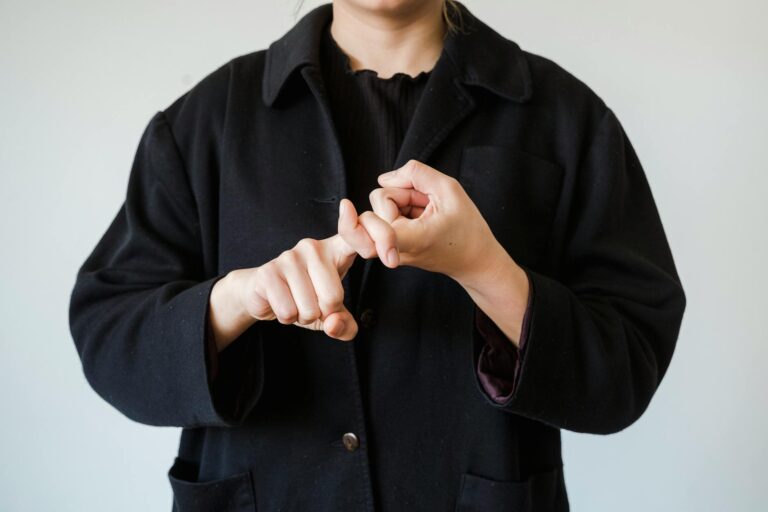
American Sign Language (ASL) places adjectives after the noun they modify, whereas English typically places adjectives before the noun.

Aspect in American Sign Language (ASL) is a grammatical feature that describes how an action is performed—whether it happens once, repeatedly, over a long...

In American Sign Language, you show possession without using an apostrophe S by using possessive signs like MY, YOUR, HIS, HER, OUR, and THEIR.

Topicalization in American Sign Language (ASL) is a grammatical feature where the main subject or topic of a sentence is introduced at the beginning,...