
Grocery stores must provide American Sign Language (ASL) interpreters or other effective communication methods to ensure Deaf and hard-of-hearing customers can access the same services and information as hearing customers. Under the Americans with Disabilities Act (ADA), any business open to the public—including grocery stores—is legally required to remove barriers that prevent people with disabilities from participating fully and equally in the shopping experience. For a Deaf customer using ASL, this might mean having a professional ASL interpreter available when they need assistance from store staff, or providing written materials, visual aids, or video relay services at checkout and customer service desks. When a family with Deaf members visits a grocery store, the store cannot simply point at items or use hand gestures as a substitute; they must offer genuine communication access through methods that the Deaf person themselves prefer.
The scope of ADA requirements extends beyond just having an interpreter on staff. Stores must communicate with customers about what communication methods are available, ensure employees understand how to accommodate ASL users, and make accommodations without unreasonable delay or adding cost to the customer. This means a grocery store cannot charge a Deaf customer extra for interpreter services, cannot require advance notice every time someone needs to communicate, and cannot use family members (especially children) as interpreters for important transactions. The specifics of what’s required depend on the size of the store, the frequency of customer interactions, and what communication methods the store already provides.
Table of Contents
- What Do ADA Regulations Actually Mandate for Grocery Store Accessibility?
- The Distinction Between ASL Interpreters and Other Assistive Communication Methods
- Common Communication Points in Grocery Stores Where ASL Access Matters
- How Grocery Stores Can Implement ADA-Compliant Communication Systems
- Training Staff and Communicating Availability
- Signage, Digital Access, and Proactive Communication
- The Broader Context and Where Grocery Store Accessibility Is Heading
- Conclusion
- Frequently Asked Questions
What Do ADA Regulations Actually Mandate for Grocery Store Accessibility?
The ADA’s Title III regulations require that businesses ensure effective communication with people with disabilities. For ASL users, “effective communication” means that information must be conveyed in a way that is accurate and timely. The Department of Justice’s ADA guidance specifies that businesses should assess their communication needs and have multiple methods available—not just one option. A large grocery chain with a deli counter, pharmacy, customer service desk, and check-out lanes has more communication touchpoints than a small neighborhood market, so the accessibility requirements scale somewhat with business size and complexity.
In practical terms, this translates to several options a grocery store might implement. Some stores hire ASL interpreters for designated hours or on-call availability; others provide video relay services where a Deaf customer can connect via video to a remote interpreter; still others use live chat or messaging apps with their employees to facilitate communication. The law doesn’t prescribe which method a store must use, only that whatever method is chosen must be genuinely accessible and not burden the Deaf customer with costs or unreasonable delays. For example, a grocery store cannot tell a Deaf customer, “Come back on Tuesday at 2 PM when our interpreter is here,” if the customer needs to make a purchase today. The store would need an alternative communication method available immediately.

The Distinction Between ASL Interpreters and Other Assistive Communication Methods
While asl interpreters are often the gold standard for Deaf individuals who use ASL as their primary language, not every grocery store interaction requires a professional interpreter. The ada allows for a range of auxiliary aids and services, which include written materials, visual demonstrations, typed notes, video relay services, and interpreters. However, businesses must not substitute a lesser method without permission from the Deaf person. A grocery store employee cannot decide that writing things down is “good enough” without asking the customer; if a Deaf person prefers ASL and the store has the ability to provide an interpreter, that is the legally appropriate accommodation.
One important limitation to understand: family members should never be used as interpreters for important communications, and the ADA actively discourages this practice. When a grandmother brings her Deaf grandchild to the grocery store and the store tries to have the child interpret what the cashier is explaining, that creates multiple problems—the child may not understand technical or specialized vocabulary, family interpretation compromises confidentiality, and it places an inappropriate burden on a minor. For a real-world example, imagine a situation where a store employee tries to explain return policies or a promotion through a Deaf customer’s young daughter; the accuracy is compromised, and the daughter may not convey the nuance of what’s being said. A professional interpreter or video relay service is the correct accommodation in such cases.
Common Communication Points in Grocery Stores Where ASL Access Matters
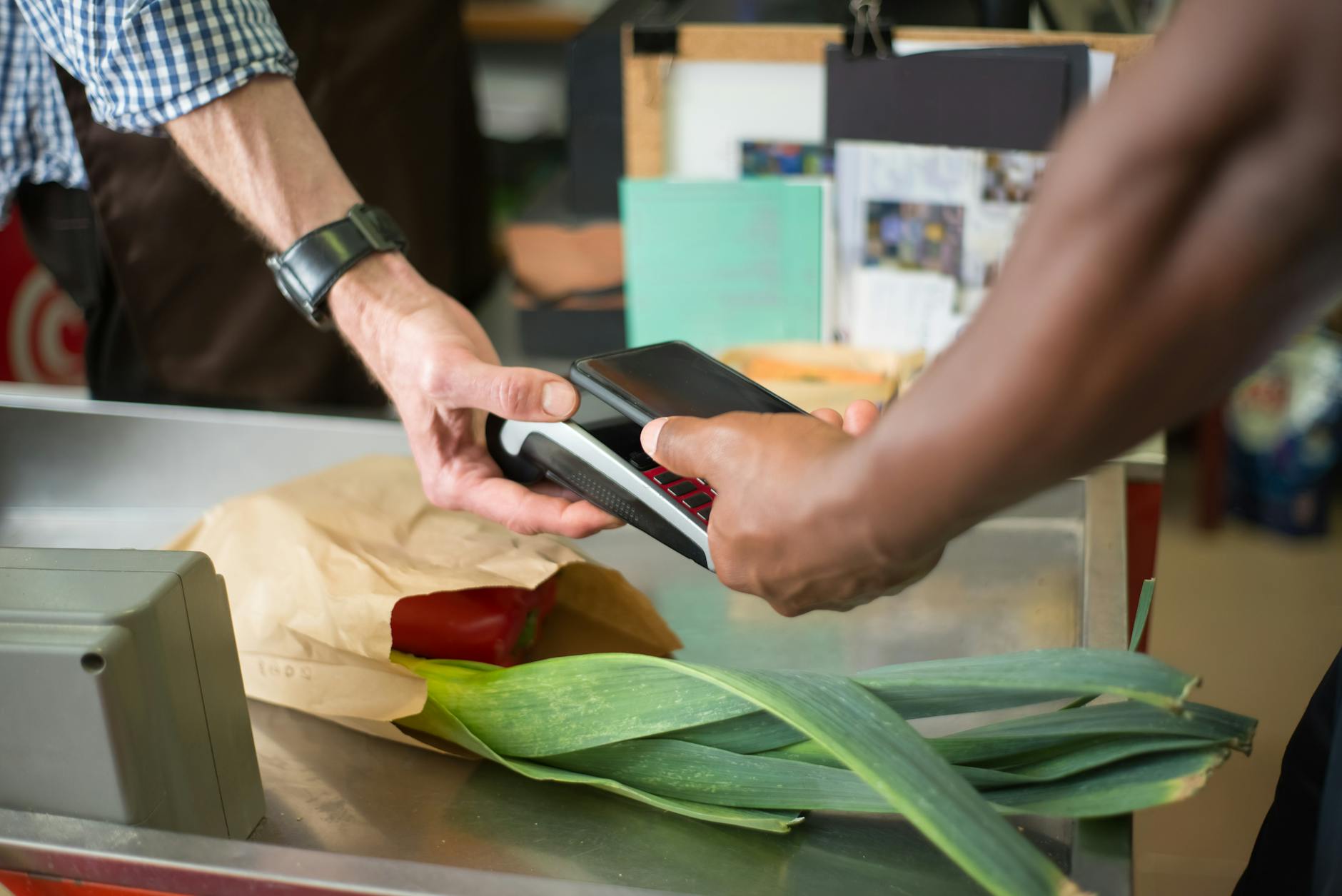
Grocery shopping involves numerous communication points beyond simply scanning barcodes. At the customer service desk, customers inquire about product location, pricing, return policies, and loyalty program details. At the pharmacy, customers pick up prescriptions, discuss medication side effects, and ask questions about dosage or interactions. At the deli counter, customers order fresh items and may have questions about ingredients or preparation. During checkout, cashiers may ask about coupons, bag preferences, or payment method verification.
Each of these interactions requires accurate, timely communication, and a Deaf customer using ASL cannot effectively participate without proper accommodation. Consider a practical example: a Deaf parent wants to purchase deli turkey for their child’s lunch. They approach the deli counter at a grocery store with no ASL interpreter on staff. The deli worker smiles and points at different options, but the Deaf customer cannot ask whether the turkey is sliced fresh or pre-packaged, what the price per pound is, or whether a specific brand is available. Without an effective communication method—whether that’s a video relay service on a tablet, a real-time chat app, or a pre-scheduled interpreter—the customer’s shopping experience is significantly degraded compared to a hearing customer’s. The store has failed its ADA obligation, even if the employee was friendly and tried their best.
How Grocery Stores Can Implement ADA-Compliant Communication Systems
Implementing ASL accessibility requires both infrastructure and training. Some stores choose to hire full-time or part-time ASL interpreters; others use on-call interpreter services that can dispatch someone within an hour or provide video relay services immediately. Video relay services (VRS) have become increasingly accessible and cost-effective, allowing a Deaf customer to access a remote interpreter via a tablet or kiosk. Written communication via note-taking or printed materials works well for simple exchanges but is slower and may not be sufficient for complex information like pharmacy instructions or return policies. A comprehensive approach combines multiple methods so customers have real options.
The tradeoff between these approaches often comes down to cost and frequency of use. A small grocery store in a community with few Deaf residents might use a video relay service, which costs $2-5 per video session, or an on-call interpreter service for a few hours per week. A large grocery chain with multiple locations in urban areas with larger Deaf communities might employ dedicated ASL interpreters. However, stores cannot use cost as a reason to deny accommodation—the ADA explicitly states that businesses must bear the cost of auxiliary aids and services. A store cannot tell a Deaf customer, “We’ll provide an interpreter, but you have to pay for it,” or “We provide communication access on Wednesdays only.” This is a legal and ethical obligation, not a customer service luxury.
Training Staff and Communicating Availability
One of the most common ADA violations in retail settings is that staff don’t know what accommodations exist or how to initiate them. A grocery store might have a video relay service app installed on a customer service tablet, but if the cashier has never been trained on how to use it, it won’t help a Deaf customer. Employees need to understand that if a Deaf customer is present or has indicated they use ASL, the employee should ask how the customer prefers to communicate and then provide that method without delay or attitude. Another warning: stores should never ask a Deaf customer how they communicate “just in case” in advance, and then claim the accommodation is unavailable during an actual visit.
If a store advertises ASL interpreter availability or says it provides video relay services, the service must actually be operational when customers need it. There have been documented cases where stores posted pictures of ASL interpreters but the interpreters were not available during posted hours, or where video relay services were listed on the website but not actually set up in stores. This creates a false sense of accessibility and violates the ADA just as severely as offering no accommodation at all. Training should cover how to troubleshoot if a system fails, how to quickly source an alternative accommodation, and how to treat Deaf customers respectfully without pity or patronization.

Signage, Digital Access, and Proactive Communication
Beyond in-store interactions, grocery stores need to ensure their digital platforms—websites, mobile apps, and in-store digital displays—are also accessible to Deaf customers. If a store advertises grocery prices, weekly specials, or coupon information online, that content should be captioned if it uses video, include transcripts where relevant, and have descriptive text for images. Some stores use digital menu boards at the deli or produce section; these should display text clearly so a Deaf customer can read without needing to ask questions.
Posting signage in visible areas explaining what communication methods are available is a practical step. Signs reading “Need ASL Interpreter or other communication accommodation? Ask at Customer Service” or listing the video relay service access point help set expectations and reduce the likelihood of miscommunication. An example of good practice is a chain grocery store that displays QR codes at customer service desks linking to video relay service providers, with simple instructions on how to access them. This puts accessibility in the customer’s control and demonstrates that the store values inclusion.
The Broader Context and Where Grocery Store Accessibility Is Heading
The grocery industry’s approach to ASL accessibility has shifted over the past decade as awareness of the ADA’s requirements has grown and as technology has made solutions more affordable. What was once seen as an expensive, optional accommodation is increasingly recognized as a baseline expectation in many communities. Younger grocery store managers and employees have grown up with more diverse representation in media and have often attended schools with explicit inclusion training, so the cultural shift toward normalizing ASL accommodations is happening alongside legal obligations.
Looking forward, more grocery stores are likely to adopt hybrid accessibility models that combine in-person interpreters for scheduled times with on-demand video relay services for unexpected interactions. As video relay technology improves and costs drop further, the barrier to entry for small stores will decrease. Additionally, as more families with Deaf members advocate for accommodations and word spreads about which stores provide genuine accessibility, market competition may incentivize stores to invest in ASL access as a way to attract customers. Stores that treat ASL accessibility as a legal checkbox rather than a genuine commitment to customer service are missing an opportunity to build loyalty and demonstrate values alignment with their communities.
Conclusion
Grocery stores are legally required to provide effective communication access for Deaf and hard-of-hearing customers using ASL, and this obligation applies regardless of store size. The ADA does not specify a single method but instead requires stores to assess their needs and provide timely, accurate communication that does not shift costs to the customer. Options range from hiring ASL interpreters to providing video relay services, written communication aids, or digital accessibility features, and stores must make these accommodations available without advance notice requirements, cost, or unreasonable delay.
Implementing real ASL accessibility means moving beyond performative gestures and training staff to understand both the legal requirements and the practical reality of what it feels like for a Deaf person to shop without communication access. Stores that take this obligation seriously—by budgeting for interpreters or technology, training employees, and communicating availability proactively—create spaces where families with Deaf members can shop independently and with dignity. For more information on specific accessibility requirements, the Department of Justice’s ADA website provides detailed guidance, and local disability organizations or Deaf community groups can offer community-specific recommendations.
Frequently Asked Questions
Can a grocery store require a Deaf customer to schedule an ASL interpreter in advance, or must it provide on-demand access?
The ADA does not allow stores to require advance notice for communication access. A store cannot tell a Deaf customer, “You need to call 48 hours ahead if you want an interpreter.” However, some stores do offer scheduled interpreter hours as one option alongside on-demand methods like video relay, which must be available without prior notice. The store must have at least one method available immediately.
Is it legal for a grocery store to ask a Deaf customer’s family member to interpret instead of providing a professional interpreter?
The ADA discourages this practice and in most cases it is not compliant. Family members should never be asked or expected to interpret for important communications like pharmacy instructions, return policies, or payment verification. However, if a Deaf customer specifically requests to use a family member out of personal preference, the store may allow it—but this does not relieve the store of its obligation to provide a professional accommodation if the customer prefers one.
What should a Deaf customer do if a grocery store claims it cannot provide an ASL interpreter or communication access?
The customer can file a complaint with the Department of Justice Civil Rights Division, state attorney general’s office, or local disability rights organization. Documenting the date, time, location, and what accommodations were requested helps strengthen a complaint. Many states also have disability advocacy organizations that can provide guidance on filing complaints and pursuing resolution.
Are video relay services considered adequate under the ADA, or must stores employ in-person interpreters?
Video relay services are a valid auxiliary aid under the ADA and meet the legal requirement for effective communication. However, some Deaf individuals prefer in-person interpreters for better rapport and visual access, and stores may choose to offer both. The store must use the method the Deaf customer prefers when feasible, but if a customer has no stated preference, video relay is acceptable and cost-effective.
Can a grocery store charge a Deaf customer for ASL interpreter services or video relay services?
No. The ADA explicitly requires that businesses bear the cost of auxiliary aids and services. A store cannot charge a Deaf customer extra for an interpreter, cannot require them to use a less-preferred method to save cost, and cannot pass the cost to the customer in any form.
How can Deaf parents advocate for better ASL accessibility at their local grocery stores?
Contact store management directly and describe specific instances where communication access was lacking. Connect with local Deaf or disability advocacy organizations that may be willing to send a formal letter outlining ADA requirements. If a store is responsive, offer constructive suggestions about video relay services, staff training, or signage. If a store is unresponsive, filing a formal ADA complaint creates a legal record and often prompts action.