
Lexical signs and gestures are fundamentally different in American Sign Language, though the distinction can seem subtle to parents and educators new to ASL. Lexical signs are the formal vocabulary of ASL—established, conventional signs with fixed, standardized meanings that function as the actual words of the language. Gestures, by contrast, are non-lexical movements that may be spontaneous or conventional but are not necessarily part of the formal ASL lexicon and don’t have the same grammatical structure or consistent meaning. For example, when a Deaf signer produces the lexical sign MOTHER (a movement typically made near the chin), they’re using a standardized word that every ASL user will recognize with the same meaning.
When someone shrugs their shoulders or waves their hand dismissively, they’re using a gesture that might be understood in context but isn’t part of ASL’s formal vocabulary system. Understanding this difference is crucial for parents and caregivers teaching sign language to toddlers and babies. Many people mistakenly believe that signed languages are simply depictive gestures or pantomime, but ASL is a fully developed language with its own lexicon and grammar, independent of spoken or gestural communication. Recognizing what counts as a lexical sign versus a gesture helps you support your child’s language development more effectively and gives them access to the structured, rule-governed system that Deaf communities use to communicate complex ideas, not just basic concepts.
Table of Contents
- How Are Lexical Signs Structured Differently From Gestures?
- Why Do Some Gestures Gradually Become Lexical Signs?
- How Does This Distinction Affect Communication in Deaf Families?
- What Should Parents Focus On When Teaching Signs to Babies?
- What Is the Risk of Treating ASL as Just Gesture?
- How Do Non-Lexical Movements Appear in Everyday Signing?
- The Evolving Relationship Between Gesture and Lexicon in Modern ASL
- Conclusion
How Are Lexical Signs Structured Differently From Gestures?
Lexical signs have standardized parameters that make them consistent and recognizable across the Deaf community. These signs follow specific patterns of handshapes, positions in signing space, movements, and orientations of the hands. When a child learns the sign BOOK (two hands coming together like pages closing), that sign carries the same meaning wherever they encounter it because it follows the established rules of asl. Gestures, however, don’t operate under the same rigid structure. A gesture might vary significantly depending on context, emotion, or individual interpretation.
Someone might indicate “come here” with a beckoning motion using one finger, several fingers, or their whole hand—and the meaning might shift slightly based on how urgently or emphatically they perform it. The grammatical status of lexical signs also distinguishes them from gestures. Lexical signs can be modified, inflected, and combined according to ASL grammar rules. For instance, the sign GIVE can be modified to show who is giving to whom by changing the direction of movement. This systematic grammatical structure is what makes ASL a true language rather than a communication system based on gestures. Gestures may convey meaning, but they typically don’t follow the same grammatical principles or allow for the same kinds of linguistic modification.
Why Do Some Gestures Gradually Become Lexical Signs?
One of the most interesting aspects of ASL’s development is how gestures can become lexicalized over time. This happens when a particular gestural form becomes standardized across a Deaf community and develops a fixed, conventional meaning. The sign STRONG is a prime example of this process. The sign originated from a gesture people make to indicate physical strength—moving the fists outward or downward to show upper body power—but it became formalized into a lexical sign with a specific handshape, movement pattern, and meaning that ASL users can reproduce consistently.
Over generations, as more signers adopt the form and standardize it, the gesture transitions into formal vocabulary. A limitation to understand here is that not every gesture becomes a lexical sign, and the process takes time. Newly created gestures or idiosyncratic movements might remain gestures indefinitely, used by individuals or small groups but never entering the broader ASL lexicon. Additionally, the line between emerging lexical signs and established gestures can be fuzzy during the transition period. Linguists and Deaf communities continuously navigate these boundaries as ASL evolves and new signs are created to represent modern concepts—think of signs for technology, internet-related terms, or recent inventions that didn’t exist when the core ASL vocabulary was established.
How Does This Distinction Affect Communication in Deaf Families?
In Deaf households where both parents and children are native signers, the distinction between lexical signs and gestures is intuitive and automatic. Children naturally acquire the lexical signs as part of their language development, just as hearing children learn spoken words. Parents use lexical signs for core vocabulary and concepts, supporting their child’s understanding of how language works. Gestures appear in communication too—a Deaf parent might use a gesture alongside a lexical sign for emphasis or clarity, but the foundation of everyday communication rests on the formal lexical signs that carry consistent, agreed-upon meanings.
For hearing parents learning ASL to communicate with their Deaf child, understanding this distinction becomes pedagogically important. When you’re teaching your child sign language, focusing on established lexical signs ensures you’re building their access to the language that Deaf communities actually use. Using only gestures or mime might make immediate sense in isolated interactions, but it doesn’t give your child the grammatical structure and consistent vocabulary they need to become a fluent signer. The most effective approach combines learning proper lexical signs with natural gestures that support communication, just as Deaf families do naturally.

What Should Parents Focus On When Teaching Signs to Babies?
When introducing sign language to babies and toddlers, prioritize teaching established lexical signs from the ASL lexicon rather than relying on homemade gestures or invented signs. Babies have an incredible capacity to acquire language when exposed to consistent, well-formed linguistic input—whether that input is spoken or signed. Lexical signs provide this structured input. Teaching signs like MOTHER, FATHER, MILK, MORE, and SLEEP gives your child access to real vocabulary that they can use across different contexts with different people.
These signs are standardized, which means your child can use them with any ASL user and be understood consistently. That said, natural gestures absolutely have a place in early communication with babies. Pointing, facial expressions, and iconic gestures (movements that visually represent their meaning, like moving your fingers like rain falling) support language development and help bridge communication gaps while your child is still acquiring vocabulary. The tradeoff is between the immediate communicative clarity of gesture and the long-term language development that comes from exposure to lexical signs. The most effective approach for young children combines both—use lexical signs as the foundation of your communication while allowing natural gestures to enhance meaning and maintain engagement.
What Is the Risk of Treating ASL as Just Gesture?
A historical and ongoing misconception has seriously limited access to full language development for many Deaf and Hard of Hearing children: the belief that signed languages are merely depictive gestures rather than fully structured languages. This misunderstanding has sometimes led educators and parents to underestimate the linguistic complexity of ASL or to treat signing as a supplement to spoken language rather than a complete language system in its own right. When ASL is treated as gesture-based pantomime, children may not be exposed to the grammatical structures, morphological complexity, and abstract vocabulary that allow for the expression of complex ideas—exactly what they need for academic success and intellectual development.
The research is clear: ASL is a linguistically structured independent language with its own lexicon and grammar, documented in resources like the ASL-LEX database. If your goal is for your child to become truly bilingual or to have full access to Deaf culture and communication, treating ASL as a gesture system rather than a language system will limit their development. A child exposed to sign language as a formal linguistic system will develop stronger language skills overall and have better access to educational and social opportunities within Deaf communities.
How Do Non-Lexical Movements Appear in Everyday Signing?
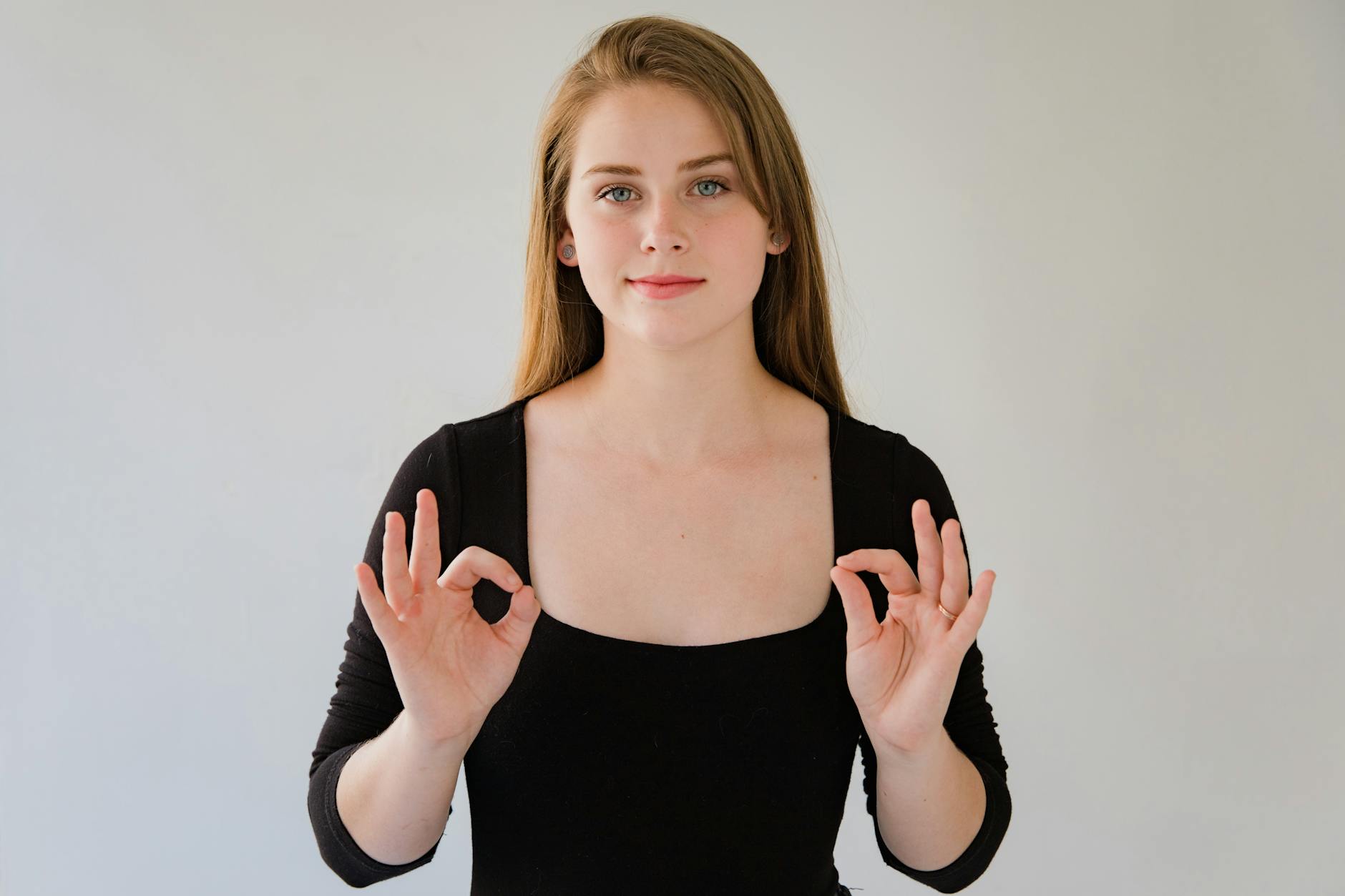
Even fluent signers regularly use non-lexical movements alongside their lexical signs. Facial expressions, body shifts, head tilts, and hand movements that aren’t part of the formal lexicon all contribute to the meaning and nuance of signed communication. A Deaf signer might produce the lexical sign UNDERSTAND with a specific hand movement, but they might simultaneously raise their eyebrows or nod to emphasize the certainty of their understanding.
These non-lexical elements add prosody and emotional coloring to communication, much like intonation does in spoken language. For young language learners, exposure to these natural, non-lexical movements helps them understand that signed communication is multidimensional and expressive. Your baby watching you sign will naturally absorb not just the lexical signs but also the facial expressions, body language, and spatial modifications that native signers use. This holistic language exposure is exactly what supports full language acquisition.
The Evolving Relationship Between Gesture and Lexicon in Modern ASL
As ASL continues to evolve, the relationship between gesture and the formal lexicon becomes even more dynamic. New technological and social developments require new signs, and sometimes gestures serve as the innovation pipeline for formal vocabulary. The sign for SELFIE, for instance, emerged from gestural representations of holding a camera up to one’s face before becoming a more standardized lexical sign.
Similarly, signs related to social media, artificial intelligence, and other modern concepts sometimes begin as descriptive gestures before communities standardize them into formal signs. This ongoing evolution means that understanding the difference between gesture and lexical signs isn’t just about recognizing what currently exists in the ASL lexicon—it’s about understanding how language works and develops. As you support your child’s sign language development, you’re participating in a living, evolving linguistic system that continues to grow and adapt. Exposing your child to established lexical signs gives them the foundation of the language, while the natural, creative use of gesture shows them how languages continue to change and expand.
Conclusion
The difference between lexical signs and gestures in ASL is the difference between formal vocabulary and informal movements—between the standardized words of a language and the spontaneous or conventional physical expressions that enhance communication. Lexical signs are the actual vocabulary of ASL, with fixed meanings and grammatical structure, while gestures are non-lexical movements that may or may not have conventional meanings. Understanding this distinction is essential for parents teaching sign language to babies and toddlers because it shapes how you approach language development and what linguistic input your child receives.
By prioritizing established lexical signs in your interactions with your child, you’re giving them access to a real, structured language—not just a communication tool. This foundation supports their long-term language development, academic success, and ability to participate fully in Deaf communities. As you learn and teach ASL, remember that the most effective approach combines mastery of lexical signs with the natural, expressive use of gesture, creating an environment where your child can acquire language the way all children do: through rich, consistent, meaningful exposure.