
Baby sign language is a method of pairing manual signs with spoken words to enable communication between parents and preverbal infants before speech develops. It works by leveraging a fundamental developmental truth: babies can control their hands and arms earlier than they can control the complex mouth and throat movements needed for speech. A six-month-old who cannot yet say “milk” can learn a simple sign for it, giving her a way to express a real need weeks or months before she has the verbal skills. This early communication channel can reduce frustration for both baby and parent.
Baby sign language uses consistent, repeatable hand shapes and motions paired with spoken English (or any spoken language). When a parent signs “more” while saying “more” during a meal, the infant begins associating the gesture with the concept and the word. Over time, babies learn to produce these signs themselves, creating a shared language system that grows alongside their developing speech. This article explores what baby sign language actually is, when to introduce it, what research shows about its effects, and how to incorporate it into everyday interactions.
Table of Contents
- How Baby Sign Language Pairs Signing with Spoken Communication
- Developmental Readiness and the Optimal Starting Age
- Developmental Timeline and When Babies First Sign
- Research-Backed Benefits and What Science Shows
- Addressing the Speech Delay Myth and Other Misconceptions
- Getting Started Practically
- Long-Term Benefits and What Remains Unknown
- Conclusion
How Baby Sign Language Pairs Signing with Spoken Communication
baby sign language is not a replacement for spoken language—it works alongside it. The core principle is simultaneity: you sign while you speak, presenting both the manual sign and the vocalized word at the same time. A parent saying “all done” will make a specific hand gesture while speaking the words aloud. Over repeated exposures, the infant’s brain processes both inputs together, building associations between the concept, the sign, and the spoken word. This dual-input approach takes advantage of how children’s brains are structured for language acquisition. Babies are naturally primed to absorb language from their environment, but the physical demands of producing speech are high—it requires precise coordination of breathing, vocal cords, lips, tongue, and jaw.
Hand movements require less fine motor control, which is why babies typically make deliberate gestures before they speak. A one-year-old can point, wave, and imitate hand motions more reliably than she can form the “ba” sound or shape her lips for a “m” sound. By introducing signs, parents give infants a communication tool that aligns with their current motor development, not their target speech abilities. The spoken words remain essential. Unlike sign language for deaf families—which is a complete, independent language system—baby sign language is explicitly a bridge tool. The signs always accompany spoken words, ensuring the child hears, processes, and gradually produces both. Research shows this combined approach does not delay speech; in fact, children who grow up with signing and speaking typically develop both communication systems without interference.
Developmental Readiness and the Optimal Starting Age
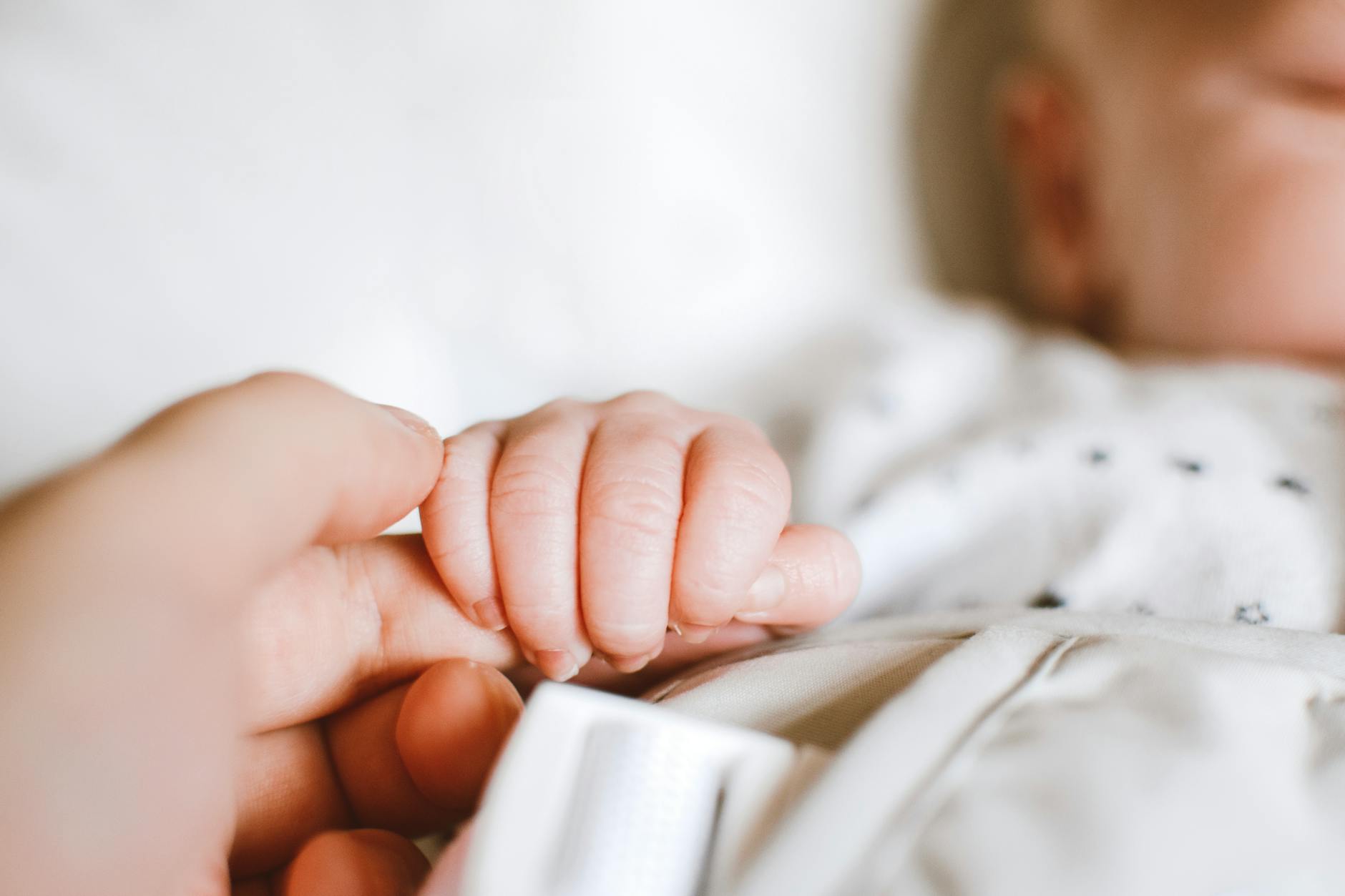
The research consensus identifies six months as the optimal age to begin introducing baby sign language. At six months, most infants can sit upright independently, which frees their hands and arms for focused attention and movement. This is when babies begin showing sustained interest in watching hand movements and start developing the motor control to intentionally replicate them. before six months, babies have the cognitive capacity to understand concepts, but their physical ability to produce signs is limited. However, readiness varies.
Some babies show early interest in hand movements as young as four to six months and may begin mimicking simple motions. Others don’t demonstrate clear signing attempts until closer to nine or ten months. Starting at six months doesn’t mean expecting immediate results; it means beginning consistent exposure so the child’s brain encounters and processes the sign-word pairings regularly. If you wait until twelve months, you’re starting later than the research-supported window, though children can still learn signs at any point in early childhood. The advantage of starting by six months is that you’re working with natural developmental momentum rather than introducing a new skill after other communication patterns have already solidified.
Developmental Timeline and When Babies First Sign
The timeline for sign language acquisition differs slightly from spoken language development. Research indicates that the mean age for first signed words is approximately 8.5 months—roughly 1.5 to 2 months earlier than typical first spoken words. This earlier emergence of signing reflects the motor advantage: hand control develops before speech production. Some babies in sign language-enriched environments produce their first recognizable signs between four and six months, though six to nine months is more typical for the broader population. The earliest signs are usually the simplest ones: pointing, waving, the sign for “more,” or the sign for “all done.” A seven-month-old who has watched her parent repeatedly sign “more” while saying it during meals may one day deliberately move her hands in that same shape—not perfectly, but recognizably.
That moment represents the child’s first active communication attempt, a milestone many parents experience weeks before hearing a first word. By ten to fourteen months of age, most signing children are responding consistently to signs and producing several signs themselves. This age range is when regular, clear signing responses appear—the child hears and sees “more” and reliably signs back or reaches her hands up in anticipation. This window corresponds with the period when hearing children are typically producing their first one or two spoken words, though signing children often have a larger vocabulary at the same chronological age. A child exposed to consistent signing from six months might have fifteen to twenty signs in her active vocabulary by fifteen months, a notably larger repertoire than many speaking-only children the same age.
Research-Backed Benefits and What Science Shows
The research evidence for baby sign language’s benefits is substantial, though with important caveats. The most rigorously documented advantage is vocabulary expansion. A landmark study tracked a hearing infant in a signing environment who reached over 112 words by 17 months—a notably advanced vocabulary for that age. The signing group in the research consistently outperformed comparison groups who were exposed only to spoken language, even when controlling for parental education and socioeconomic factors. The motor advantage of signing allows children to express more concepts earlier, which may then facilitate broader language development. A critical concern that deters some parents is the fear that signing will delay or interfere with spoken language development. The research directly contradicts this worry.
Goodwyn, Acredolo, and Brown’s research (2000) demonstrated that signing does not hinder vocal language development; in fact, infants and toddlers who grew up with both signing and speaking actually outperformed children whose parents focused exclusively on encouraging vocal language. The bilingual exposure to signs and speech appears to support overall language development rather than compete with it. This is important context: the choice to introduce signs is not a trade-off against speech development. Beyond communication and vocabulary, parents report behavioral and emotional benefits. Families using baby sign language consistently report fewer tantrums, likely because the child can express needs more clearly. Additionally, parenting stress decreases: when parents can understand what their child wants or feels through signs, they’re more responsive and less frustrated. Research documents that signing parents experience more affectionate interactions with their children and show greater responsiveness when the child is upset. These are not trivial outcomes—the reduction in parental stress and the improvement in parent-child attunement create a more positive home environment for everyone.
Addressing the Speech Delay Myth and Other Misconceptions
The most persistent concern about baby sign language is the misconception that introducing signs will cause speech delays—that somehow teaching manual communication will cause children to “prefer” signing and avoid speaking. This worry is understandable but unsupported by evidence. The research is clear: signing does not create speech delays. Children growing up in homes where both signing and speech occur develop both systems. In fact, as noted in the previous section, these children often outperform speech-only peers. Why does this myth persist? Partly because sign language itself is sometimes misunderstood as a complete substitute for spoken language, which creates confusion. Baby sign language is not the same as sign language for deaf communities. Deaf sign language is a full, independent language system with its own grammar, syntax, and vocabulary.
Baby sign language, by contrast, is a supplementary communication bridge used alongside spoken language. The signs follow spoken English word order (in most baby sign language systems), not ASL syntax, and they’re always paired with spoken words. This distinction is crucial: you are not replacing English with sign language; you’re adding a motor-based component to your spoken English communication. A secondary concern is whether teaching signs might distract from other developmental priorities. The answer is simply no. Learning signs requires no special classes, no separate time block, and no reduction in other activities. You integrate signs into normal caregiving moments—mealtimes, diaper changes, playtime. The signs take seconds to produce and add no meaningful time burden. If your child is not progressing in signing after several months of consistent exposure, there’s no downside to discontinuing; the research shows no developmental harm from exposure without adoption.
Getting Started Practically
Starting baby sign language does not require professional instruction or special equipment. Begin with a small, high-frequency vocabulary: signs that appear in your daily routine. For a six-month-old, these might include “more,” “milk,” “all done,” “mommy,” “daddy,” and “eat.” You can find baby sign language demonstrations on YouTube, parenting websites, or through resources like “Tiny Signs,” which is built specifically around this concept. You don’t need to learn full ASL—in fact, most baby sign language systems use simplified, English-ordered signs designed for hearing children. The key is consistency. Pair your chosen signs with the spoken words and use them repeatedly throughout the day, at natural moments.
During mealtimes, consistently sign and say “more.” During diaper changes, consistently sign and say “all done.” The repetition, not perfection, builds associations. Your signs don’t need to be textbook correct; they simply need to be consistent and recognizable to your child. Many parents create slight variations of official signs based on what’s easiest for them to remember and reproduce—and that works fine. Your child learns the sign *you* teach her, not some ideal version. The progression is usually: your child watches the signs for weeks or months, then begins showing interest through pointing or focusing intensely on your hands, then starts attempting to imitate, and eventually produces recognizable signs. If your child is not signing by twelve to fourteen months despite months of consistent exposure, discuss it with your pediatrician. Most children benefit quickly from consistent signing, but individual variation is normal, and early signs of speech or language delay deserve professional evaluation.
Long-Term Benefits and What Remains Unknown
While the short-term benefits of baby sign language—early communication, reduced frustration, stronger parent-child attunement—are well documented, it’s important to acknowledge what is still uncertain. The long-term developmental impacts of baby sign language are not conclusively proven. A child who learns signs early and then develops robust speech is tracked, but we don’t have decades of follow-up data demonstrating whether these children show advantages in literacy, academic achievement, or long-term language outcomes. The research evidence for short-term communication and bonding benefits is solid, but broader developmental impacts require more high-quality, long-term research.
This uncertainty matters because it shapes realistic expectations. Baby sign language is not a cognitive enhancement strategy or a guaranteed path to advanced development—though anecdotal parent reports are enthusiastic. Rather, it’s a communication tool that fills a gap in the developmental timeline, making the preverbal period more interactive and reducing the frustration that comes when a ten-month-old has complex thoughts but no way to express them verbally. For many families, that is benefit enough.
Conclusion
Baby sign language is a straightforward, evidence-supported bridge between a child’s emerging cognitive abilities and her developing speech skills. By pairing manual signs with spoken words, parents give preverbal infants a way to communicate earlier than speech alone allows. The research shows no speech delays, documented benefits for vocabulary development and parent-child bonding, and measurable reductions in parenting stress. Starting by six months allows you to work with natural developmental timing, and consistent use of a small vocabulary in daily routines is all that’s required.
If you’re considering baby sign language, the practical barrier is minimal. You can begin tomorrow at your next meal, using whatever signs feel natural to you and repeating them consistently. Your child will learn the signs you teach her, and she will likely begin signing back to you within weeks or months. The broader developmental impact of this choice—whether signing in infancy creates lasting advantages—remains an open research question. But the immediate benefits—early communication, fewer tantrums, and more connected parent-child interactions—are real and consistent across families who use it.