
Baby sign language refers to simplified signs that hearing babies can learn to communicate their needs before they develop spoken language. Babies can begin signing as early as 8.5 months old—roughly 1.5 to 2 months earlier than they typically speak their first words. Some babies have even been observed making deliberate “baby signs” as young as 2 months old, such as opening and closing their fists to indicate they want milk. This means parents have a practical tool to reduce communication frustration during those pre-verbal months when infants have thoughts and needs but lack the motor control for clear speech. This article explores the science behind baby sign language, when to start, what benefits research supports, and how parents can introduce it at home. Baby sign language is not a full version of American Sign Language (ASL).
Instead, it’s a simplified signing system that takes advantage of babies’ natural ability to understand and produce hand and body movements. Because babies develop their large motor skills and hand control before the fine motor skills needed for clear speech, they can actually sign before they can speak. This gives frustrated babies an earlier way to communicate, and it gives parents insight into what their child is thinking and needing. The approach differs from spoken-only communication because it doesn’t require the precise mouth and throat control that speech demands. Your baby might sign “milk,” “more,” or “all done” weeks before they can say these words clearly. For working parents, babysitters, and grandparents, this early signing creates a bridge to understanding the baby’s world before language fully develops.
Table of Contents
- When Can Babies Start Learning Sign Language?
- How Baby Sign Language Boosts Verbal Development
- The Cognitive and Literacy Benefits Beyond Words
- Getting Started With Baby Sign Language at Home
- Understanding the Research Limitations and Realistic Expectations
- The Behavioral and Emotional Benefits
- Special Considerations for Deaf and Hard of Hearing Children
- Conclusion
When Can Babies Start Learning Sign Language?
Experts recommend starting baby sign language between 6 and 9 months of age, though earlier introduction can be beneficial for language acquisition. At 8.5 months, babies typically reach the developmental milestone where they can produce their first signed words. This is remarkable because it represents a genuine shift in their communication ability—not imitation, but intentional communication. However, don’t wait until 8 months to start. Research from HeadStart.gov shows that babies as young as 2 months old can begin observing and processing signs, even if they won’t produce them immediately. The earlier you expose your baby to sign language, the more time their brain has to integrate it as a natural communication system. The window between 6 and 9 months is optimal because this is when babies are developing greater hand control and becoming more intentional with their movements.
They’re also increasingly aware of cause and effect—if I move my hands this way, Mom smiles and understands me. By 8 months or 9 months, many babies who’ve been exposed to signing will produce their first signs independently. Some parents report their babies signing even earlier, around 6 or 7 months, while others take slightly longer. The variation is normal and doesn’t reflect intelligence or future language ability—it’s simply how individual development unfolds. If you’re starting after 9 months, don’t hesitate. Babies are still absorbing language rapidly through their first two years. Even a baby who’s 12 or 18 months old can learn signing quickly because their brains are specialized for language acquisition. The advantage of starting earlier is cumulative—more exposure and practice over time—but starting later is still worthwhile.
How Baby Sign Language Boosts Verbal Development
One of the most compelling findings from recent research is that baby sign language doesn’t delay speech—it actually accelerates it. A study funded by the National Institutes of Health found that babies taught sign language exhibited verbal skills 3 months ahead of non-signing peers at age 2. This is a substantial difference that persists into early childhood. Additionally, babies exposed to signing showed higher rates of word comprehension overall and earlier speech development when compared to their peers without sign exposure. These findings come from rigorous research published by Indiana University’s early literacy researchers, who analyzed multiple studies on the topic. The mechanism behind this acceleration isn’t fully understood, but researchers propose that signing activates the same language centers in the brain as spoken language does. When a baby learns that specific movements mean “milk” or “more,” they’re building neural pathways for language regardless of whether that language is signed or spoken.
The brain doesn’t distinguish between the two—it recognizes them as communication systems. Interestingly, babies seem to benefit from having both options. They’ll watch you sign, watch you speak, and integrate both into their developing language system. This bilingual exposure—even at this early age—appears to strengthen overall language development. The American Academy of Pediatrics has officially approved simple sign language with infants and toddlers, noting that it can break down communication barriers and build positive interaction between baby and parent. This is important because it directly addresses one of the biggest parental concerns: the fear that signing will interfere with speech development. Research confirms that this concern is unfounded. Signing doesn’t interfere with spoken language development; instead, it supports it.
The Cognitive and Literacy Benefits Beyond Words
Beyond just speaking more words earlier, babies taught sign language develop stronger foundational literacy skills. Research from Indiana University’s early literacy program found that signing babies showed increased development of letter recognition and phonemic awareness compared to non-signing peers. This is a meaningful finding because letter recognition and phonemic awareness—the ability to hear and manipulate the sounds in words—are among the strongest predictors of reading success in kindergarten and beyond. By introducing sign language to your baby, you’re not just giving them an early communication tool; you’re potentially laying groundwork for stronger reading skills years down the line. The cognitive advantage extends to early infancy as well. Northwestern University researchers discovered that 3- and 4-month-old infants who are exposed to sign language show a cognitive advantage in forming object categories.
In other words, babies are better at recognizing that a spoon, fork, and knife all belong to the category “utensils,” or that a car, truck, and motorcycle all belong to the category “vehicles.” This isn’t about knowing the signs themselves—it’s about how sign exposure affects the developing brain’s ability to organize information. The bilingual input (both signing and spoken language) seems to enhance cognitive flexibility and categorization abilities. However, there’s an important caveat here: while the research shows benefits, some studies found that language advantages from signing disappeared by age 3. This means the short-term boost to verbal skills and cognitive abilities may not persist into preschool age. This doesn’t negate the value of signing with your baby—early benefits matter for development, confidence, and family communication. But it’s honest to acknowledge that we don’t yet have long-term data showing that babies who sign in infancy perform better academically in elementary school than their peers.
Getting Started With Baby Sign Language at Home
To begin signing with your baby, start with high-frequency, functional words that relate to your baby’s daily life and interests. The most commonly recommended first signs are “milk,” “more,” “all done,” “mom,” and “dad.” These words appear multiple times daily in your baby’s routine, which provides natural repetition and context. When you sign “milk” while giving your baby their bottle, and you say “milk” out loud, your baby is seeing, hearing, and tasting milk all at once. This multi-sensory experience accelerates learning. Your local early intervention system can provide American Sign Language instruction if you request it, particularly if you have a deaf or hard of hearing child or if you’re interested in full ASL rather than simplified baby signing.
For hearing families starting with basic baby signs at home, resources include books, online classes, and video tutorials from organizations dedicated to baby sign language. The beauty of baby signing is that you don’t need to be fluent in ASL to get started—simple, consistent signs used daily will be understood and eventually replicated by your baby. A practical comparison: Signing “all done” every time your baby finishes eating, combined with the spoken word and the obvious context, means your baby has multiple ways to understand and eventually express this concept. Your baby might sign “all done” before saying it, might say it before signing it, or might do both simultaneously. All of these patterns are normal. The key is consistency—using the same sign the same way every day so your baby’s brain learns the association.
Understanding the Research Limitations and Realistic Expectations
It’s important to know that research on baby sign language shows mixed results with various methodological limitations. A comprehensive literature review found that while 13 out of 17 studies reported benefits of baby sign language, several studies had methodological weaknesses that leave the overall evidence somewhat inconclusive. Some studies involved small sample sizes, lacked control groups, or relied on parent-reported outcomes that could be subject to bias. This doesn’t mean signing isn’t beneficial—it means we should be cautious about overstating claims or expecting dramatic, guaranteed results. As mentioned earlier, some of the most rigorous studies found that any language advantages from signing disappeared by age 3, suggesting the benefits are most pronounced in the first two years. The practical implication is that signing with your baby is valuable for early communication and connection, potentially for early verbal development, but probably not a permanent academic advantage into school years.
This is actually fine—the value of reducing frustration, building parent-child connection, and accelerating early language development during the most intense communication struggles is substantial and meaningful, even if the advantage doesn’t persist. The research also shows that benefits vary by child. Not every baby who is exposed to signs will sign earlier than they speak, and not every signing baby will show measurable verbal acceleration. Individual variation in development is normal and expected. Some babies are naturally more verbal; others are more physically oriented. Signing fits beautifully into some families’ communication styles and less naturally into others. The goal isn’t to guarantee a specific outcome but to give your baby an additional communication option during the preverbal stage.
The Behavioral and Emotional Benefits
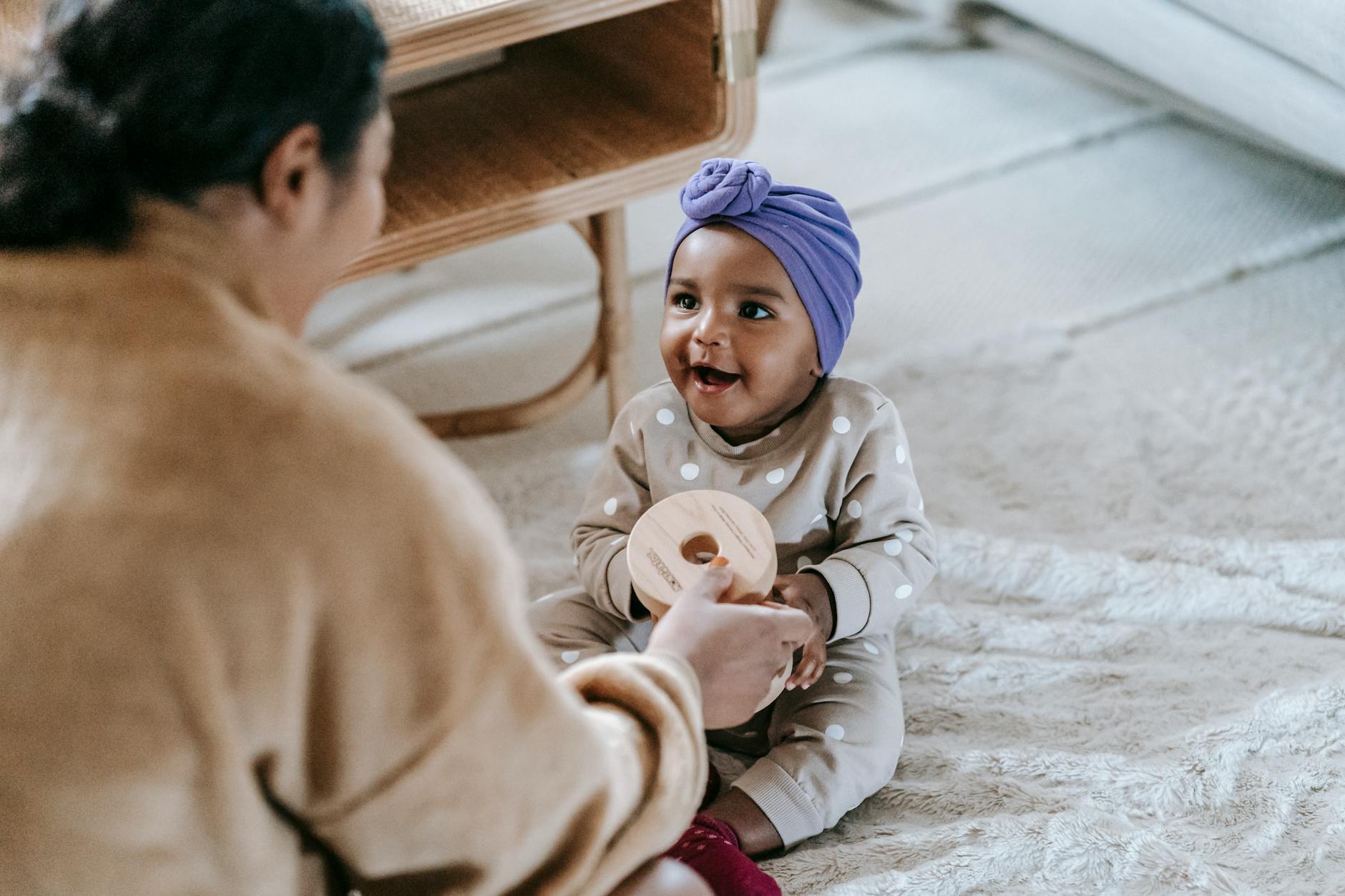
One of the most practical benefits parents report is reduced frustration and tantrums. Babies often become frustrated during the pre-verbal period because they have wants and needs they can’t express clearly. A baby might want “more” food but can’t say the word, so they cry or whine. If that baby can sign “more,” they’ve solved their communication problem and significantly reduced their own frustration. Research from Michigan State University found that sign language reduces tantrums by providing this earlier channel for expression. Parents reported not experiencing heightened stress or frustration from teaching baby signs. In fact, they reported the opposite: a greater ability to understand their child, which led to more positive interactions and earlier parent-child bonding. This behavioral benefit extends beyond reduced tantrums to overall family communication quality.
When a parent understands exactly what a pre-verbal baby wants or feels, the parent can respond appropriately and promptly. This responsiveness strengthens the attachment relationship. The baby learns that their communication is understood and valued. Parents feel more confident in their parenting because they have reliable insight into their baby’s thoughts. This positive cycle of understanding and connection is one of the most tangible benefits of baby sign language, regardless of whether it produces measurable language acceleration. The emotional intelligence aspect shouldn’t be overlooked either. Teaching your baby that their thoughts and feelings can be communicated and understood—even before they have words—is a foundational message about their own agency and the value of expression. This early experience with successful communication may contribute to healthier emotional development and communication patterns later, even if we don’t yet have long-term research confirming this.
Special Considerations for Deaf and Hard of Hearing Children
The vast majority of deaf children are born into hearing, non-signing households. This creates a critical gap: valuable early language exposure time is often lost even after a child’s deafness is diagnosed. Without early access to a natural, full language—whether signed or spoken—children can experience delays in language acquisition and literacy development. For these children, early American Sign Language instruction from a qualified teacher is crucial. Hearing parents of deaf infants should know they can request American Sign Language instruction from their child’s early intervention system.
The good news is that options exist and resources are available. Parents can connect with Deaf mentors, attend ASL classes, and involve their deaf child in Deaf communities where ASL is a natural, native language. Early intervention systems are mandated to provide this support. If you have a deaf or hard of hearing baby, prioritizing early access to full ASL—not simplified baby signs, but fluent ASL—gives your child the same kind of early language exposure that hearing babies get naturally from their environment. This is a different scenario from baby signing for hearing babies, but it underscores the power of sign language as a complete, developmentally appropriate language system when accessed early.
Conclusion
Baby sign language is a practical and research-supported communication tool for hearing babies between roughly 6 months and 2 years old. Babies can produce their first signs as early as 8.5 months—earlier than spoken words—giving families a way to reduce frustration and understand their pre-verbal child’s thoughts and needs. While research on long-term academic benefits is mixed, evidence clearly supports early verbal acceleration, increased word comprehension, stronger literacy foundations, and significantly improved family communication and bonding.
Starting is simple: choose high-frequency words from your baby’s daily life, use them consistently with the spoken word, and watch your baby gradually begin to sign back to you. Whether your baby becomes a fluent signer or uses signs as a bridge to spoken language, the early benefits are real and meaningful. The connection you build through understanding your baby’s signed communication is valuable in itself, independent of any future language advantage. If you’re interested in getting started, consult your pediatrician, explore resources from reputable baby sign language organizations, and remember that consistency and patience matter more than perfection.