
Baby sign language posters are visual reference guides that display common baby signs—simplified hand gestures, facial expressions, and body movements designed for infants and toddlers to learn and use. Posters serve as everyday reminders for parents, caregivers, and siblings to consistently use and model these signs alongside spoken language, helping create a visual communication system that babies can physically replicate before they can speak clearly. For example, a typical poster might show the signs for “more,” “all done,” “milk,” and “sleep” with step-by-step hand position photos and descriptions.
Research shows babies as young as six months can begin learning these signs, potentially supporting early language development before spoken words emerge. This article explores how posters function as communication tools, what the current research actually shows about their effectiveness, how to use them strategically, and when combining them with other approaches matters. Baby sign language posters have become popular in homes, daycare settings, and early intervention programs as parents seek ways to reduce frustration and strengthen early parent-child communication. However, the evidence for their benefits is more nuanced than marketing often suggests, and their role is best understood as one component of a broader communication strategy rather than a standalone solution.
Table of Contents
- How Can Babies Learn Signs from Posters?
- What Does Research Actually Show About Sign Language Benefits and Limitations?
- Choosing Posters That Work for Your Situation
- Creating a Sustainable Signing Practice with Posters as Your Guide
- When Posters Alone Fall Short—Signs of Needing Additional Support
- Posters for Different Age Groups and Developmental Stages
- The Bigger Picture—Posters as Part of Communication, Not a Complete Solution
- Conclusion
- Frequently Asked Questions
How Can Babies Learn Signs from Posters?
Posters work by providing visual models that caregivers reference repeatedly throughout the day. When a parent sees a poster showing the sign for “more,” they’re more likely to use that sign consistently when the baby reaches for additional food, creating a pattern of exposure and repetition. Babies learn signs through the same mechanisms they learn spoken language—through consistent modeling, repetition in meaningful contexts, and opportunities to imitate. A poster on the refrigerator becomes a tool not primarily for the baby to study, but for adults in the environment to maintain consistent signing behavior. Research from the University of Connecticut indicates that babies as young as six months can begin learning simple signs when they’re modeled consistently and paired with relevant contexts (like using the “milk” sign when offering a bottle). This early window is particularly important because infants at this age are beginning to understand that gestures carry meaning, even before they can produce speech sounds reliably.
The effectiveness of posters depends almost entirely on how consistently caregivers use them. A poster on the wall that nobody references won’t influence behavior. A poster that prompts a parent to slow down and deliberately model a sign during everyday activities—like pointing to “happy” while the baby laughs—creates genuine learning opportunities. Some families find success placing multiple posters in high-traffic areas: one in the kitchen near the highchair, one in the bedroom, one in the playroom. Others find that a single, frequently referenced poster works better than dozens that become visual wallpaper. The key factor is active parental engagement with the reference guide, not the poster’s mere presence.

What Does Research Actually Show About Sign Language Benefits and Limitations?
Recent evidence presents a more complex picture than early enthusiasm suggested. A 2026 study from French researchers evaluated 1,348 typically developing hearing children aged 10 to 28 months—723 exposed to baby sign language and 625 without exposure. The findings showed weak to no significant effect on vocabulary development overall, and no marked changes in caregiver behavior, though importantly, baby sign language exposure was not detrimental to speech development. This study challenges earlier claims that sign language significantly accelerates language learning in hearing children who have normal speech exposure. However, other research demonstrates real communication advantages: the National Institutes of Health documented that infants taught signs experienced fewer episodes of crying or temper tantrums compared to control groups, and parents reported significantly greater ability to understand their children’s needs, leading to more positive interactions and earlier parent-child bonding.
The discrepancy between studies reflects important limitations in how baby sign research is conducted and measured. Literature reviews have identified that 13 of 17 studies reporting benefits contain methodological weaknesses that make it difficult to draw firm conclusions about vocabulary acceleration. Some studies lack proper control groups, others don’t account for differences in overall language exposure, and many measure outcomes inconsistently. The bottom line: sign language may reduce frustration and improve parent-child understanding, particularly during the pre-speech phase, but it’s not a language development accelerator for hearing children with typical speech exposure. For deaf and hard of hearing children, however, sign language remains critical and not optional—it provides essential visual communication and does not interfere with spoken language development when both are available.
Choosing Posters That Work for Your Situation
Not all baby sign language posters are created equal. Some feature posed photographs of adult hands signing, which can be difficult for babies to interpret because babies learn best from faces and whole-body context—they watch mouth shape, facial expression, and body position. The best posters show full-body or at least face-and-hands views, with clear descriptions of hand placement and movement. Some posters focus on vocabulary (noun signs like “dog,” “book,” “toy”), while others emphasize functional signs that appear frequently in daily routines (“hungry,” “help,” “more,” “all done,” “sleep”). Functional signs typically offer more immediate communication value because they appear multiple times per day, creating natural repetition opportunities. A poster heavy on noun signs may look comprehensive but provide fewer actual opportunities for meaningful signing practice during caregiving routines.
Consider also whether you want asl (American Sign Language), SEE (Signing Exact English), or simplified signing systems marketed specifically for babies. Full ASL is a complete language with grammar and structure but can feel intimidating to parents without deaf family members. Simplified systems designed for hearing families learning baby signs tend to focus on high-frequency, easy-to-remember signs. There’s no single “correct” choice—what matters is consistency within your family or caregiving setting. If the baby’s daycare uses one system and home uses another, the inconsistency can reduce benefits. A practical approach: choose a poster or system, commit to using it for at least a few months, and expect that consistency matters more than which specific system you select.

Creating a Sustainable Signing Practice with Posters as Your Guide
A poster is most effective when it’s integrated into a genuine communication practice, not displayed as decoration. Some families adopt a “sign of the week” approach: they focus on one or two new signs for seven days, placing them in a prominent location and deliberately using those signs repeatedly throughout daily routines. This creates learning momentum without overwhelming the caregiver. After a week, new signs are introduced while continuing to use previously learned signs. Other families prefer selecting 8-10 core functional signs and maintaining consistent use of those signs daily for several months before expanding the repertoire. Young babies (6-12 months) typically benefit more from a smaller set used reliably than from exposure to dozens of signs used sporadically.
Practical implementation requires ongoing referencing. Keep posters where you’ll actually see them during caregiving moments. A poster in a closet is useless. A laminated poster at eye level while feeding, changing, or playing creates genuine opportunities to pause, reference a sign, and model it. Some caregivers photograph poster signs and set phone reminders (“use the ‘more’ sign at meals”). Others involve siblings and grandparents by teaching the poster signs to multiple family members, creating more consistent modeling throughout the child’s day. When multiple caregivers know and use the same signs, the baby receives more repetition and benefit.
When Posters Alone Fall Short—Signs of Needing Additional Support
While posters can facilitate communication, they’re not a substitute for direct interaction or professional guidance if developmental concerns exist. A baby who shows no interest in imitating gestures at 18 months, or who doesn’t begin attempting signs or spoken words by 24 months, needs evaluation by a speech-language pathologist or developmental specialist—not simply more exposure to posters. Similarly, if a baby uses no meaningful signs or words by 18 months, persistent nonresponse to sound, or limited engagement with adults, these are indicators for professional assessment, not a situation where better posters will help.
Posters are also limited in teaching pragmatics—the social rules of communication like turn-taking, eye contact, and context-appropriate communication. A poster can show the sign for “help,” but it takes real interaction for a child to learn when and how to request help in a socially appropriate way. Deaf children benefit from both posters and immersive sign language community exposure; hearing children need both visual reference materials and consistent live modeling paired with responsive interaction. Additionally, if a family member has a hearing loss or is Deaf, professional guidance on sign language exposure specific to that child’s needs is important—posters alone don’t account for the individual communication requirements of each family situation.
Posters for Different Age Groups and Developmental Stages
The way posters serve children shifts across age ranges. With babies aged 6-12 months, posters primarily serve as caregiver reminders to model signs during everyday caregiving. The baby may not actively reference the poster; the adult does. At this stage, even very young babies can observe and sometimes begin imitating signs, though imitation develops gradually.
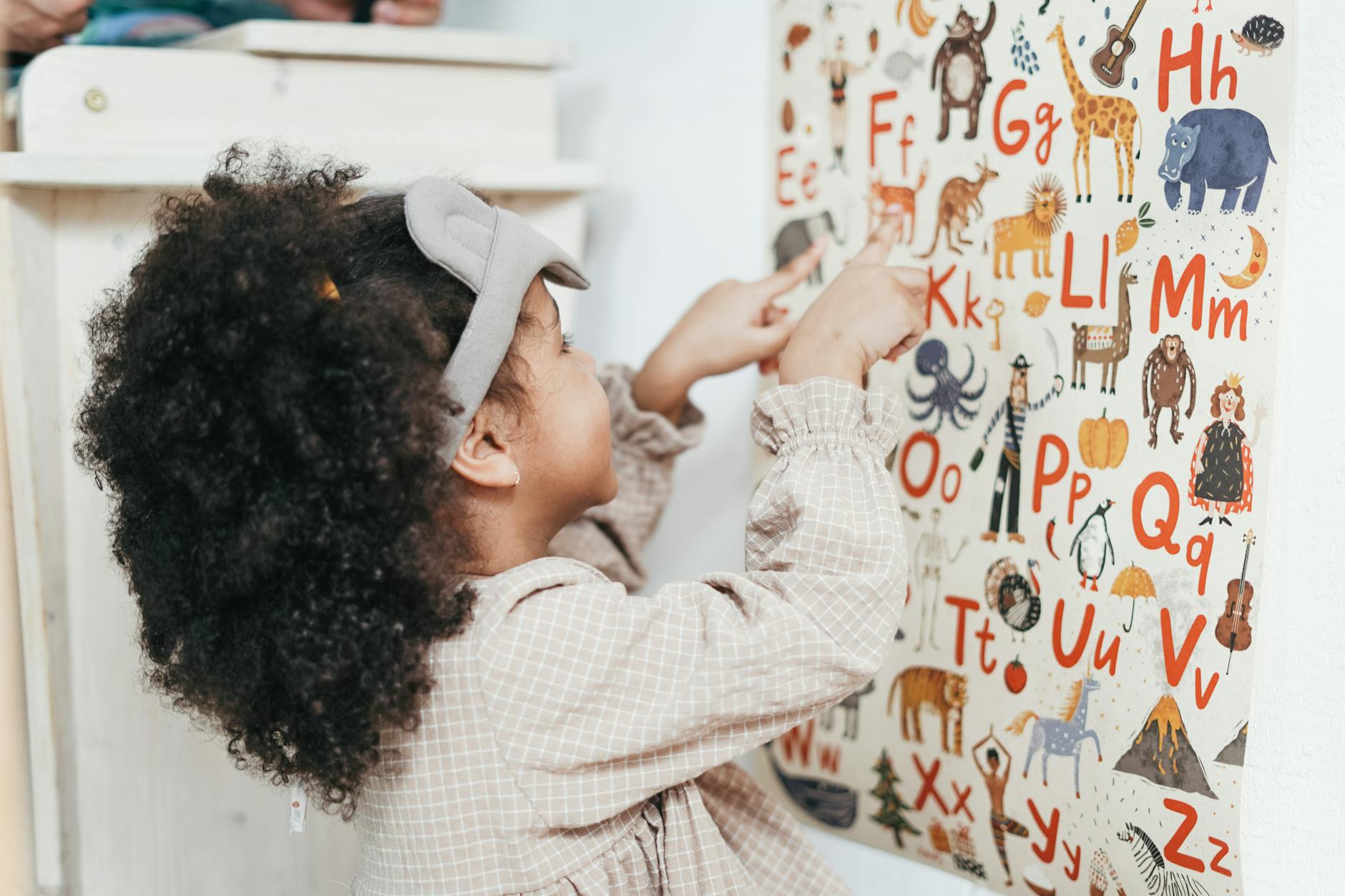
Between 12-24 months, toddlers become more interested in pointing to and exploring posters, asking “What’s this?” and enjoying the repetition. This is often when active imitation of signs increases noticeably. By 24-36 months, the motivation shifts again—many toddlers have oral language emerging and may use signs less frequently as speech develops, or may use a blend of signs and words (called “contact signing”). Some families find that updating poster displays to show signs that match their toddler’s current interests (animals, vehicles, colors) maintains engagement longer than static displays focused on early functional vocabulary.
The Bigger Picture—Posters as Part of Communication, Not a Complete Solution
Baby sign language posters have a genuine but limited role in early communication development. The most rigorous recent research, like the 2026 French study, reveals that posters and baby sign exposure don’t dramatically accelerate overall vocabulary in hearing children with typical speech input. What they can do is provide structure to early communication, reduce immediate frustration during the pre-speech phase, and strengthen the parent-child relationship by giving parents tools to more effectively understand their baby. For families with Deaf relatives, for early intervention programs, and for families seeking multiple communication channels, posters remain valuable.
For parents simply wanting the “best” language development tool for a hearing baby, posters are a helpful supplement but not a game-changer on their own. As babies grow into toddlers and oral language emerges, posters often naturally become less central to daily communication. Many children move toward spoken language as their primary communication mode. This is developmentally normal and expected. Posters have done their job if they’ve supported early understanding, reduced frustration, and given caregivers tools to respond meaningfully to their child’s earliest communication attempts.
Conclusion
Baby sign language posters are practical visual aids that help caregivers consistently model simple signs during daily routines with infants and toddlers. They can support early communication, particularly between six months and two years, by reducing frustration and improving parent-child understanding. However, they’re not a language acceleration tool—recent research shows weak evidence that they significantly boost overall vocabulary development in hearing children who have normal speech exposure.
Their real value lies in creating structure, consistency, and alternative communication channels during the pre-speech phase when babies are learning that gestures carry meaning. If you’re considering using sign language posters in your home or caregiving setting, start with a small set of high-frequency, functional signs, keep posters visible where you’ll actually reference them, and commit to consistent use for at least several weeks. Expect that the posters serve primarily as caregiver guides rather than materials for babies to study directly. If your child shows no interest in communication, isn’t attempting gestures or words by 18-24 months, or has specific developmental concerns, consult with a speech-language pathologist for personalized guidance beyond what posters can provide.
Frequently Asked Questions
Can babies learn sign language from watching videos or posters alone, without a parent modeling it?
No. Babies learn signs through live interaction and consistent modeling by people in their environment. Simply displaying a poster or playing a video doesn’t create the repetition and context that supports learning. The adult must actively reference the poster and model the signs during meaningful daily activities.
Will sign language delay my hearing child’s speech development?
No. Research consistently shows that sign language exposure does not interfere with speech development in hearing children. However, the 2026 French study also found no acceleration of vocabulary from baby sign exposure alone—sign language is an additional communication tool, not a shortcut to language acceleration.
At what age should I start using baby sign language posters?
Babies can begin learning simple signs as early as six months. However, you might notice more intentional imitation starting around 9-12 months. There’s no harm in starting early—consistent exposure allows babies to learn at their own pace.
Should I use posters if I’m not Deaf and don’t have Deaf family members?
That’s a personal family choice. Posters can support early communication and reduce frustration, but they’re not necessary for typical development. Some hearing families find them valuable; others find that spoken language alone meets their communication needs. The evidence suggests modest benefits in parent-child understanding rather than transformative language gains.
What should I do if my child isn’t interested in signing despite poster exposure?
This is very normal. Many hearing children naturally move toward spoken language as their primary mode. If interest in communication overall (spoken or signed) seems delayed past 18-24 months, consult your pediatrician or speech-language pathologist for developmental assessment.
Can posters help if my child is Deaf or hard of hearing?
Yes. Sign language is critical for Deaf children and does not interfere with spoken language or hearing aid/cochlear implant use if those are also available. Posters can support sign language exposure, but professional guidance from educators experienced in Deaf child development is equally or more important than posters alone.