
The best baby sign language apps right now are ASL Kids, Baby Sign and Learn, and My Smart Hands Baby Sign Language Dictionary for one-time purchase options, and My Signing Time for families who want a deep subscription-based library. Each takes a different approach to teaching signs, from video demonstrations by Deaf children to animated flashcards to full curriculum programs with songs and stories. The right pick depends on your budget, how many signs you want access to, and whether your child responds better to real human demonstrations or colorful animations.
Beyond just picking an app, though, the decision matters more than most parents realize. Research has shown that babies can begin using sign language to communicate around eight months of age, well before spoken words develop. A landmark study found that children who were signed to as infants had IQs that were 12 points higher on average than their non-signing peers when followed up at age eight. This article breaks down each major app in detail, compares pricing and features, covers what the research actually says about baby sign language benefits, and helps you figure out which app fits your family’s learning style.
Table of Contents
- Which Baby Sign Language Apps Are Actually Worth Downloading?
- Free vs. Paid Baby Sign Language Apps and What You Actually Get
- What Research Says About Baby Sign Language Benefits
- How to Choose the Right Baby Sign Language App for Your Family
- Common Mistakes Parents Make With Baby Sign Language Apps
- Using Song-Based Apps to Reinforce Signing
- Where Baby Sign Language Apps Are Heading
- Conclusion
- Frequently Asked Questions
Which Baby Sign Language Apps Are Actually Worth Downloading?
Not every app in this category delivers real value, so here is a closer look at the strongest options. ASL Kids stands out because its signs are taught by Deaf children ages one through twelve, which creates a relatable learning experience for young viewers. The free version includes 58 signs, with an optional pack of 200 or more additional signs available. It works offline, has no ads or external links, and its interface requires no reading, making it genuinely usable for toddlers. It is available on both iOS and Android. baby Sign and Learn takes a different route, offering 100 signs with animated video demonstrations across five sign language dialects: ASL, Australian Sign Language, British Sign Language, Hong Kong Sign Language, and New Zealand Sign Language.
That multilingual support is rare in this space. It is free to download with in-app purchases, or $2.99 on the Amazon Appstore, though it carries a 3.8 out of 5 star rating with 96 ratings on Amazon, which suggests it works well for some families but not all. If you are outside the United States or have family members who use a non-ASL sign language, this app fills a gap that most competitors ignore entirely. My Smart Hands Baby Sign Language Dictionary rounds out the top tier for one-time purchases. At $4.99 for the full version with 300 signs, or free for a Lite version with 120 signs, it offers over 45 minutes of instructional video from ASL instructor Laura Berg. It includes memory tips, a favorites list, categories organized around food, animals, and daily routines, and a customizable quiz with scorecard. The structured instructional approach works well for parents who want guidance rather than just a reference dictionary.
Free vs. Paid Baby Sign Language Apps and What You Actually Get
The price range across baby sign language apps is dramatic. SignShine is completely free on iOS and focuses on baby sign language videos of popular children’s songs like “Itsy Bitsy Spider,” “Wheels on the Bus,” and “Twinkle Twinkle Little Star.” It demonstrates hand shapes and facial expressions for each sign. Baby Sign Dictionary offers a free Lite version with video demonstrations showing words used in the context of natural speech. These free options work fine if you want to dip your toes in and learn a handful of signs around music time or mealtime. At the other end, My Signing Time runs $12.99 per month or $129.99 per year after a 14-day free trial.
For that investment, you get over 1,000 signs, more than 500 videos, flashcards, and a sign language dictionary. The Baby Signing Time series within the platform combines songs, animation, and real signing babies age two and under, and it teaches how to put signs together in sentences rather than just isolated vocabulary. If you plan to make signing a central part of your communication with your child over months or years, the depth justifies the cost. However, if your goal is simply to learn 20 or 30 practical signs for everyday needs like “milk,” “more,” “all done,” and “help,” spending $130 a year is overkill. A free app like ASL Kids or the Lite version of My Smart Hands will cover those basics without any financial commitment. The subscription model makes the most sense for families who want signing to be a sustained educational activity, not just a phase.
What Research Says About Baby Sign Language Benefits
The case for baby sign language is supported by real research, though the picture is more nuanced than many parenting blogs suggest. Studies demonstrate that children who learn to sign during infancy have fewer tantrums, better language skills as toddlers, and improved social-emotional skills. Parents who sign with their babies report less stress and frustration and tend to be more affectionate, while signing babies initiate interaction more often. Research from Indiana University published in February 2025 shows baby sign language increases development of early literacy skills, including letter recognition and phonemic awareness. That said, honesty matters here.
Some research analysis, including a study from UNC, has found that claims about sign language benefits lack sufficient quality evidence for definitive conclusions. Benefits may vary by child, with children who are linguistically slower to develop showing the largest gains. This does not mean signing is useless. It means the twelve-point IQ boost and other headline statistics should be understood as findings from specific studies, not universal guarantees. For many families, the most immediate and tangible benefit is simply fewer meltdowns because an eight-month-old can tell you they want more crackers instead of screaming about it.

How to Choose the Right Baby Sign Language App for Your Family
The decision comes down to three factors: your child’s age, your preferred learning format, and how deeply you want to commit. For babies under one year old, an app with simple, clear video demonstrations like My Smart Hands or Baby Sign Dictionary works well because you, the parent, are the one learning the signs and then modeling them for your child. The app is really a reference tool for you at this stage. For toddlers who can interact with a screen, ASL Kids has a major advantage because its child-friendly interface requires no reading and its quiz games keep older babies engaged. My Signing Time’s video content with songs and animation is designed to hold the attention of children age two and under, making it more of a watch-together experience.
The tradeoff is cost. ASL Kids gives you a solid free foundation with the option to expand, while My Signing Time requires an ongoing subscription but delivers a far deeper library. If your family has international connections or you want to expose your child to a non-ASL sign language, Baby Sign and Learn is the only app on this list that supports five different sign language systems. No other app in this category offers that breadth. Just be aware that its animated demonstrations, while colorful, are less naturalistic than apps that use video of real people signing.
Common Mistakes Parents Make With Baby Sign Language Apps
The most frequent mistake is expecting the app to do the teaching. No app replaces a parent consistently modeling signs during real interactions. If you learn the sign for “milk” on an app but never use it while actually giving your child milk, the sign will not stick. Apps are reference tools and reinforcement aids, not standalone teachers. Consistency in daily routines is what makes signing work. Another pitfall is starting too many signs at once. Most experts recommend beginning with three to five signs tied to your child’s strongest motivators, usually food, drink, and comfort items.
Parents who download an app with 300 signs and try to introduce a new one every day tend to burn out or overwhelm their child. Start small, use the signs every single time the relevant situation comes up, and add new signs only when your child shows recognition of the current ones. A realistic timeline is that most babies need several weeks of consistent exposure before they produce their first sign. Finally, be cautious about screen time for very young babies. The American Academy of Pediatrics recommends avoiding screen media for children under 18 months, with the exception of video chatting. For babies in this age range, use the app yourself to learn signs, then teach them in person. The app is for your reference, not your infant’s entertainment.
Using Song-Based Apps to Reinforce Signing
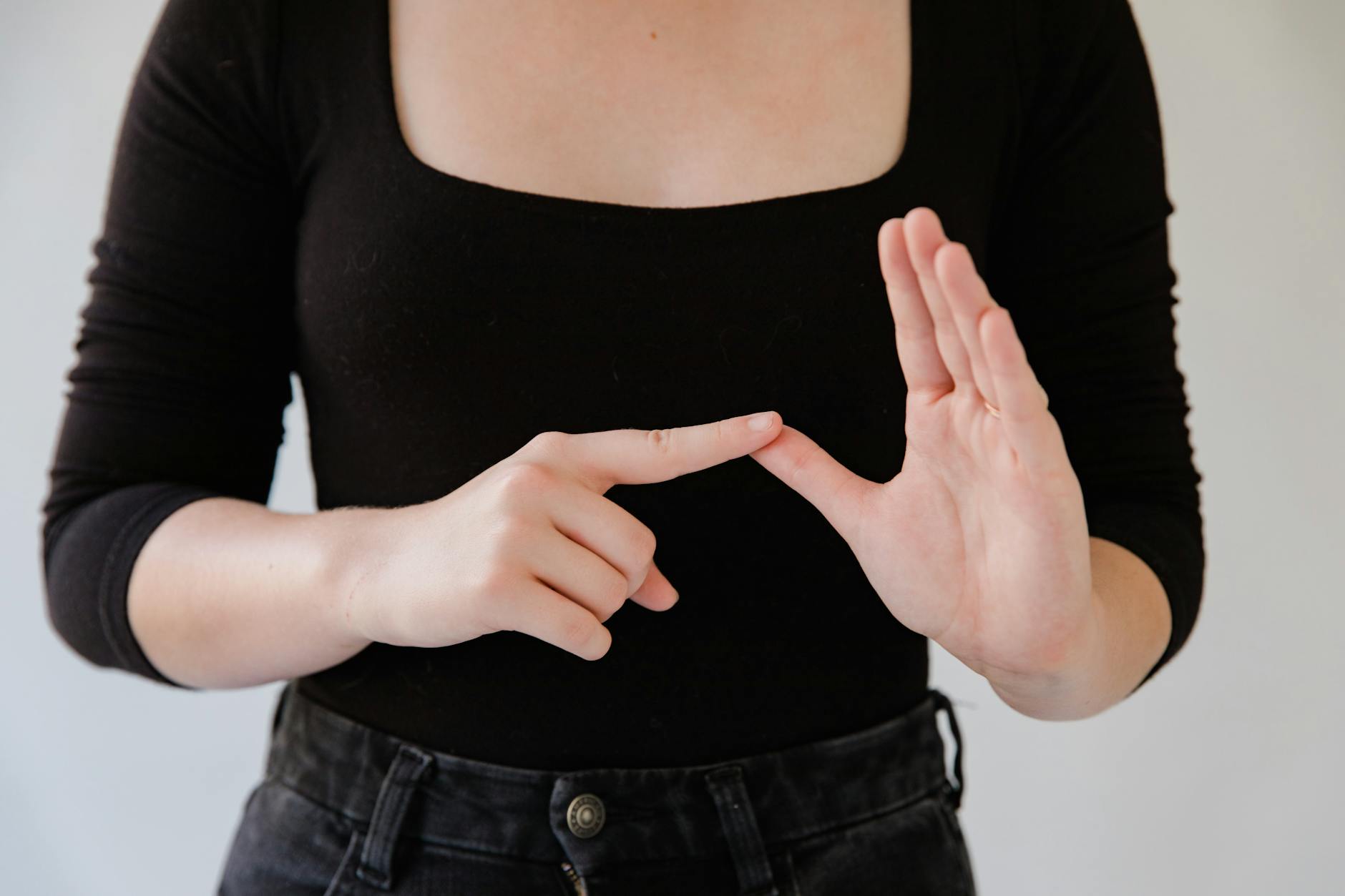
SignShine takes an approach worth highlighting separately. By pairing signs with familiar children’s songs like “Twinkle Twinkle Little Star” and “Wheels on the Bus,” it leverages the fact that music and repetition are among the strongest memory tools for young children.
If your toddler already loves a particular song, learning the signs that go with it creates an immediate connection between the gesture and a meaningful, enjoyable context. This song-based method works especially well for group settings like playdates or daycare, where multiple children can sign along together. The limitation is that SignShine’s library is narrower than dictionary-style apps, so it works best as a supplement rather than a primary learning tool.
Where Baby Sign Language Apps Are Heading
The baby sign language app market has matured considerably over the past few years, but gaps remain. Most apps still focus exclusively on ASL, leaving families who use other sign languages with limited options. Baby Sign and Learn’s support for five sign language systems is an exception, not the norm.
As awareness of baby signing grows internationally, expect more multilingual and cross-cultural options to emerge. The shift toward subscription models, as seen with My Signing Time, reflects a broader trend in educational apps. While this funds ongoing content development, it also means families need to evaluate whether they will use the app long enough to justify recurring costs. For most families, a combination approach works best: a free or inexpensive dictionary app for reference, paired with a focused program or video series for structured learning during the months when signing is most actively used.
Conclusion
The best baby sign language app for your family depends on what you need from it. For a free, child-friendly experience with real human demonstrations, ASL Kids is hard to beat. For a comprehensive paid dictionary, My Smart Hands at $4.99 gives you 300 signs with quality instructional video. For families ready to invest in a full curriculum, My Signing Time’s subscription provides the deepest library at over 1,000 signs.
And for international families, Baby Sign and Learn is the only app covering five different sign language systems. Whatever app you choose, remember that the app is a tool, not a teacher. The research supports real benefits from baby signing, including earlier communication, fewer tantrums, and stronger early literacy skills, but those benefits come from consistent, in-person modeling by parents and caregivers. Pick an app that fits your budget, learn a handful of signs that matter most in your daily routine, and use them every single day. Your child will let you know when they are ready to sign back.
Frequently Asked Questions
At what age should I start using a baby sign language app?
Babies can begin using sign language to communicate around eight months of age, but many parents start learning signs themselves around six months so they are prepared. Use the app as your own reference tool first, then model signs during daily interactions like feeding and diaper changes.
Will baby sign language delay my child’s speech?
No. Research consistently shows that signing does not delay speech development. Studies from Bright Horizons and others demonstrate that children who learn to sign during infancy actually develop better language skills as toddlers. Signing serves as a bridge to spoken language, not a replacement for it.
Do I need to know ASL to teach my baby sign language?
You do not need to be fluent in ASL. Baby sign language typically uses simplified ASL signs for common words. Apps like My Smart Hands and ASL Kids teach individual signs with clear demonstrations, so you can learn alongside your child without any prior sign language experience.
Are free baby sign language apps good enough?
For most families, yes. The free version of ASL Kids includes 58 signs, and the My Smart Hands Lite version offers 120 signs. Most babies actively use only 20 to 50 signs, so free versions often cover the essentials. Paid options add depth, quizzes, and structured learning, but they are not strictly necessary to get started.
How long does it take for a baby to start signing back?
Most babies need several weeks of consistent exposure before producing their first sign, and some take two to three months. The key factor is repetition in context. If you sign “milk” every time you offer milk, your baby will eventually connect the gesture to the meaning.