
The best age to start baby sign language is between 6 and 9 months old. At this stage, most infants have developed enough motor control to begin imitating simple hand movements, and their cognitive abilities allow them to start connecting gestures with meanings. A baby who starts learning signs at 7 months, for instance, might produce their first recognizable sign””often “milk” or “more”””somewhere between 8 and 12 months, though comprehension typically develops before production. That said, there is no wrong time to introduce signing.
Parents who begin earlier, around 4 to 5 months, are simply laying groundwork that will pay off once motor skills catch up. Those who start later, even at 12 or 18 months, often see faster initial results because older babies can imitate more quickly. The “ideal” window matters less than consistency and realistic expectations. This article covers the developmental milestones that signal readiness for signing, how different starting ages affect the learning curve, which signs to introduce first, and common mistakes that can slow progress. Whether your baby is 4 months or 14 months old, you will find practical guidance for making sign language part of your daily routine.
Table of Contents
- When Is a Baby Developmentally Ready for Sign Language?
- Starting Baby Sign Language Before Six Months: What to Expect
- How Starting Age Affects the Speed of Learning
- Which Signs to Teach First and Why
- Common Mistakes That Delay Progress
- Signing With Older Toddlers: A Different Approach
- Long-Term Benefits Beyond Early Communication
- Conclusion
When Is a Baby Developmentally Ready for Sign Language?
Babies become ready for sign language when several developmental milestones converge, typically between 6 and 9 months. The first indicator is sustained eye contact””when a baby can focus on your face and hands for several seconds at a time, they can begin absorbing the visual information that signing requires. The second is improved hand control; around 6 months, most babies start deliberately reaching for objects and bringing their hands together at midline, movements that form the foundation for sign production. A third readiness signal is joint attention, the ability to follow your gaze or pointing finger to look at something together. When a baby can look at a toy, then look at you, then look back at the toy, they are demonstrating the cognitive link between objects and communication.
A 7-month-old who watches intently as you sign “dog” while pointing at the family pet is engaging in exactly this kind of triangular attention. However, readiness does not guarantee immediate results. Motor development varies considerably among babies; some produce clear signs at 8 months while others with equal comprehension cannot form the shapes until 11 or 12 months. If your baby seems to understand signs but is not producing them, the delay is almost always motor rather than cognitive. Patience during this gap is essential.
Starting Baby Sign Language Before Six Months: What to Expect
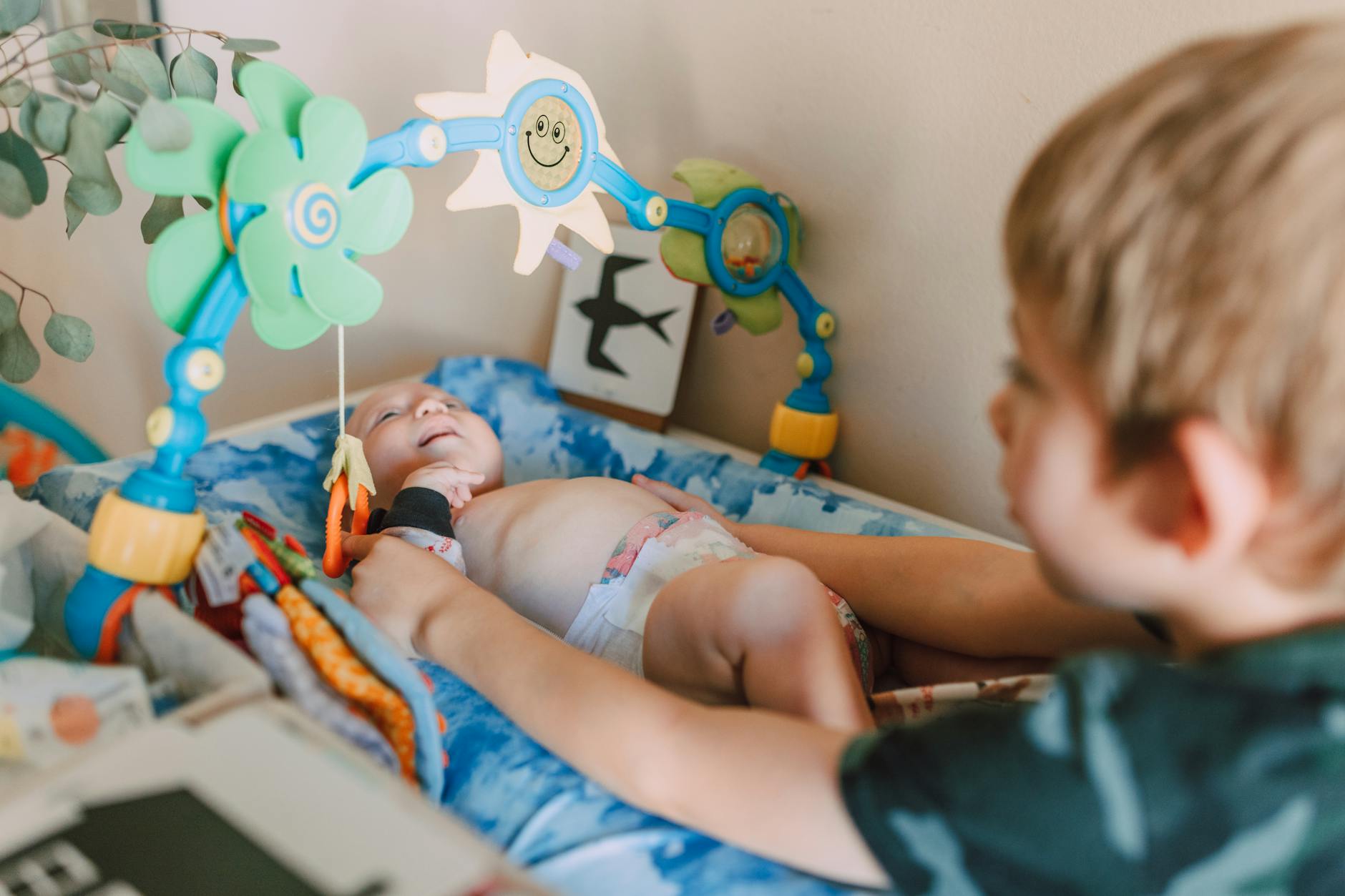
Introducing signs before 6 months is not harmful, but parents should adjust their expectations accordingly. At 4 or 5 months, babies are primarily in an absorption phase””they are watching, listening, and forming neural connections, but their motor skills and cognitive development are not yet mature enough for them to sign back. Think of this period as exposure rather than instruction. The advantage of starting early is that signs become part of the communication landscape from the beginning. A parent who consistently signs “milk” before every feeding from 4 months onward is creating a strong association that the baby will eventually act on.
The disadvantage is the long wait for visible results, which can feel discouraging. Some parents who start at 4 months give up by 6 months, right before the payoff begins, simply because the silence feels like failure. If you choose to start before 6 months, limit yourself to three to five high-frequency signs tied to daily routines: milk, eat, sleep, diaper change, and all done are common choices. This keeps the cognitive load manageable for you and builds strong associations for the baby. Attempting to introduce a large vocabulary at this stage wastes effort that would be better spent on repetition and consistency.
How Starting Age Affects the Speed of Learning
Research consistently shows that babies who start learning signs later often produce their first signs sooner after introduction than babies who start earlier. A 6-month-old might take two to four months to produce a first sign, while a 12-month-old might sign back within two to six weeks. This creates an apparent paradox where earlier starters and later starters often produce first signs around the same age””roughly 9 to 12 months. The explanation lies in motor and cognitive development. An older baby has better hand control, stronger memory, and more advanced imitation abilities.
They can skip the lengthy absorption phase and move directly into production. A 14-month-old learning “more” might sign it back after seeing it just a dozen times, while a 7-month-old needs hundreds of exposures. This does not mean later is better. Earlier starters often develop larger sign vocabularies by 18 months because they have more months of accumulated learning. They also tend to transition more smoothly to spoken language, possibly because the practice with symbolic communication strengthens language-related neural pathways. The tradeoff is real: start early for depth and long-term benefits, or start later for quicker initial gratification.

Which Signs to Teach First and Why
The most effective first signs are those tied to high-motivation situations and daily routines. “Milk,” “more,” “all done,” and “eat” consistently rank as successful starter signs because they connect to immediate desires and appear multiple times every day. A hungry baby has strong incentive to communicate, and a sign that produces results””more food appears””reinforces the entire concept that gestures have power. Contrast this with teaching a sign like “tree” or “bird” early on. While these are perfectly good vocabulary words, they lack the motivational urgency and frequency of repetition that food-related signs offer.
A baby might see a tree once during a walk, but they encounter mealtime six to eight times daily. The sheer number of learning opportunities makes routine-based signs far more practical for building initial success. One effective approach is to choose three signs from daily care routines (milk, diaper, sleep), two from mealtimes (more, all done), and one or two from play (ball, book, help). This covers multiple contexts without overwhelming either parent or baby. Once the baby produces these signs reliably, typically over four to eight weeks of active signing, you can expand the vocabulary more rapidly because the foundational concept””that hand movements communicate meaning””is now established.
Common Mistakes That Delay Progress
The most damaging mistake is inconsistency””signing “milk” sometimes but not others, or having one parent sign while the other does not. Babies learn through repetition and pattern recognition. When a sign appears unpredictably, the association between gesture and meaning forms slowly or not at all. A family where both parents commit to signing key words at every relevant opportunity will see results far faster than one where signing happens sporadically. Another common error is overwhelming the baby with too many signs at once. Parents who enthusiastically introduce twenty signs in the first week often abandon the effort when the baby seems confused or unresponsive.
The baby is not confused by the concept of signing””they are simply unable to absorb that much information simultaneously. Starting with three to five signs for at least two to three weeks before adding more respects the baby’s processing limits. A subtler mistake is expecting signs to look perfect. Baby signs are approximations. A baby signing “milk” might open and close their fist rather than forming the proper handshape, or sign “more” by clapping rather than bringing fingertips together. Parents who wait for textbook-perfect signs before responding miss early communication attempts, which discourages the baby from continuing. Accept approximations, respond to them, and the precision will improve over time.

Signing With Older Toddlers: A Different Approach
Toddlers between 18 and 24 months who are already speaking a few words can still benefit from sign language, but the approach shifts from foundational communication to vocabulary expansion and frustration reduction. At this age, signs often serve as bridges””helping a toddler communicate words they understand but cannot yet pronounce clearly. A toddler who says “wawa” for water and signs it simultaneously is more likely to be understood, reducing tantrums born of miscommunication.
For older toddlers, you can introduce signs more rapidly because their cognitive abilities allow faster learning. A toddler might learn five to ten new signs in a week where an infant would need a month for the same number. However, the window for signing often closes naturally as speech becomes more reliable. Most toddlers gradually drop signs by age 2 or 3 as verbal communication takes over, keeping only occasional gestures for emphasis or when speech fails them.
Long-Term Benefits Beyond Early Communication
The benefits of baby sign language extend past the signing phase itself. Multiple studies have found that children who learned to sign as babies often demonstrate slightly larger spoken vocabularies and more complex sentence structures in preschool years, though effects tend to even out by elementary school. More consistently documented are the bonding benefits””parents who sign report feeling more attuned to their baby’s needs and experiencing less frustration during the pre-verbal months.
Perhaps the most underappreciated long-term benefit is that early signing can spark a lasting interest in American Sign Language or other sign languages as a second language. Children who signed as babies sometimes show enthusiasm for learning formal sign language later, having already experienced it as a natural form of communication rather than an academic subject. This door remains open whether or not they pursue it.
Conclusion
The optimal window for starting baby sign language falls between 6 and 9 months, when most babies have the motor control, attention span, and cognitive development to begin forming sign-meaning connections. Starting earlier means a longer wait for results but potentially greater long-term vocabulary depth, while starting later yields faster initial progress but less total time in the signing phase before speech takes over.
Success depends more on consistency and realistic expectations than on hitting a precise starting age. Choose a handful of high-motivation signs, use them at every natural opportunity, accept imperfect approximations, and involve all caregivers in the effort. Whether your baby signs their first word at 8 months or 14 months, you are building communication skills and reducing frustration during a period when they have far more to say than their mouths can yet express.