
Baby sign language allows infants to communicate their needs, wants, and observations months before they can speak their first words. Most babies can start learning and using simple signs between 6 and 9 months of age, even though verbal speech typically does not emerge until 12 to 18 months or later. For example, an 8-month-old who has learned the sign for “milk” can clearly indicate hunger during a feeding time, eliminating the guesswork that often leads to frustrated crying from both baby and parent. This communication gap between understanding and speaking is where sign language becomes particularly valuable.
Babies develop the motor control needed to make hand gestures well before their vocal cords and oral muscles mature enough for speech production. By introducing simple signs during this pre-verbal period, parents create a bridge that allows their child to actively participate in communication rather than passively waiting until their mouths catch up with their minds. This article explores when and how to introduce signing to pre-verbal babies, what signs work best at different developmental stages, realistic expectations for when babies sign back, and how this early communication tool relates to later speech development. We also address common concerns parents have about whether signing might delay talking.
Table of Contents
- When Can Babies Start Learning Sign Language Before They Talk?
- The Science Behind Pre-Verbal Sign Language Development
- Signs That Work Best for Pre-Talking Babies
- Realistic Expectations for When Babies Sign Back
- Does Signing Before Talking Delay Speech Development?
- Signs Pre-Verbal Babies Learn Fastest
- The Transition from Signing to Talking
- Conclusion
When Can Babies Start Learning Sign Language Before They Talk?
Babies can begin learning sign language as early as 4 to 6 months old, though most will not produce signs back until closer to 8 to 12 months. This timeline parallels spoken language development: babies understand words long before they can say them. A 5-month-old watching a parent consistently sign “milk” before nursing begins building recognition of that gesture, even if several months pass before they attempt to replicate it themselves. The key factor is receptive language development, not motor skill readiness. Around 6 months, babies enter a period of rapid cognitive growth where they begin connecting symbols (whether spoken words or hand gestures) with their meanings.
Research from the University of California found that babies exposed to sign language showed increased understanding of symbolic communication, which later supported verbal vocabulary acquisition. However, parents should note that starting earlier does not necessarily mean results come faster. A baby introduced to signs at 4 months may not sign back any sooner than one who starts at 7 months, since both are waiting for the same neurological and motor development milestones. Some babies are naturally more inclined toward gestural communication than others. Observant parents may notice their child already pointing, waving, or reaching with intent around 8 to 9 months, indicating readiness for more deliberate signing. Babies who seem less interested in gestures often respond better to signing introduced during high-motivation moments, such as mealtime hunger or the excitement of seeing a favorite toy.
The Science Behind Pre-Verbal Sign Language Development
The neurological basis for baby sign language lies in the brain’s language centers developing faster than the motor systems required for speech. Broca’s area and Wernicke’s area, both critical for language processing, begin maturing in the first months of life. Meanwhile, the approximately 100 muscles involved in speech production require years to achieve the fine coordination needed for clear articulation. Hand muscles develop gross motor control earlier, making signs physically possible before words. Studies from the National Institutes of Health have documented that babies process signed and spoken language using the same brain regions. This means signing is not a separate skill competing with speech but rather an alternative channel using the same linguistic pathways.
However, if a family signs without also speaking, babies may have delayed verbal development simply due to reduced spoken language exposure. The research supports signing as an addition to, not replacement for, verbal communication. Individual variation in sign language uptake is substantial. Some babies sign back within a few weeks of consistent exposure, while others take three months or more. Temperament plays a role: highly social babies often sign earlier, while more cautious or observational children may understand signs well before demonstrating them. Parents should not assume signing is not working just because their baby has not signed back yet. Recognition typically precedes production by several weeks.
Signs That Work Best for Pre-Talking Babies
The most effective first signs connect to immediate physical experiences that motivate communication. “Milk,” “more,” “eat,” and “all done” consistently rank as the easiest and most useful starting signs because they relate to basic needs babies feel intensely throughout the day. A hungry baby has strong motivation to communicate that hunger, making meal-related signs natural entry points. Concrete, visible objects make better early signs than abstract concepts. Signs for “ball,” “dog,” “book,” or “bird” work well because babies can see the object while learning the sign. For example, signing “bird” every time a bird appears at the window creates a consistent association. Abstract signs like “love” or “sorry” are better suited for older toddlers who have grasped the basics of symbolic communication. Signs should be distinct from one another in hand shape and movement to reduce confusion. “More” (fingertips tapping together) and “milk” (opening and closing fist like milking) look completely different, making them easy for babies to distinguish and attempt. In contrast, introducing two signs with similar hand positions at the same time, such as “ball” and “apple” in some sign systems, can lead to mixing them up. Start with three to five visually distinct signs before expanding the vocabulary.
## How to Introduce Signs During the Pre-Verbal Stage Consistent repetition during meaningful moments creates the strongest associations. Each time you offer milk, sign “milk” while saying the word. Each time your baby finishes eating, sign and say “all done.” This pairing of sign, word, and experience should happen dozens or even hundreds of times before expecting a response. A baby seeing “milk” signed three times daily for two months has built a foundation of roughly 180 exposures. The choice between structured teaching sessions and natural integration affects both parent consistency and baby engagement. Structured sessions, such as a daily five-minute signing practice with books or flashcards, help parents remember to sign but can feel forced if the baby is not interested. Natural integration, signing only during real-life moments when signs are relevant, feels more organic but requires constant mindfulness from caregivers. Most successful families combine both approaches: maintaining natural signing throughout the day while occasionally reading a signing board book or watching a short video together. Waiting for a response requires patience that can feel unnatural. Parents often feel they are signing into a void for weeks, especially with first children when there is no sibling example to follow. Keeping a simple log of when signing began and any possible attempts from the baby (even approximate movements that might be early sign attempts) helps parents recognize gradual progress rather than waiting for a sudden breakthrough that may not come dramatically.

Realistic Expectations for When Babies Sign Back
Most babies produce their first intentional sign between 8 and 14 months of age, with significant variation based on individual development and consistency of exposure. This timeline assumes regular daily signing starting around 6 months. Babies introduced to signing later, around 10 or 11 months, often sign back more quickly because their motor skills and cognitive development are further along. Early sign attempts rarely look like perfect adult signs. A baby’s first “more” might look like clapping or general hand waving. The sign for “milk,” which involves opening and closing a fist, might appear as simply squeezing a hand repeatedly.
Parents who expect textbook-perfect signs may miss their baby’s actual communication attempts. The key is looking for consistent gestures in appropriate contexts: if your baby makes the same hand movement every time they want more food, that is signing, even if it does not match the formal sign. False expectations about signing timelines cause many families to abandon the practice prematurely. If a parent expects results within two weeks and sees nothing, frustration may lead to inconsistency, which further delays results. Understanding that six to eight weeks of consistent signing is typical before seeing responses helps maintain the commitment needed for success. Some babies never sign prolifically but still benefit from understanding signs even if they rarely produce them.
Does Signing Before Talking Delay Speech Development?
Research consistently shows that baby sign language does not delay speech and often supports it. A longitudinal study from the University of California tracked signing and non-signing babies through age three and found that signers developed slightly larger spoken vocabularies on average. The key factor is that signing families typically also speak while signing, increasing total language exposure rather than decreasing it. The concern about speech delay usually stems from a misunderstanding about how language develops. Babies do not have a limited capacity that gets “used up” by signing.
Instead, each successful communication experience, whether signed or spoken, reinforces the value of communication itself. A baby who signs “more” and receives more food learns that expressing needs works, which motivates further communication in any available form. However, signing could theoretically delay speech if parents stopped speaking and only signed, reducing verbal input. This scenario is rare and would require deliberate avoidance of speech rather than the typical approach of signing while talking. For families concerned about speech development, the solution is not to avoid signing but to ensure abundant spoken language accompanies every signed interaction.
Signs Pre-Verbal Babies Learn Fastest
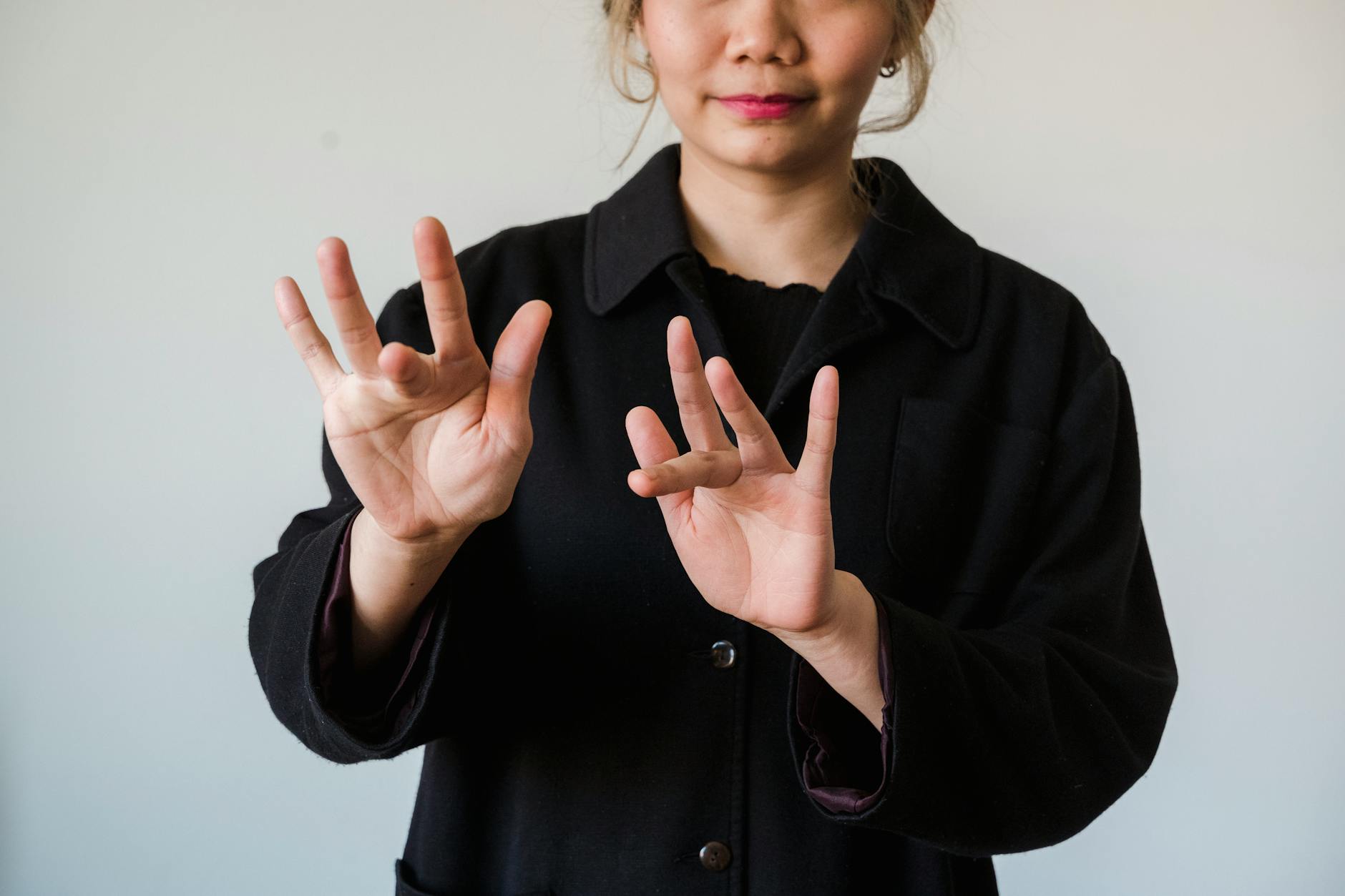
High-frequency, high-motivation signs consistently emerge first in babies’ signing vocabularies. “More” often appears early because babies experience wanting more of something many times daily, whether more food, more play, or more of a favorite activity. The sign is simple, the motivation is strong, and parents can easily create multiple daily opportunities to reinforce it. Signs that babies can use to control their environment tend to develop faster than purely labeling signs. “All done” lets babies end an unwanted activity. “Help” summons assistance.
“Up” results in being picked up. These functional signs have immediate, powerful consequences that reinforce their use. In contrast, signs that simply name things, like “tree” or “flower,” have less obvious payoffs and typically develop after functional communication is established. For example, one documented case followed a 10-month-old who learned “dog” as her first sign because the family dog was her favorite thing in the world. Her motivation to communicate about the dog outweighed the typical preference for need-based signs. This illustrates that while general patterns exist, individual interests can override them. Observing what captivates your specific baby helps identify which signs they might be most motivated to learn.
The Transition from Signing to Talking
As babies develop verbal abilities, they naturally begin replacing signs with words while often combining both for a period. A 14-month-old might sign “milk” while attempting to say “muh,” gradually dropping the sign as the spoken word becomes more reliable. This transition typically occurs between 12 and 24 months, varying with each child’s verbal development pace. Some children continue using signs as backup communication when tired, frustrated, or encountering new situations where speaking feels harder. This is not a sign of dependence on signing but rather strategic communication, using whatever tool works best in the moment.
Most signing children have fully transitioned to spoken language by age two, though some enjoy continuing to learn new signs as a supplementary skill. Parents sometimes worry about “weaning” their child off signs, but this process happens naturally in nearly all cases. As speaking becomes easier and more effective, the extra effort of signing loses its appeal. Attempting to force an earlier transition by refusing to respond to signs can backfire, causing frustration and potentially reducing overall communication. Letting children lead the transition respects their developmental readiness.
Conclusion
Baby sign language offers a practical solution to the communication gap that exists before babies can speak. Starting signs around 6 months and expecting responses between 8 and 14 months gives families a realistic framework for this tool.
The signs that work best address immediate needs like hunger, more, and all done, while requiring consistent daily use over weeks before babies respond. Parents considering sign language for their pre-verbal baby should focus on natural integration during daily activities, patience during the weeks before babies sign back, and maintaining spoken language alongside all signing. The research supporting sign language’s neutral or positive effect on speech development should reassure families that this communication bridge poses no risk to verbal development and often enhances the overall communication environment during these formative early months.