
When a deaf person uses home signs and an interpreter doesn’t recognize them, communication breaks down entirely. There is no shared language between the interpreter and the deaf person—the gestures that work perfectly at home become meaningless to someone outside the family. Instead of smooth interpretation, the interpreter must spend significant time trying to decipher individual gesture meanings, essentially attempting to develop a new language on the spot while the deaf person waits for answers. This situation is far more common than most people realize. Approximately 75% of hearing parents of deaf children do not sign, instead creating their own unique home sign systems made up of gestures, speech, and lipreading cues.
These family-specific gestures allow parents and children to communicate at home but create a barrier when the deaf child encounters interpreters, teachers, or medical professionals who haven’t learned the family’s particular signs. For example, a hearing family might use a specific gesture for “medicine” that doesn’t match any standard American Sign Language (ASL) sign, leaving a professional interpreter confused about what the child is trying to communicate. The challenge extends beyond simple misunderstandings. When home signs are the only language a deaf person knows, the cognitive and linguistic development that comes from learning a complete sign language system doesn’t happen. This can affect how well the person thinks through complex ideas, learns new concepts, and participates in settings where standard sign language is expected.
Table of Contents
- Why Standard ASL Interpreters Can’t Help When Home Signs Are Used
- The Language Development Gap: What Home Signs Alone Cannot Provide
- How Prevalent Are Home Signs in Families With Deaf Children?
- Certified Deaf Interpreters: The Specialized Solution for Home Signs
- The Hidden Costs of Relying on Home Signs Without Standard Language
- When Home Signs Work and When They Don’t
- Building Better Access: The Role of Early Sign Language Exposure
- Conclusion
Why Standard ASL Interpreters Can’t Help When Home Signs Are Used
When a standard interpreter encounters a deaf person using home signs, they face an impossible situation. According to Nebraska Deaf and Hard of Hearing Services, interpreters find themselves unable to provide their primary service—interpretation—because there is no language in common. Instead, they spend their time continuously deciphering what each gesture means, essentially trying to solve a puzzle while the deaf person waits. This is not interpretation; it’s improvised communication building, and it’s inefficient for everyone involved. The problem stems from how home signs develop. They emerge organically within families based on the communication patterns, objects, and situations that matter most to that specific household. One family’s sign for “bedtime” might be completely different from another family’s sign.
A deaf child whose only exposure to language is these homemade gestures hasn’t learned the standardized visual grammar, facial expressions, body positioning, and handshape patterns that make asl a complete language. When they meet an interpreter trained in ASL, they’re essentially two people trying to speak different dialects so different that neither understands the other. This gap becomes particularly painful in medical, educational, and legal settings where precision matters. A deaf person using home signs needs medical treatment and tries to explain their symptoms. The interpreter doesn’t understand the gestures. Medical staff can’t access the information they need to help. The appointment becomes longer, more stressful, and potentially less effective because critical details get lost in translation.
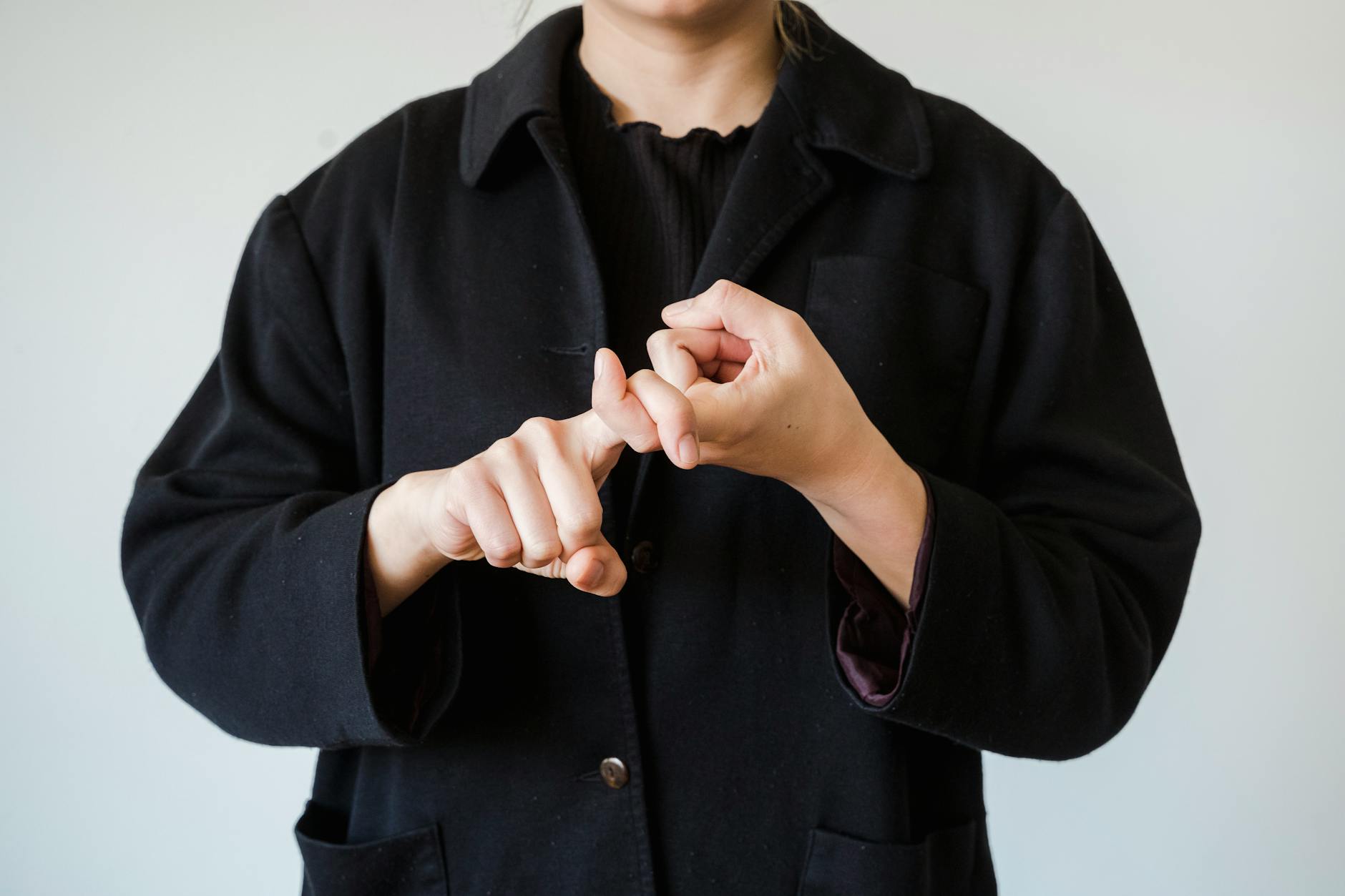
The Language Development Gap: What Home Signs Alone Cannot Provide
Research from the National Institutes of Health reveals an important limitation of home signs: adult home signers without exposure to conventional sign language do not develop the same level of theory of mind or linguistic complexity as those who learn complete sign language systems. Theory of mind is the ability to understand that other people have beliefs, desires, and perspectives different from your own. It’s fundamental to learning, relationships, and problem-solving. When a deaf person grows up with only home signs, their cognitive development follows a different path, and catching up later becomes increasingly difficult. This doesn’t mean home signs are useless—they absolutely serve a vital purpose for family communication and early bonding. However, relying exclusively on home signs creates long-term disadvantages.
Consider a deaf child whose hearing parents have created a rich home sign system. The child can communicate with family members and understands what’s happening at home. But when that child enters preschool or kindergarten, they encounter other deaf children who know ASL, teachers who use ASL interpreters, and curricula designed around standard sign language. The home signer is now at a disadvantage not just in school performance but in social connection and access to the broader deaf community. The warning here is clear: home signs should not replace—only supplement—early exposure to a complete sign language system. Families who rely exclusively on home signs are inadvertently limiting their deaf child’s future opportunities, access to higher education, and connection to deaf culture and community.
How Prevalent Are Home Signs in Families With Deaf Children?
The statistics underscore just how widespread this issue is. According to data from the Gallaudet Research Institute (2013-2014), only 22.9% of families with deaf children regularly sign at home. This means that more than 77% of deaf children in hearing families are growing up relying primarily or exclusively on home signs rather than formal sign language. When you combine this with the fact that 75% of hearing parents don’t sign, the picture becomes clear: most deaf children in hearing families face this exact situation where an interpreter won’t understand their home signs. Consider a specific scenario: A hearing mother and father of a three-year-old deaf child have developed a set of home signs to communicate with their daughter.
Mealtimes, playtime, and bedtime routines are all handled through these family-specific gestures. The parents feel they’re doing well communicating with their child. But when the family meets with an early intervention specialist or speech-language pathologist who brings an ASL interpreter, that interpreter cannot understand the child’s signs. The professional can’t assess the child’s language level. The parents don’t realize that their daughter is not developing language at the rate expected for her age, partly because home signs alone don’t provide the linguistic complexity needed for typical development. This scenario repeats thousands of times across the country, often without families recognizing that they’re creating a communication barrier that will follow their deaf child into school, medical appointments, and every professional setting outside the home.
Certified Deaf Interpreters: The Specialized Solution for Home Signs
When a standard interpreter cannot communicate effectively because of home signs or idiolects, the solution is a Certified Deaf Interpreter (CDI). According to the National Deaf Center, CDIs have specialized training in understanding and working with home signs, gestures, mime, and matching the language development level of the deaf person they’re working with. A CDI brings something a hearing interpreter cannot: personal experience navigating between different signing styles and the ability to bridge communication gaps that feel impossible to resolve. Here’s how the difference works in practice. A hearing interpreter and a CDI arrive at a medical appointment. The hearing interpreter cannot understand the patient’s home signs—they’re stuck.
The CDI steps in, understands the gestures through their own familiarity with non-standard signing, and either interprets into standard ASL (if the medical provider is deaf) or works with the hearing interpreter to establish what the patient is communicating. This two-interpreter model, with the CDI working alongside a hearing interpreter, becomes the gold standard when home signs are involved. The tradeoff is that adding a CDI increases the cost of interpretation services. For families struggling financially, or for systems with limited accessibility budgets, this additional expense can be prohibitive. However, the cost of not providing adequate communication access—misdiagnosis, educational delays, legal problems—far exceeds the price of bringing in a CDI. Healthcare systems, schools, and legal settings are increasingly recognizing that CDI services are not a luxury but a necessity for equitable access.
The Hidden Costs of Relying on Home Signs Without Standard Language
Beyond language development, there’s another critical issue: home signs don’t equip a deaf person for independent communication outside the family unit. A deaf adult who grew up using only home signs faces significant challenges when they try to access services, hold a job, or participate in society without family members present to interpret. They cannot automatically communicate with other deaf people who use ASL. They cannot read written English as effectively because written English is the written form of English, not of home signs. Their ability to access information, education, and opportunity becomes severely limited. Research from ScienceDirect on deaf homesigners shows that individuals without exposure to conventional sign language struggle with complex linguistic concepts that signed languages naturally convey.
They may understand concrete, here-and-now communication but find abstract thinking, hypothetical scenarios, and complex narratives difficult. This affects education, employment, and quality of life. A deaf teenager who only knows home signs may not be able to understand a high school curriculum, even if it’s taught by an ASL interpreter, because the concepts and language structures are too different from what they’ve learned at home. The warning for families is this: treating home signs as sufficient language development is setting your deaf child up for struggle. Early exposure to ASL—whether through Deaf schools, sign language programs, interactions with deaf adults, or other pathways—should begin as soon as deafness is identified, ideally before age three. Home signs can exist alongside ASL, but they should never be the only language foundation.

When Home Signs Work and When They Don’t
Home signs excel in intimate family settings where the people involved have spent years building shared understanding. A deaf grandmother and her hearing grandchild who see each other regularly can develop a rich communication system through home signs alone. They understand each other’s quirks, preferences, and the context of their lives. The grandmother doesn’t need to explain what “that noise outside” means because her grandchild knows her daily routines and environment. In these close relationships, home signs are effective, warm, and sufficient for the relationship itself.
But this effectiveness stops at the family door. The moment that deaf grandmother needs to speak to a doctor, call a mechanic, or interact with someone outside her inner circle, home signs become a barrier. A medical interpreter won’t know what her gesture for “sharp pain” means. She’ll need to start from scratch, building understanding with a stranger in a high-stakes situation where miscommunication could affect her health. This is the critical limitation: home signs enable family bonding but disable independent functioning in the wider world.
Building Better Access: The Role of Early Sign Language Exposure
The path forward involves recognizing home signs as a starting point, not an endpoint. Families who use home signs with their deaf children can absolutely continue doing so—these gestures carry emotional warmth and family identity. But they should simultaneously ensure their deaf child has access to a complete sign language system, ideally through interaction with deaf adults and peers who use ASL fluently. Early intervention programs, Deaf schools, and sign language classes create pathways for deaf children to develop the linguistic foundation they’ll need for life outside the home.
The future of better communication access lies in shifting cultural expectations. Hearing parents of deaf children should view sign language not as optional or supplementary but as a primary language, as necessary as spoken language would be for a hearing child. When more deaf children grow up bilingual in both home signs and ASL, or home signs and another complete sign language system, they’ll have the cognitive and linguistic tools to communicate effectively with interpreters, access professional services, and participate fully in society. The generation of deaf children born today can have different outcomes than previous generations—but only if families understand the stakes and seek early exposure to complete sign language systems.
Conclusion
When a deaf person uses home signs an interpreter doesn’t know, communication essentially stops. There is no shared language, only confusion and frustration on both sides. The interpreter cannot do their job, the deaf person cannot access the services they need, and the barrier persists until either a Certified Deaf Interpreter steps in or the participants somehow manage to establish understanding from scratch. This scenario is preventable through early exposure to complete sign language systems and avoidable through the right interpreter services when it does occur.
For families raising deaf children, the takeaway is clear: home signs serve an important purpose in family bonding, but they should supplement, not replace, early access to a complete sign language. Seeking out Deaf community connections, sign language classes, and early intervention services that prioritize ASL development alongside family communication creates a foundation for lifelong independence, education, and opportunity. When the time comes that your deaf child needs an interpreter outside the home, they’ll have the linguistic tools to communicate effectively, and that interpreter will understand the language being used. That difference changes everything.