
There is no strict age limit for teaching baby sign language. Babies can begin learning sign language from birth, and you can start teaching them at any point from infancy through toddlerhood and beyond. However, the most practical time to begin is around 6 to 8 months old, when babies have the hand coordination to mimic simple gestures like waving and clapping, and can sign back what you’re teaching them.
Some babies may sign as early as 4 to 6 months, though this is less common. Most babies typically start signing back between 8 to 14 months old. The key distinction is between modeling signs (which you can do from birth) and expecting your baby to sign back to you (which usually happens once they have the necessary motor control). This article covers the developmental timeline for baby sign language, what to expect at different ages, how to teach effectively regardless of when you start, and addresses common questions about age limits and language development milestones.
Table of Contents
- When Can Babies Actually Start Learning Sign Language?
- The Developmental Timeline—What Changes Month to Month
- The Upper Age Limit—There Isn’t One
- Modeling Signs Before Your Baby Can Sign Back
- Signs of Readiness—When Your Baby Can Actually Learn
- Starting Late—Teaching Sign Language to Older Toddlers
- Sign Language as a Lifelong Tool
- Conclusion
When Can Babies Actually Start Learning Sign Language?
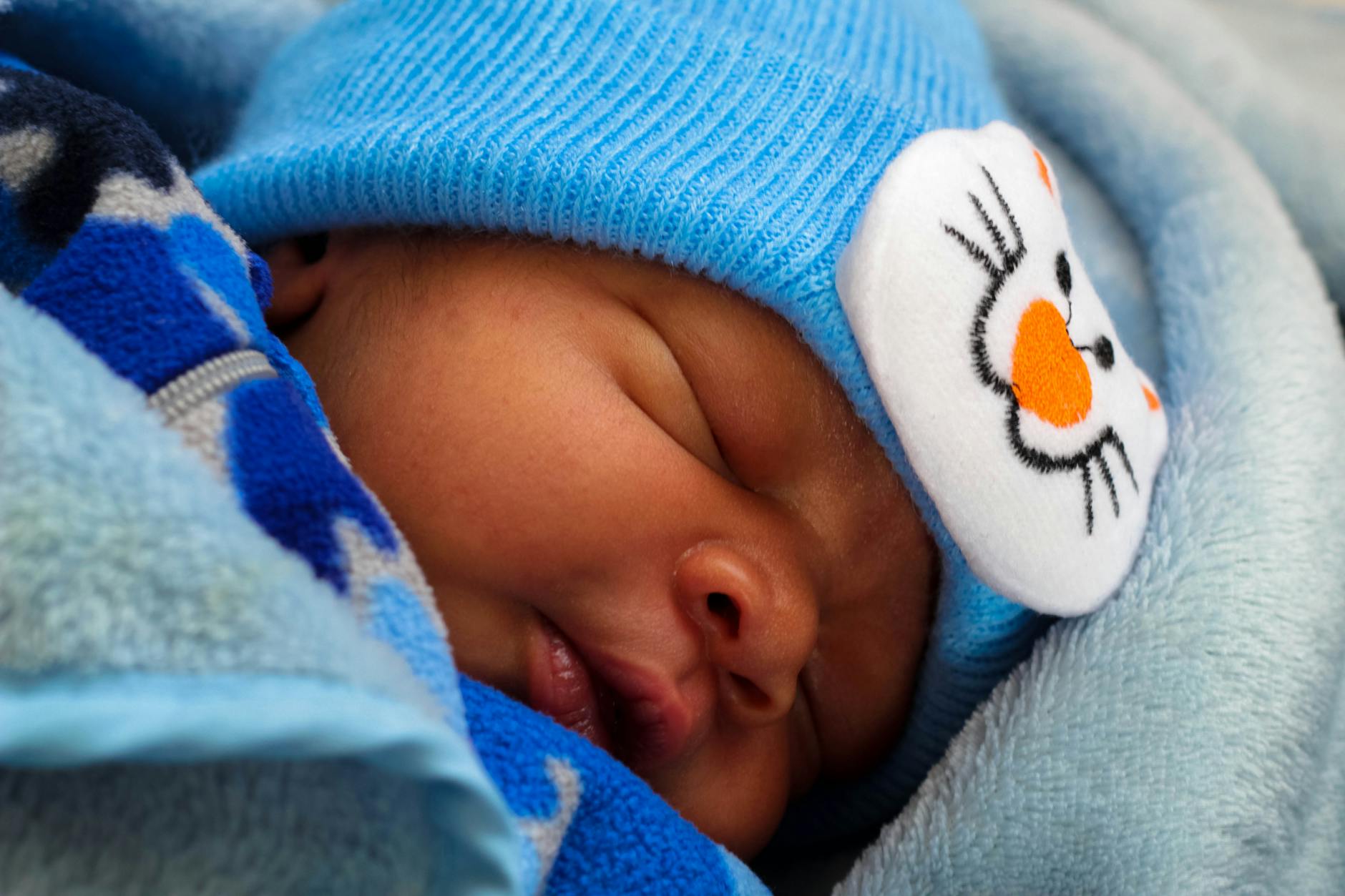
The earliest you can begin introducing sign language is at birth, though babies won’t be able to respond with signs until they develop sufficient hand coordination. From birth through about 6 months, you can model signs consistently—showing your baby hand shapes, movements, and positions while speaking the words aloud. Think of this as the foundation-building phase. You’re not expecting responses yet; you’re familiarizing your baby with the language and building neural pathways. Starting around 6 to 8 months old, babies typically gain enough motor control to begin imitating and signing back.
At this stage, simple signs like “more,” “milk,” or “all done” become achievable because these require basic hand movements your baby can manage. By 8 to 9 months, many babies start showing clear understanding and can reproduce simple signs. The range extends through 10 to 14 months for most babies, reflecting normal developmental variation—there’s nothing concerning about a baby taking until 14 months to actively sign if they’re developing typically in other areas. One important caveat: if your family includes deaf adults or you’re planning to use sign language as a primary language in your household, starting from birth makes sense even though responses won’t come for months. If you’re introducing sign language as a supplementary communication tool, waiting until your baby shows interest in mimicking gestures (around 6 months) is perfectly reasonable and often more rewarding because you’ll see quicker responses.
The Developmental Timeline—What Changes Month to Month
From 4 to 6 months, some babies can produce their first signs, though this is uncommon. Most families shouldn’t expect this, but it does happen with consistent exposure. At this stage, signs will be approximate—your baby might wiggle their fingers in a way that roughly resembles a sign they’ve seen you make repeatedly. Reward these attempts enthusiastically because you’re encouraging the connection between the gesture and its meaning. Between 6 and 8 months is when the shift becomes noticeable for most families. Hand coordination improves dramatically, and babies become much more interested in copying the movements they see you make.
This is an ideal window to introduce 5 to 10 frequently-used signs related to daily routines: feeding, bath time, sleep, and comfort. However, if this timeline doesn’t match your baby’s development—perhaps they’re not showing interest in copying until 10 months—that’s normal variation, not a sign of delay. A critical limitation to understand: babies who are learning sign language while also hearing spoken language may not show mastery of either language at the pace you’d see if they were learning just one. This is code-switching during dual language acquisition, not confusion. Research shows that pairing spoken words with signs—saying “more” while signing MORE—supports development of both languages simultaneously. If you’re worried your baby isn’t progressing in speech because you’re also signing, this mixed progress is expected and healthy, not something to correct by stopping signs.
The Upper Age Limit—There Isn’t One
There is no upper age restriction on learning sign language. If you didn’t start teaching signs in infancy, you can introduce them at 18 months, at 3 years old, or at any point in childhood. Toddlers and preschoolers may actually have an advantage: they have better hand control, stronger memory, and can understand more abstract explanations about why you’re using signs. An older toddler (say, 2 to 4 years old) typically learns new signs faster than a 6-month-old because they have better motor control and can comprehend the concept of symbolic communication.
If you’re starting with a toddler, you might introduce 10 to 15 signs in the span of a month, whereas a younger baby might take 2 to 3 months to reliably produce those same signs. The trade-off is that early exposure (from birth onward) builds sign language as a natural, primary communication system, while later introduction typically positions it as a secondary tool. Parents sometimes worry they’ve “missed the window” for sign language if they didn’t start in infancy. This concern isn’t supported by evidence. Your 2-year-old, your 4-year-old, or even your school-age child can still benefit significantly from learning sign language—whether for communication with a deaf family member, language enrichment, or practical communication advantages.

Modeling Signs Before Your Baby Can Sign Back
One of the most important practices is starting to model signs long before you expect your baby to reproduce them. From birth onward, you can show your baby hand shapes and movements paired with spoken words. When you say “wave,” physically wave while signing WAVE. When you say “clap,” clap while signing CLAP. This consistent pairing helps your baby’s brain create connections between the gesture, the spoken word, and the concept. Many parents find this practice valuable even before their baby shows any sign of producing signs themselves.
For the first few months, modeling is entirely one-directional, and that’s fine. You’re building receptive understanding—your baby is learning to recognize what signs mean even if they can’t yet produce them. Once your baby reaches 6 to 8 months and starts gaining coordination, they’ll begin attempting to imitate the signs you’ve been consistently showing them. A practical comparison: some parents choose to model signs from birth and see their first signed words around 8 months. Others wait until 10 to 12 months to introduce signs deliberately, and their babies may start signing within weeks. Both approaches work. The difference is primarily whether you want to invest in early modeling (which feels like it takes a long time to see results but creates early familiarity) or whether you prefer waiting for your baby to show readiness (which tends to produce faster, more visible responses).
Signs of Readiness—When Your Baby Can Actually Learn
Your baby shows readiness for sign language when they start mimicking other gestures naturally. If your baby is waving goodbye, clapping during songs, or pointing at things they want, they have the motor foundation to learn signs. These behaviors typically emerge around 6 to 8 months, though some babies show them later, and that’s still within the normal range. Another sign of readiness is when your baby becomes interested in your face and hands during interactions. A baby who watches your mouth intently when you talk is also someone who will watch your hands intently when you sign.
This visual tracking and mimicry impulse is the foundation for learning sign language effectively. If your baby isn’t yet showing these behaviors at 6 months, continuing to model signs is still worthwhile—they’re still learning receptively even if they’re not yet producing signs. A warning: some parents worry that their baby will become “confused” by being exposed to both spoken language and sign language. The evidence doesn’t support this concern. Babies are equipped to learn multiple languages simultaneously, and sign language plus spoken language doesn’t create confusion—it creates bilingual development. That said, if your goal is fluency in sign language (which is important for families with deaf members), then consistent exposure to fluent signers, not just learned signs, matters significantly.
Starting Late—Teaching Sign Language to Older Toddlers
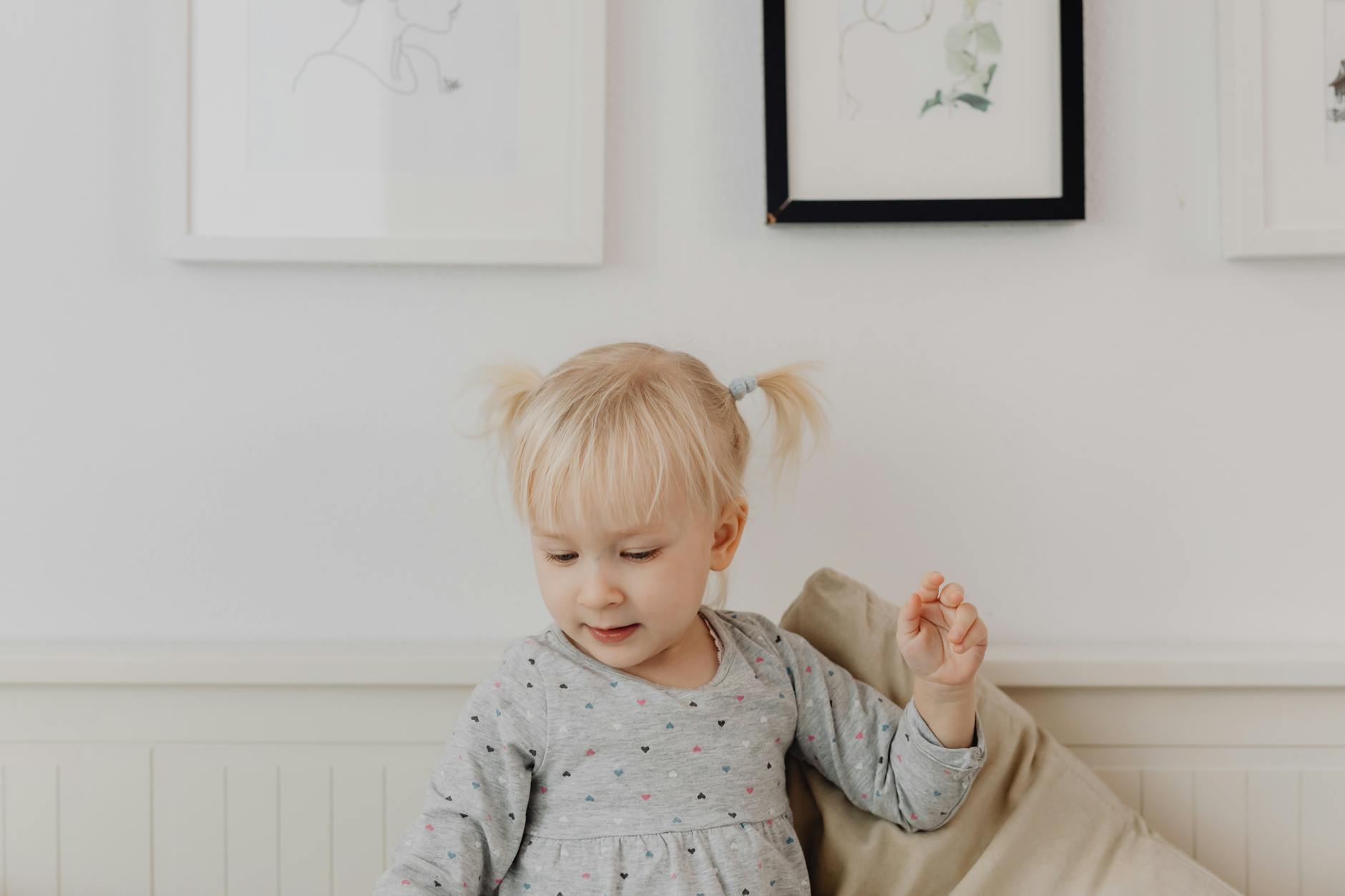
If you’re starting sign language teaching with a toddler older than 18 months or even older than 3 years, the process is actually simpler in some ways. Your child has better focus, stronger memory, and can understand the connection between a sign and what it represents more explicitly. You might explain, “This sign means ‘more’—watch my hands,” and then demonstrate.
A 6-month-old couldn’t understand that explanation, but a 2-year-old can. An example: a family with a newly deaf grandparent might introduce sign language to their 3-year-old so the child can communicate with the grandparent. That child typically learns meaningful signs within 4 to 8 weeks of consistent practice, moving much faster than an infant would. The downside is that an older child may not develop sign language as deeply as someone who’s been exposed from infancy, but they can absolutely achieve functional, conversational ability.
Sign Language as a Lifelong Tool
Sign language isn’t something you only use during infancy and early childhood. Once your child learns signs in infancy, that skill persists and deepens throughout childhood and into adulthood. A child who starts signing at 8 months will likely continue expanding their sign vocabulary throughout preschool and school years, reaching fluency if they have consistent exposure.
The broader insight is that sign language age limits exist only at the bottom—there’s no age too young to start modeling—but not at the top. Your 4-year-old, your school-age child, or even an adult can learn sign language. The window for optimal bilingual development (pairing sign and spoken language from infancy) is most open in the first year of life, but the window for learning and using sign language is open at every age.
Conclusion
Baby sign language has no strict age limit. You can begin modeling signs from birth, though most babies won’t sign back until 6 to 8 months when they develop the necessary hand coordination. Most babies typically start signing between 8 and 14 months, with significant variation being completely normal. The critical insight is that there’s no upper age restriction—if you didn’t start in infancy, you can introduce sign language at any point in toddlerhood or beyond without missing any important windows.
Your next step is to choose when to begin based on your family’s circumstances. If you have deaf family members or plan to use sign language as a primary language at home, start modeling from birth. If you’re introducing sign language as a supplementary communication tool, you can begin whenever it feels natural—whether that’s at 6 months when you notice your baby mimicking gestures, or at 2 years old when you recognize the need. Whichever age you start, consistency matters far more than timing.