
Baby sign language numbers are a visual way to teach young children to recognize and understand numerical concepts using hand gestures, starting as early as four months old. While babies won’t be able to sign back until around six to nine months of age, they can begin interpreting signs well before their first birthday, making number signs an excellent early communication tool for both hearing and deaf families. For example, a parent can sign “one” while handing a baby a single piece of food, or sign “two” while clapping twice together—pairing the visual sign with the actual thing being counted. This article covers when to start teaching numbers through sign language, how babies learn at different developmental stages, practical teaching methods, and what research shows about the benefits and limitations of early number signing.
Table of Contents
- When Should You Start Teaching Baby Sign Language Numbers?
- How Babies Develop Number Awareness and Sign Language Skills
- Effective Teaching Methods for Baby Number Signs
- Building a Structured Learning Routine
- Understanding the Limitations and Real Benefits of Early Number Signing
- Why Deaf Children Show Particular Advantages With Early Sign Language
- The Broader Picture of Early Language and Long-Term Literacy
- Conclusion
When Should You Start Teaching Baby Sign Language Numbers?
The optimal window to introduce sign language to your baby begins between four and six months of age. At this stage, your baby’s brain is primed to absorb visual information, and introducing signs creates a foundation for language development long before they can speak or sign in return. Starting early doesn’t mean drilling numbers relentlessly—it means incorporating number signs naturally into your daily routines, such as counting the sneezes during a cold, the number of toys going into the basket, or the fingers on your hand. However, there’s an important distinction between exposing your baby to signs and expecting them to use them.
Between four and six months, your baby is purely in observation mode. The real shift happens around six to nine months, when babies begin to understand that signs have meaning and may attempt to imitate them. This developmental window is when you might notice your baby watching your hands more intently or trying to copy your movements. Keep early counting to just two or three items—babies at this stage learn best through repetition and real-world context rather than abstract number sequences.

How Babies Develop Number Awareness and Sign Language Skills
Babies don’t naturally understand the concept of numbers the way adults do. The brain needs time to develop the abstract thinking required to connect a symbol (whether spoken, signed, or written) with a quantity. Most babies begin to understand counting as an abstract concept around eighteen months old, though this understanding develops gradually over time.
before eighteen months, your baby can still learn number signs, but they’re primarily learning them as motor patterns and associations rather than as true numerical understanding. This timeline means that introducing number signs early builds the neural pathways needed for later mathematical thinking, but you shouldn’t expect your ten-month-old to demonstrate genuine counting ability. The benefits of early exposure appear to be more about comfort with the symbols and the strengthened communication bond with you than about immediate mathematical achievement. What matters more than timing is consistency—repeatedly pairing the sign with the actual count creates stronger neural connections than occasional exposure.
Effective Teaching Methods for Baby Number Signs
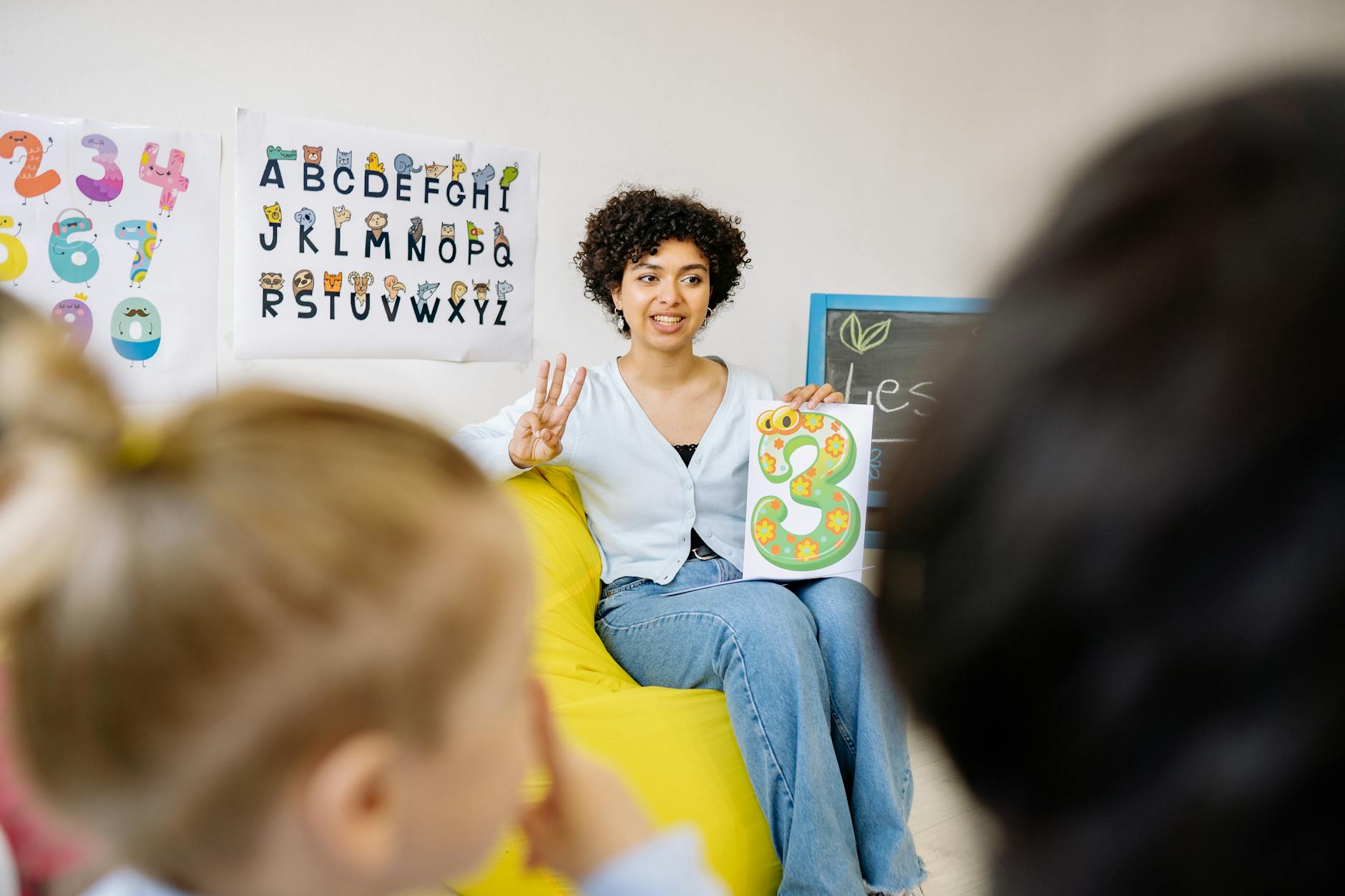
The most effective approach is the three-step teaching method: first, you model the sign clearly; second, you pause briefly to give your baby time to process and attempt the sign; third, you respond positively regardless of whether they imitated perfectly. This method works because it mimics natural conversation and gives your baby’s developing motor skills a chance to practice without pressure. Repeat this cycle as often as possible throughout your daily life. When teaching numbers, always pair the spoken word with the sign.
Say “one” while signing “one,” say “two” while signing “two.” This dual input helps your baby create multiple sensory pathways to the concept—they’re not just learning the sign in isolation but connecting it to the spoken word and the actual quantity. Real-life counting activities remain the most effective teaching tool. Count the blocks as you stack them, count the sneezes during cold season, count the bites at dinner. These spontaneous, meaningful counting moments teach your baby that numbers have real-world purpose. Avoid the temptation to skip flashcard work early on—flashcards are most useful after your baby has a foundational understanding built through real-world counting activities, typically around ten to fourteen months or later.
Building a Structured Learning Routine
Most formal sign language classes teach parents thirty to fifty different signs they can use at their own pace, though numbers are typically a smaller subset. You don’t need to enroll in a class to teach number signs, but many families find that classes provide structure and expose them to signs beyond just numbers. If you choose a class, look for one with an instructor who understands how babies learn and can model the three-step teaching method. If you prefer to teach independently, resources like sign language charts and instructional videos can provide the visual models you need.
The trade-off between self-teaching and formal classes is one of consistency versus professional guidance. Self-teaching gives you complete control over timing and focus, but you might unintentionally reinforce incorrect hand positions or miss subtle variations in sign clarity. Classes provide expert feedback but require committing to a schedule and potentially dealing with group pacing that doesn’t match your baby’s needs. Many families find a hybrid approach works best: learning basic number signs from online resources and then refining technique in a class setting, or taking a class for foundational understanding and then practicing independently at home.
Understanding the Limitations and Real Benefits of Early Number Signing
Research has not found compelling long-term developmental advantages from baby signing programs alone. This is an important caveat: early sign language exposure doesn’t automatically create mathematically gifted children or guarantee earlier literacy. However, documented benefits that do exist are significant on a relational level rather than a purely developmental one. Families who sign with their babies report increased bonding, decreased frustration on both sides (the baby can communicate intent earlier and the parent can understand the baby’s needs), and improved self-esteem for the child.
These are genuine, meaningful benefits even if they don’t show up on standardized developmental testing. It’s also important to understand that sign language numbers are just one piece of early language exposure. The primary value comes from the increased communication and connection with your baby, not from the numbers themselves. If sign language numbers feel forced or stressful to you, the drawbacks might outweigh the benefits. The best approach is one that feels natural to your family and that you can sustain without exhaustion or pressure.

Why Deaf Children Show Particular Advantages With Early Sign Language
If your family includes deaf individuals or if you’re raising a deaf child, the research on sign language exposure becomes particularly important. Deaf children who are exposed to sign language early perform better overall than deaf children without early sign language exposure, regardless of whether the child later uses cochlear implants or other hearing technology. This advantage appears consistently across developmental domains—not just in language learning but in overall cognitive development.
Early sign language exposure provides clear developmental benefits for deaf children because it ensures they have full, unobstructed access to language during critical periods of brain development. Unlike spoken language, which may be partially or fully inaccessible depending on hearing technology and its timing, visual sign language is always available to deaf children without requiring equipment or intervention. For hearing families with deaf children, beginning to learn and sign number signs early is not just beneficial—it’s crucial for ensuring your child’s full linguistic and cognitive development.
The Broader Picture of Early Language and Long-Term Literacy
Recent research on sign language instruction, including studies from 2014 through 2025, has shown that integrating sign language into literacy instruction supports reading and writing skills that transfer across languages. For deaf children, this means that strong early sign language skills actually support their ability to read and write English or their regional spoken/written language later.
Number signs are part of this broader linguistic foundation—they represent abstract symbols and their meanings, which is a key skill for reading and writing. Looking forward, the value of baby sign language numbers increasingly appears tied to the bigger picture of multilingual, multimodal development rather than any specific mathematical advantage. Whether your baby eventually becomes fluent in sign language or uses it only occasionally, the early exposure creates cognitive flexibility and normalizes visual communication in your family.
Conclusion
Baby sign language numbers can be introduced as early as four to six months, with babies beginning to meaningfully sign back around six to nine months. The most effective teaching approach pairs the signed number with the spoken number and uses real-world counting moments—sneezes, food items, toys—rather than abstract drilling.
While research hasn’t identified specific long-term developmental advantages to early number signing in isolation, the documented benefits of increased parent-child bonding, decreased frustration, and improved self-esteem are genuine and meaningful. If you have a deaf child in your family or are raising a deaf child as hearing parents, the research case for early sign language becomes particularly strong. Regardless of your family’s circumstances, the key is consistency and naturalism—choosing an approach that feels sustainable for you and one that values the communication and connection itself rather than any specific developmental outcome.