
ASL and baby sign language are not the same thing, and the distinction matters more than most parenting blogs let on. ASL — American Sign Language — is a complete, natural language with its own grammar, syntax, idioms, and deep cultural roots in the Deaf and Hard of Hearing community. Baby sign language, by contrast, is a simplified communication tool that borrows and modifies individual ASL signs so that hearing infants can express basic needs before they can talk. When your ten-month-old puts her fist to her mouth to sign “eat,” she is using a single gesture to represent a whole thought — not constructing a sentence in ASL.
That said, baby sign language owes a significant debt to ASL, and understanding the relationship between the two will make you a more informed and respectful parent. Babies can begin learning basic signs around six months old and may start producing them between eight and ten months, often well before their first spoken words. The research on short-term benefits is encouraging: less frustration, better joint attention, stronger parent-child bonding. But claims about long-term IQ gains remain contested, and some members of the Deaf community have raised valid concerns about how baby sign language can trivialize ASL when it strips away the linguistic and cultural context. This article breaks down what actually separates ASL from baby sign language, what the research says (and doesn’t say), how to get started with signing, and why the Deaf community’s perspective deserves a seat at the table in this conversation.
Table of Contents
- What Is the Real Difference Between ASL and Baby Sign Language?
- How Baby Sign Language Borrows from ASL — and Where It Diverges
- What the Research Actually Shows About Baby Signing Benefits
- Getting Started — Which Signs to Teach and How to Approach It
- The Myth That Signing Delays Speech — and Other Misconceptions
- The Deaf Community’s Perspective on Baby Sign Language
- Where Baby Sign Language Research Is Heading
- Conclusion
- Frequently Asked Questions
What Is the Real Difference Between ASL and Baby Sign Language?
The simplest way to think about it: ASL is a language, and baby sign language is a vocabulary list. ASL has verb conjugation, spatial grammar, classifiers, and sentence structures that are entirely distinct from English. A fluent ASL user can express abstract ideas, tell jokes, argue philosophy, and write poetry — all without producing a single spoken word. It is the primary language of the Deaf community in the United States and parts of Canada, and it is not a signed version of English. Baby sign language takes a handful of ASL signs — often modified for infant motor skills — and uses them as isolated words. A baby signing “more” at dinner is not using ASL grammar.
She is using one gesture to communicate a single concept, much the way she might point at something she wants. The handshapes are frequently simplified because infants lack the fine motor control to produce precise ASL signs. For example, the ASL sign for “milk” involves opening and closing the fist as if squeezing, and babies often produce a looser, less defined version. Teaching baby signs does not require a parent to learn ASL grammar, sentence structure, or any of the linguistic complexity that makes ASL a full language. This distinction is not just academic. If you tell someone you are “teaching your baby ASL,” you are making a claim that goes well beyond what most baby sign language programs actually deliver. Recognizing what baby sign language is — and what it is not — keeps expectations honest and shows respect for ASL as a legitimate language with a rich cultural history.

How Baby Sign Language Borrows from ASL — and Where It Diverges
Most baby sign language systems draw their signs directly from ASL, which is a practical choice. ASL signs are standardized and widely documented, and if your child transitions from baby signs to actual ASL instruction later, the foundation will be somewhat familiar. common first baby signs — milk, more, eat, water, all done, sleep, play, bath, and hurt — are nearly all adapted from their ASL equivalents. However, the adaptation process changes more than just motor difficulty. When baby sign language programs strip signs out of ASL and present them as standalone vocabulary, they remove the grammatical scaffolding that gives those signs meaning within ASL. In ASL, the sign for “finish” functions differently depending on its placement in a sentence, its speed, and the facial expression accompanying it.
In baby sign language, “all done” is just “all done” — a single signal with a single purpose. This is perfectly fine for a twelve-month-old who wants to leave the high chair, but it is not ASL instruction in any meaningful sense. There is also the question of invention. Some baby sign language systems include signs that are not from ASL at all — made-up gestures designed to be intuitive for hearing parents. If consistency with ASL matters to you, check whether the program you are using actually sources its signs from ASL or just loosely references it in marketing materials. Programs like Baby Signs (developed by Linda Acredolo and Susan Goodwyn) and Sign2Me (developed by Joseph Garcia) have different philosophies on how closely to adhere to ASL, and the difference is worth knowing before you start.
What the Research Actually Shows About Baby Signing Benefits
The most frequently cited study in baby sign language circles is the longitudinal research by Acredolo and Goodwyn, funded by the National Institutes of Health and published in 2000. That study reported that children who were signed to as infants had IQs averaging twelve points higher at age eight than non-signing peers. It is a striking number, and it has been repeated in countless parenting articles and product marketing materials. What gets mentioned far less often is that this specific finding has been debated and not consistently replicated in subsequent research. As of 2025, meta-analyses paint a more measured picture. The consistent short-term benefits are real: reduced frustration for both parent and child, improved joint attention, and stronger parent-child bonding.
The INSIGHT study, published in PMC and led by Kirk and colleagues in 2013, found that infant signing improved responsive parenting and joint attention — outcomes that matter enormously in early development even if they do not show up as IQ points on a test years later. A 2025 study published in the journal Cognition reported that sign language promotes object categorization in young hearing infants, suggesting cognitive benefits that researchers are still working to fully understand. Parents consistently report less stress when their babies can sign, describing it as a “window into their babies’ minds,” and signing babies tend to be more engaged, initiate interaction more often, and have fewer tantrums. Where the evidence thins out is in long-term outcomes. Meta-analyses show limited evidence for lasting advantages in IQ, speech production, or academic achievement for hearing infants who signed as babies. This does not mean baby signing is pointless — the short-term benefits alone are substantial, and the bonding gains may have cascading effects that are difficult to isolate in a study. But if someone is selling you a baby sign language program with promises of a permanently higher IQ, they are overselling what the data supports.
Getting Started — Which Signs to Teach and How to Approach It
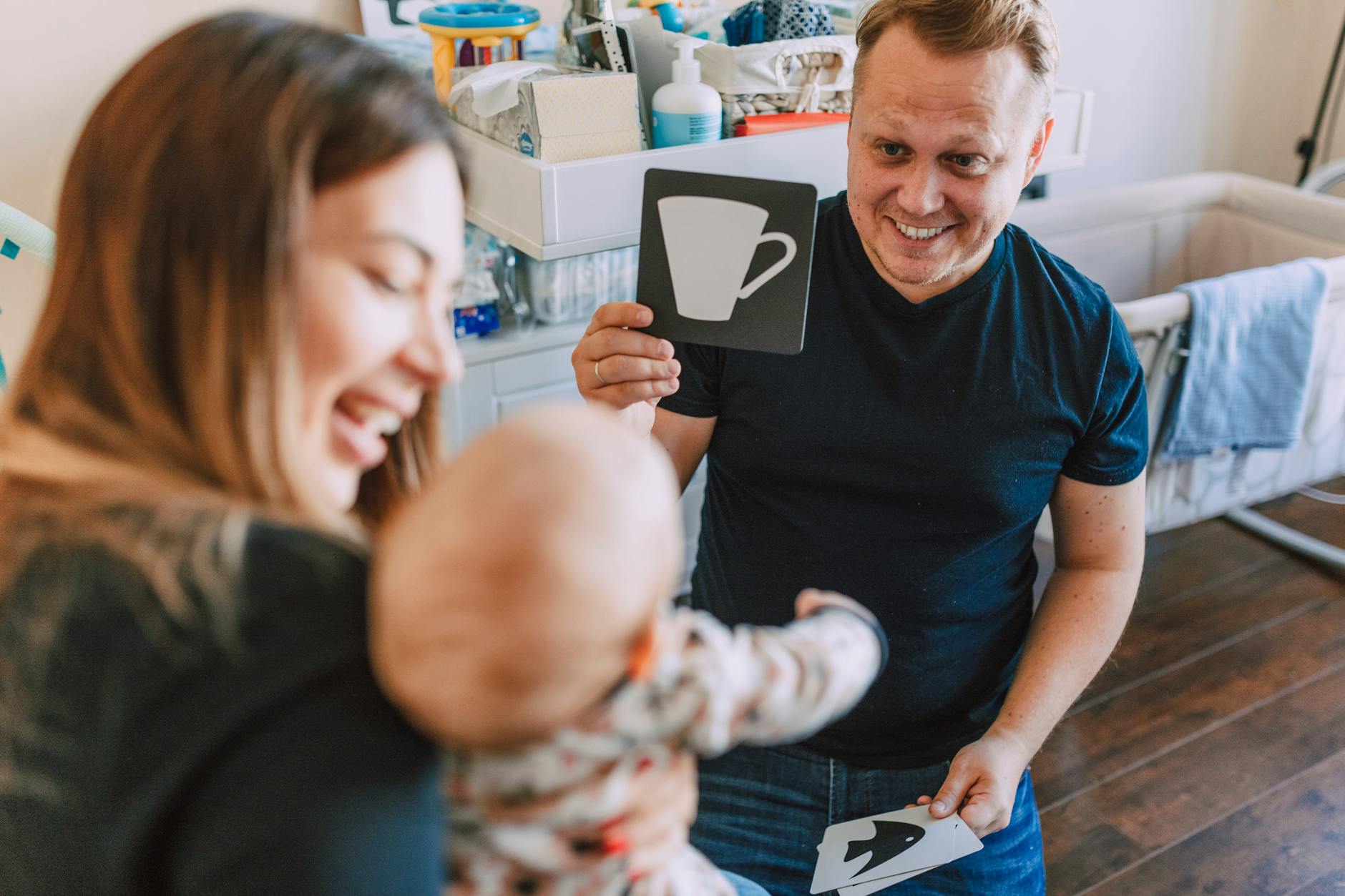
If you are a hearing parent with a hearing child, baby sign language is the practical starting point. You do not need to enroll in an ASL course or master a new grammar system. You need a handful of high-frequency signs that map to your baby’s daily life, and you need to use them consistently in context. Start with signs tied to routines: “milk” during feeding, “more” when offering food, “all done” when the meal is over, “bath” before bath time, “sleep” at bedtime. These signs succeed because they are immediately useful and repeatedly reinforced. The tradeoff to be aware of is depth versus accessibility. Baby sign language gets you communicating faster with almost no learning curve.
Actual ASL instruction is slower to start, requires more from you as a parent, and involves learning a fundamentally different grammatical system — but it offers your child access to a real language and a bridge to the Deaf community if that becomes relevant. Some families start with baby signs and transition to structured ASL classes as their child gets older, which is a reasonable middle path. Others commit to ASL from the beginning, especially if there is any hearing loss in the family or if they want their child to grow up bilingual in a signed language. Research by Laura-Ann Petitto in the 2000s showed that babies regularly exposed to sign language and fingerspelling begin to “babble” with their fingers, mirroring the vocal babbling that hearing babies do. This suggests that the infant brain is wired for language acquisition regardless of modality — a finding that should encourage parents who worry that signing might somehow interfere with speech. It does not. Multiple studies have debunked the myth that baby sign language delays speech development, and there are no documented negative effects on language development associated with baby signing.
The Myth That Signing Delays Speech — and Other Misconceptions
The most persistent myth about baby sign language is that it delays spoken language. Parents hear it from relatives, pediatricians who have not reviewed the literature, and strangers at the grocery store. The research is unambiguous on this point: baby sign language does not delay speech development. Across multiple studies spanning more than three decades — a body of work encompassing at least 68 studies on the impact of signing on development and learning — no negative effects on language development have been found. If anything, signing appears to support the transition to spoken language by giving children an early framework for symbolic communication. A more nuanced concern is whether parents might rely on signs as a crutch and reduce their verbal interaction with their child. This is worth being honest about.
If signing replaces talking rather than accompanying it, you could theoretically reduce your child’s exposure to spoken language. The solution is straightforward: always say the word while you sign it. Signing should layer on top of your normal speech, not substitute for it. When you sign “more” while saying “Do you want more?” you are giving your child two channels of input, not one. Another misconception is that baby sign language is only useful for children with developmental delays or hearing loss. While signing is indeed a valuable tool for children with speech delays, Down syndrome, autism spectrum conditions, and hearing impairment, it benefits typically developing children just as much. The frustration reduction alone — for a fifteen-month-old who knows exactly what she wants but cannot yet say the words — is reason enough for any family to try it.
The Deaf Community’s Perspective on Baby Sign Language
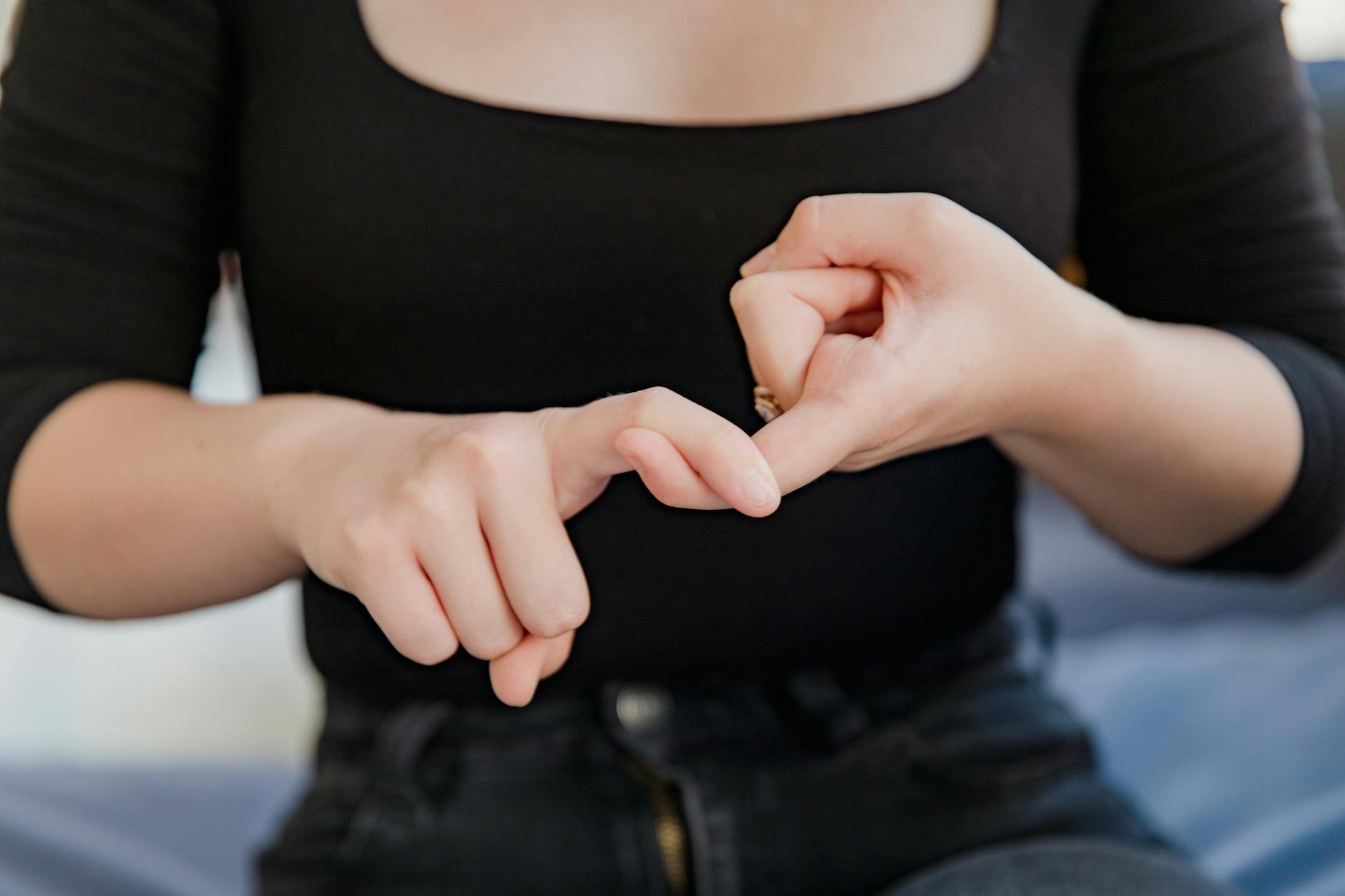
Some members of the Deaf community have expressed concern that baby sign language trivializes ASL by reducing a rich, complex language to a handful of modified gestures marketed primarily to hearing families. This is not a fringe objection. When a billion-dollar parenting industry markets “ASL for babies” without acknowledging that what they are teaching is not actually ASL — and without engaging with or crediting the Deaf community — the criticism is earned. The American Speech-Language-Hearing Association (ASHA) published a 2024 article clarifying what baby signing is and is not, emphasizing that it should not be confused with actual ASL instruction.
If you use baby sign language with your child, you can honor this distinction simply by being accurate in how you describe what you are doing. You are teaching your baby modified signs to communicate basic needs. You are not teaching ASL. And if your family develops a genuine interest in sign language, pursuing real ASL instruction — ideally from Deaf instructors — is the respectful and enriching next step.
Where Baby Sign Language Research Is Heading
The field is moving toward more rigorous, controlled studies that can separate the effects of signing itself from the effects of increased parental engagement. A parent who takes the time to learn and consistently use signs with their baby is, by definition, an attentive and responsive parent — and it is difficult to untangle how much of the observed benefit comes from the signs versus the attention. The 2025 Cognition study on object categorization suggests researchers are finding more specific cognitive mechanisms to investigate, which may eventually yield clearer answers about what signing does at a neurological level.
What seems unlikely to change is the practical reality that baby sign language gives preverbal children a way to communicate, and that this communication reduces frustration and strengthens bonding. Whether or not future research confirms lasting cognitive advantages, those immediate benefits are well-documented and meaningful. The growing conversation around respecting ASL as a language and culture, meanwhile, is pushing baby sign language programs to be more thoughtful about sourcing, attribution, and accuracy — a development that benefits everyone.
Conclusion
ASL is a full language with grammar, syntax, and deep cultural significance to the Deaf community. Baby sign language is a practical communication tool that borrows and simplifies individual ASL signs for use by hearing infants and their parents. Both have value, but they are not interchangeable, and being precise about the difference matters — both for setting realistic expectations and for respecting the Deaf community. If you are considering signing with your baby, the evidence supports it.
Short-term benefits in frustration reduction, joint attention, and parent-child bonding are well established. Long-term cognitive advantages remain unproven for hearing children, but there are no downsides. Start with a few high-frequency signs, always pair them with spoken words, and if your family’s interest grows, consider pursuing real ASL instruction from qualified — ideally Deaf — instructors. Your child’s brain is ready for language in whatever form it arrives.
Frequently Asked Questions
Will teaching my baby sign language delay their speech?
No. Multiple studies over more than three decades have consistently shown that baby sign language does not delay speech development. There are no documented negative effects on language development. Always say the word aloud while signing to reinforce both channels of communication.
At what age can I start teaching my baby signs?
Babies can begin learning basic signs around six months old. Most babies start producing signs between eight and ten months, though some may take longer. Start with signs tied to daily routines like eating and sleeping for the fastest uptake.
Is baby sign language the same as ASL?
No. Baby sign language borrows and simplifies individual signs from ASL, but it does not include ASL grammar, sentence structure, or linguistic complexity. It is a communication tool, not a language. The American Speech-Language-Hearing Association published a 2024 article specifically clarifying this distinction.
What are the best first signs to teach my baby?
The most commonly taught and most practical first signs are milk, more, eat, water, all done, sleep, play, bath, and hurt. These work well because they connect to repeated daily routines and address immediate needs your baby is motivated to communicate about.
Does baby sign language really boost IQ?
The widely cited Acredolo and Goodwyn study from 2000 reported a twelve-point IQ advantage at age eight for children who signed as infants. However, this specific finding has been debated, and as of 2025, meta-analyses show limited evidence for long-term IQ benefits in hearing children. Short-term benefits like reduced frustration and improved bonding are well supported.
Is baby sign language disrespectful to the Deaf community?
It can be, if it is marketed or described as “teaching ASL” when it is not. Some Deaf advocates have raised valid concerns about baby sign language trivializing ASL by stripping away its linguistic and cultural context. Being accurate about what you are teaching and crediting ASL as the source of the signs are simple ways to be respectful.