
The best baby sign language book for most families is “Baby Sign Language Made Easy” by Lane Rebelo, a licensed clinical social worker and founder of the Tiny Signs program. It covers 101 signs organized by everyday routines like mealtime, bath time, and bedtime, and it includes a free online video dictionary so you can actually see how each sign is performed. If you want a single book to get started, that is the one most parents reach for, and it has held the top spot in the category for good reason. But not every family needs the same book.
A parent who wants a larger reference library will benefit from Rebelo’s expanded “Complete Guide to Baby Sign Language” with its 200-plus signs. A family that values authentic Deaf culture perspective might prefer Cecilia S. Grugan’s “Learn to Sign with Your Baby,” written by a Deaf parent. And for the youngest babies, a sturdy board book like “Baby Signs” by Joy Allen makes more sense than a detailed instructional guide. This article walks through the top books in the category, the research behind baby sign language, what to look for depending on your child’s age, and the honest limitations of the evidence.
Table of Contents
- Which Baby Sign Language Books Are Worth Buying in 2026?
- What the Research Actually Says About Baby Sign Language
- Choosing a Book Based on Your Child’s Age
- Board Books Versus Parent Guides — What Format Actually Works
- Common Mistakes Parents Make With Baby Sign Language Books
- Books That Include Digital and Video Resources
- Where Baby Sign Language Books Are Heading
- Conclusion
- Frequently Asked Questions
Which Baby Sign Language Books Are Worth Buying in 2026?
The market has grown considerably since Monta Z. Briant published “baby Sign Language Basics” back in 2004, a book that became the global bestseller in this space and was eventually translated into half a dozen languages. Today, Lane Rebelo dominates the category with three titles at different levels. Her “Baby Sign Language Made Easy” (ISBN 9781641520775) covers 101 signs and works well as a starter guide. Her “Complete Guide to Baby Sign Language” (ISBN 9781641525673) expands to over 200 signs for parents who want a more thorough reference. And “My First 100 Signs” (ISBN 9781400354757) is a newer release aimed at quick, everyday use. Beyond the Rebelo titles, a few other books stand out for specific reasons.
Diane Ryan’s “Baby Sign Language” offers more than 150 signs and draws on her experience founding KinderSigns, a program focused on teaching both parents and childcare professionals. Cecilia S. Grugan’s “Learn to Sign with Your Baby” (Penguin Random House, ISBN 9780593435625) is notable because Grugan is a Deaf parent who brings genuine ASL fluency rather than a hearing person’s adaptation of signs. If authenticity to American Sign Language matters to you, her book is the strongest pick. For very young babies, Joy Allen’s “Baby Signs” (ISBN 9780803731930) is a board book designed for little hands to hold and flip through. And a newer entry, “The Very Hungry Caterpillar’s First Signs: ASL” from the World of Eric Carle brand, published in July 2025, pairs sign language with a character many toddlers already love. The practical difference between these books often comes down to format and scope. A 101-sign paperback is enough for most families who want to cover basics like “more,” “milk,” “all done,” and “help.” A 200-sign guide is better suited for parents who plan to use signing as a long-term communication bridge or who want vocabulary for specific situations like trips to the zoo or doctor visits.
What the Research Actually Says About Baby Sign Language
The case for baby sign language rests on over three decades of accumulated research, with one reference list documenting 68 individual studies on the topic. The most widely cited findings come from the original Baby Signs research program, which found that babies enrolled in sign language programs had significantly larger spoken vocabularies by age two compared to non-signing peers. By age three, these children showed language skills that resembled those of four-year-olds. A separate NIH-funded study of roughly 100 babies found that children who had been signed to as infants scored an average of 12 points higher on IQ tests when retested at age eight. More recent research has also pointed to benefits in early literacy. A 2025 analysis from Indiana University found that baby sign language supports the development of early literacy skills, including letter recognition and phonemic awareness. Beyond cognitive measures, studies have consistently found that signing is associated with lower frustration in pre-verbal children, enriched parent-child relationships, greater parental respect for babies’ communicative abilities, and enhanced infant self-esteem.
However, parents should know that the research picture is not as clean as marketing materials suggest. A systematic review that examined 1,208 published articles on sign language found that only 17 met strict inclusion criteria for methodological rigor. More importantly, subsequent studies with tighter controls have failed to replicate the long-term vocabulary advantages reported in the original research. Sample sizes across many of these studies have been relatively small. This does not mean signing is useless. The short-term communication benefits and reduced frustration are well supported. But the claim that signing will make your child measurably smarter years down the road is on shakier ground than the book covers imply.
Choosing a Book Based on Your Child’s Age
For babies under six months, you do not need a book yet. At this stage, you can introduce a handful of signs casually during routines, and a board book like Joy Allen’s “Baby Signs” serves mostly as a visual toy. The real utility of a sign language book kicks in around six to eight months, when babies begin to develop the motor control and cognitive readiness to start producing signs back to you. Between six and twelve months, a focused starter book like “Baby Sign Language Made Easy” hits the sweet spot. You do not need 200 signs at this point. You need maybe ten to twenty high-frequency signs that map onto your baby’s daily life: milk, eat, more, all done, water, diaper, sleep, play, dog, cat.
Rebelo’s 101-sign book organizes signs by routine, which makes it easy to pick a handful from each context and build naturally. Grugan’s “Learn to Sign with Your Baby” is also strong here because it includes specific activities for incorporating signs into daily interactions rather than just listing them. For toddlers over twelve months who are already signing and ready for more, the expanded guides become more useful. Rebelo’s “Complete Guide to Baby Sign Language” with its 200-plus signs gives you room to grow as your child’s interests expand. One thing to watch for at this stage is that toddlers who are picking up spoken language rapidly may lose interest in signing. That is completely normal and not a failure. The signs served their purpose as a communication bridge.

Board Books Versus Parent Guides — What Format Actually Works
The format question matters more than most parents realize. Board books like “Baby Signs” and “The Very Hungry Caterpillar’s First Signs: ASL” are designed for babies to interact with directly. They are durable, visually engaging, and can become part of your child’s bookshelf rotation. The downside is that they typically show a small number of signs without much context or instruction for the parent. You learn the sign from the illustration, but you do not get guidance on when to introduce it, how to practice, or what to do when your baby modifies the sign. Parent guides like those by Rebelo, Briant, and Grugan are the opposite.
They are rich in instruction, context, and teaching strategy, but your baby is not going to sit and flip through a 200-page paperback. The most effective approach for many families is to own one of each: a parent guide that you read and reference, and a board book that lives in the nursery or play area. Modern parent guides have narrowed this gap somewhat by including supplementary digital content. Rebelo’s books, for example, come with access to an online video dictionary, which solves the fundamental problem of learning a visual language from static illustrations. If you are choosing only one book and budget is a concern, the parent guide with video access gives you more practical value than a board book alone. Flash card sets represent a third format that some families prefer, especially for on-the-go practice or for sharing signs with grandparents and childcare providers. They are not a substitute for a guide, but they work well as a supplement.
Common Mistakes Parents Make With Baby Sign Language Books
The biggest mistake is buying a comprehensive book and trying to introduce too many signs at once. A baby who is shown thirty signs in a week will not retain any of them. Starting with three to five high-frequency signs and using them consistently for two to three weeks is far more effective. Most good baby sign language books explain this pacing, but parents in their enthusiasm often skip the instructional chapters and jump straight to the sign dictionary. Another common issue is choosing a book that uses made-up or simplified signs rather than actual ASL. Some older baby sign language resources invented gestures that are not part of any recognized sign language, which means your child learns a communication system that only works with people who read the same book.
Books by Grugan, Rebelo, and Briant all use ASL-based signs, which has the advantage of connecting your child to a real language used by millions of people. If a book does not specify that its signs are based on ASL or another established sign language, that is a red flag. A third pitfall is giving up too early. Babies typically need to see a sign used in context dozens of times before they produce it themselves. The gap between when you start signing and when your baby signs back can be weeks or even months. This is not a sign that the method or the book has failed. It is normal developmental timing, and the books that discuss this expectation honestly are the ones worth keeping.
Books That Include Digital and Video Resources
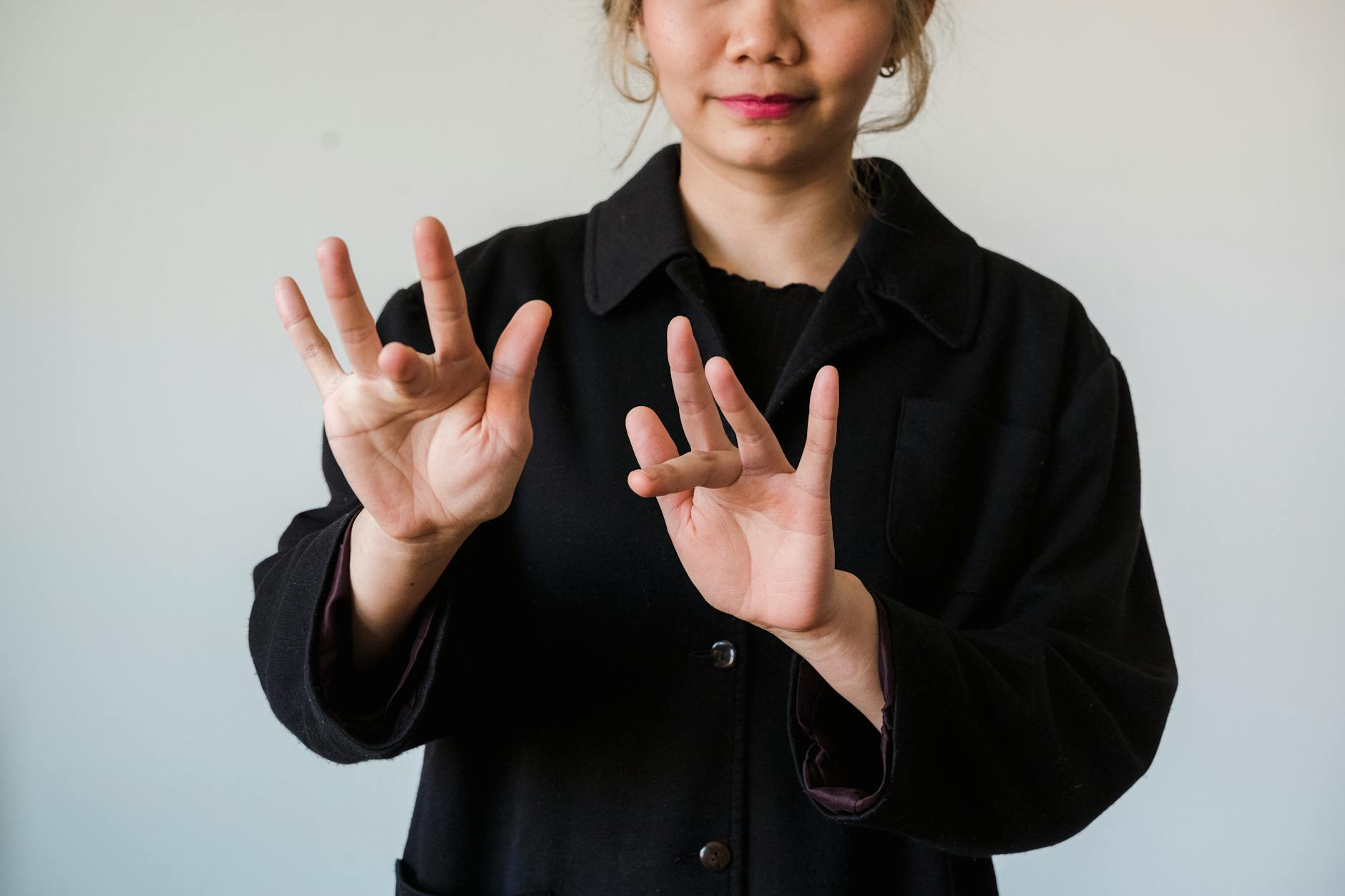
The shift toward hybrid book-plus-video resources has been one of the most useful developments in this category. Sign language is inherently visual and three-dimensional, which means static illustrations in a book can only convey so much. Lane Rebelo’s “Baby Sign Language Made Easy” addresses this by including a free online video dictionary where you can watch each of the 101 signs performed in motion. This is particularly helpful for signs that involve movement or facial expression, which are difficult to capture in a single image.
Not all books offer this, and the ones that do not can leave parents guessing about the correct handshape or motion. If you are choosing between two similarly priced books and one includes video content or QR codes linking to demonstrations, that is a meaningful advantage. Briant’s “Baby Sign Language Basics” predates the QR code era but has been supplemented by her online content over the years. For parents who prefer a fully digital approach, several apps and online courses exist, but a physical book remains useful as a quick reference during the chaotic moments of daily life with a baby when pulling up a phone app is not practical.
Where Baby Sign Language Books Are Heading
The entry of major children’s brands into the space, like Eric Carle’s “The Very Hungry Caterpillar’s First Signs: ASL” published in 2025, signals that baby sign language has moved firmly into the mainstream. This is generally positive because it increases access, but it also means more books of uneven quality will enter the market. Parents should continue to look for books written or reviewed by credentialed experts, whether that means a licensed social worker like Lane Rebelo, a Deaf parent like Cecilia Grugan, or an established educator like Monta Briant.
The trend toward including digital resources will almost certainly continue, and future editions may incorporate augmented reality or interactive video more deeply. For now, the combination of a well-organized physical book and an online video dictionary remains the most practical setup for most families. The research base, while imperfect, is strong enough to support the short-term communication and bonding benefits of signing with babies. As more rigorous studies are conducted, the picture will sharpen, but families do not need to wait for perfect evidence to start a practice that reduces frustration and opens a window into what their pre-verbal child is thinking.
Conclusion
The best baby sign language book depends on where you are in the journey. For most families just starting out, Lane Rebelo’s “Baby Sign Language Made Easy” offers the right balance of scope, organization, and supplementary video content. Parents who want authentic ASL instruction from a Deaf perspective should look at Cecilia Grugan’s “Learn to Sign with Your Baby.” And families with very young babies can start simply with a board book like Joy Allen’s “Baby Signs” before graduating to a full parent guide.
Whatever book you choose, the principles are the same: start with a small number of signs, use them consistently in context, be patient through the weeks before your baby signs back, and do not expect signing to be a magic intelligence booster. The real, well-supported benefits are more immediate and more human than that. Signing gives your baby a way to tell you what they need, what they see, and what they are interested in before they can say it out loud. That alone is worth the price of a good book.
Frequently Asked Questions
What age should I start teaching baby sign language?
Most experts recommend introducing signs around six to eight months, when babies develop the motor control to begin imitating hand movements. You can start modeling signs earlier, but do not expect your baby to sign back before six months at the earliest.
Do baby sign language books use real ASL?
The better ones do. Books by Lane Rebelo, Monta Z. Briant, and Cecilia S. Grugan all use ASL-based signs. Some older or lesser-known books use invented gestures. Check whether the book explicitly states it uses ASL or another recognized sign language before buying.
Will teaching my baby sign language delay their speech?
Research consistently shows that signing does not delay spoken language development. In the original Baby Signs studies, signing babies actually developed larger spoken vocabularies by age two than their non-signing peers, though later studies with stricter controls have been less conclusive about the size of this advantage.
How many signs should I start with?
Three to five signs is a practical starting point. High-frequency signs like “milk,” “more,” “all done,” “eat,” and “help” give your baby the most immediate communicative power. Add new signs gradually as your baby masters the first set.
Do I need a parent guide or is a board book enough?
A board book is fine for introducing the concept to your baby, but it will not teach you how to sign effectively or when to introduce new signs. A parent guide with instructional content and, ideally, video resources will give you a much stronger foundation.