
To start baby sign language at home, begin introducing simple signs like “more,” “milk,” and “all done” during everyday routines when your baby is around six to eight months old. You don’t need formal classes, special materials, or a teaching background. The method is straightforward: say the word out loud while making the sign, maintain eye contact with your baby, and repeat consistently at mealtimes, diaper changes, and play. A parent feeding their eight-month-old lunch, for instance, might sign “more” each time the baby leans forward for another spoonful of sweet potato, saying the word clearly at the same time. Within weeks or a few months, many babies start signing back. The approach is grounded in real research.
A landmark NIH-funded study by Drs. Linda Acredolo and Susan Goodwyn at UC Davis tracked 103 babies and found that those taught signs had larger vocabularies by age two and language skills comparable to four-year-olds by the time they turned three. No study has ever found that signing delays speech. While some later research has questioned whether the benefits are as universal as early studies suggested, the consensus among pediatric experts remains that baby sign language is a safe, productive way to communicate with pre-verbal children. This article walks through when to start, which signs to teach first, how to weave signing into your daily routine without turning it into a chore, what the research actually says (including its limitations), and how to troubleshoot when your baby doesn’t seem interested. Whether your child is four months old or well past their first birthday, there is no wrong time to begin.
Table of Contents
- When Should You Start Teaching Baby Sign Language at Home?
- What Does the Research Actually Say About Baby Sign Language?
- The Best First Signs to Teach Your Baby
- How to Work Signs Into Your Daily Routine Without Formal Lessons
- What to Do When Your Baby Is Not Signing Back
- Emotional Benefits That Go Beyond Communication
- Building on Baby Sign Language as Your Child Grows
- Conclusion
- Frequently Asked Questions
When Should You Start Teaching Baby Sign Language at Home?
The American Academy of Pediatrics and most pediatric experts recommend starting baby sign language between six and eight months of age. AAP spokesperson and pediatrician Howard Reinstein has noted that most babies develop the physical dexterity and cognitive ability to learn some form of sign language around eight months. That said, you can begin exposing your baby to signs as early as four to six months. They will absorb what they see even if they are not yet able to sign back. Most babies produce their first signs between eight and twelve months, roughly the same window when many start waving bye-bye or clapping on their own. There is no deadline and no window that closes. Parents who start at twelve or fourteen months often see faster results simply because their baby’s motor skills and comprehension are more developed. A family with a ten-month-old who has never seen a sign before can jump right in and expect to see responses within a few weeks of consistent practice.
Conversely, a parent who starts at five months should expect a longer gap between introduction and the baby’s first sign. Neither approach is wrong. The key variable is not your baby’s exact age but your willingness to stay consistent over time. One thing to keep in mind: starting earlier does not necessarily mean your child will sign earlier. The timeline depends on individual development. Some six-month-olds sign “milk” within a month. Others take three or four months. Comparing your baby’s progress to another family’s timeline is one of the least productive things you can do. Watch for approximations rather than perfect hand shapes, and celebrate the intent behind the gesture.
What Does the Research Actually Say About Baby Sign Language?
The most widely cited evidence comes from the Acredolo and Goodwyn study at UC Davis, funded by the National Institutes of Health. The researchers divided 103 eleven-month-old babies into three groups: one received sign training, another received verbal training with extra spoken labels, and a control group received no special intervention. At fifteen, nineteen, and twenty-four months, the signing group scored statistically higher on both receptive and expressive language measures. By age two, signing babies had significantly larger vocabularies. By age three, their language abilities were on par with those of average four-year-olds. A follow-up at age eight found that the children who had signed as infants scored an average of twelve IQ points higher than their non-signing peers and landed in the top twenty-fifth percentile among eight-year-olds. However, the research landscape is not as clean-cut as these headline numbers suggest.
A controlled study published in 2013 found that overall language outcomes for signing babies were not significantly better than those in other groups, raising questions about whether signing universally accelerates development. Kirk and colleagues in 2012 found that signing particularly benefits children who are linguistically behind their peers, with those children showing large gains after signing exposure. A Canadian review identified methodological problems across many baby sign studies, including a lack of blinding and inconsistent random assignment, and concluded that some popular claims about signing were not fully supported by the data. What no study has found is that baby sign language causes harm. There is zero evidence that signing delays or interferes with spoken language development. The worst-case scenario supported by current research is that signing neither helps nor hurts, while giving parents and babies a shared communication tool during the pre-verbal months. For families weighing whether to invest the effort, that risk profile is about as favorable as it gets.
The Best First Signs to Teach Your Baby
Start with signs tied to things your baby already cares about. Experts consistently recommend “more” as a first sign because it applies to nearly every situation a baby encounters: more food, more play, more reading, more swinging. The sign itself is simple. You pinch your thumbs and fingers together on both hands and tap the fingertips together. Babies often produce a rough approximation, clapping their fingertips or tapping fists, and that counts. After “more,” the most commonly recommended starter signs are “milk,” “eat,” “all done,” “help,” and “water.” These cover the basics of hunger, thirst, and needing assistance, which are the situations that generate the most frustration in a pre-verbal child.
Once your baby has a few functional signs, add motivating words that spark excitement: “dog,” “cat,” “ball,” and “light” are favorites because babies encounter them constantly and tend to find them thrilling. A baby who learns to sign “dog” every time the family pet walks into the room has a reason to keep signing because the payoff is immediate and fun. Resist the temptation to introduce ten signs at once. Start with two or three, use them relentlessly for a couple of weeks, and add new signs only after your baby shows recognition or attempts a sign back. Flooding a baby with too many signs at the beginning can dilute the repetition that makes each individual sign stick. Think of it like vocabulary building in any language: depth before breadth.
How to Work Signs Into Your Daily Routine Without Formal Lessons
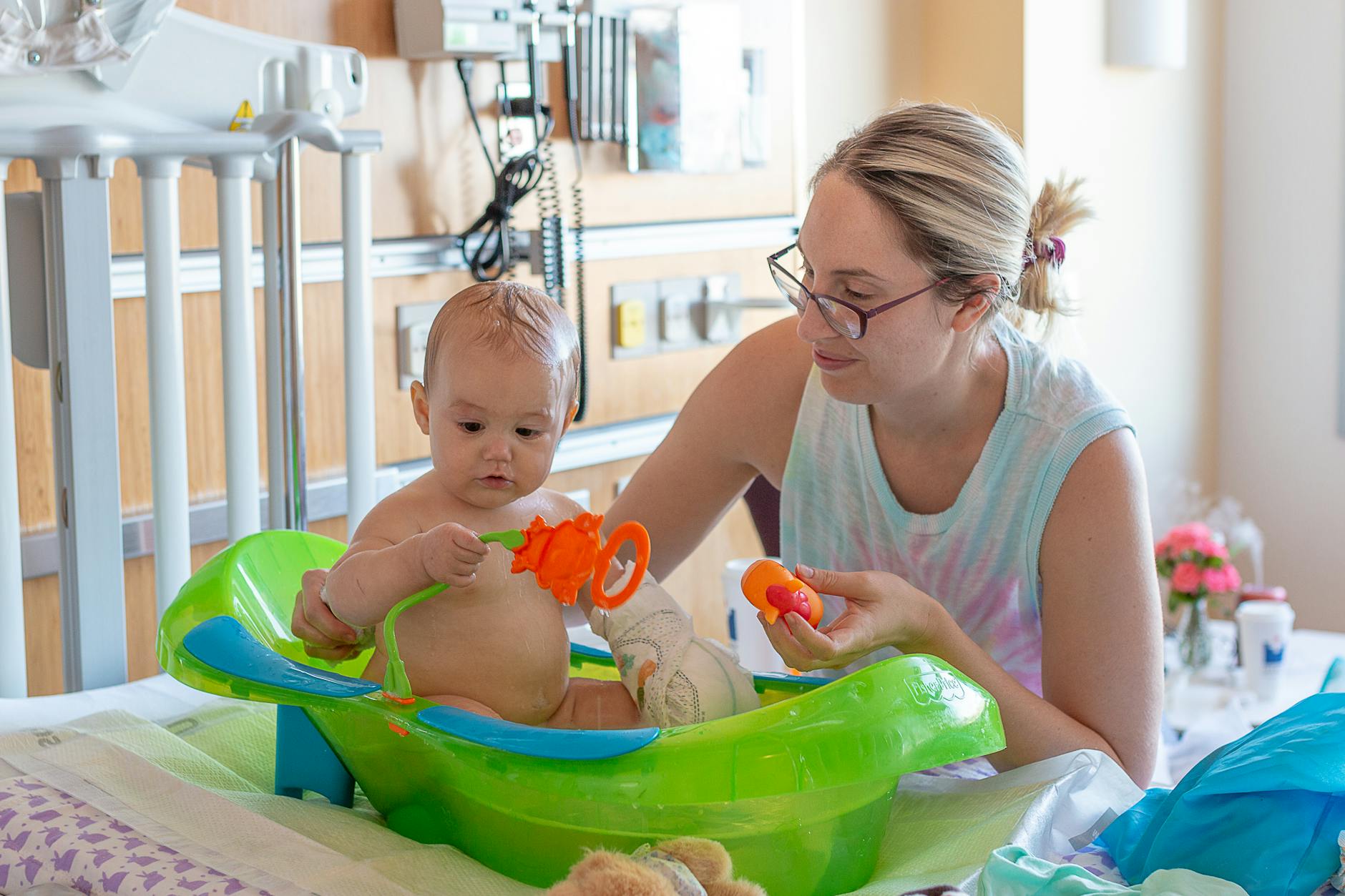
You do not need to set aside dedicated teaching time. The expert consensus is that baby sign language works best when woven into activities you are already doing. At breakfast, sign “eat” and “more” and “all done” at natural moments. During a diaper change, sign “help” or “all done.” At bath time, sign “water.” The key is saying the word out loud while making the sign. This multimodal approach, combining visual, auditory, and gestural input, accelerates learning because the baby receives the same information through multiple channels. HeadStart.gov guidance emphasizes making eye contact before signing. Get down to your baby’s level, wait until they are looking at you, and then produce the sign while saying the word. Exaggerate both the sign and your vocal tone slightly.
Babies respond to enthusiasm and contrast, so a flat, quiet sign across the room is far less effective than a bright, close-up one with a clear spoken word attached. Incorporating signs into nursery rhymes and songs also works well. Signing “more” during a pause in a favorite song, for example, gives the baby a way to request that the music continue. The tradeoff with the informal approach versus structured classes is accountability. In a six-week parent-child class, which typically costs around $105 for sixty-minute weekly sessions, an instructor corrects your hand shapes, introduces signs in a deliberate sequence, and provides peer motivation from other families. A three-hour parent workshop runs roughly $45 per couple, with some hospitals subsidizing the cost to as low as $15. Programs like the Baby Signs Program and Signing Time Academy offer instructor networks and at-home resources nationwide. These can be worthwhile if you struggle with consistency on your own. But the research behind baby sign language was conducted with parents signing at home, not in classrooms, so formal instruction is a convenience rather than a requirement.
What to Do When Your Baby Is Not Signing Back
The most common reason a baby is not signing back is simply time. Parents often expect results within days, but the gap between first exposure and first produced sign typically spans four to eight weeks, sometimes longer. If you started at six months, you may not see a sign until eight or nine months regardless of how diligent you are. This is normal. The baby is absorbing the sign long before they can reproduce it, just as they understand “no” and “bottle” months before they can say those words out loud. A second common issue is inconsistency. If only one caregiver signs while others do not, the baby receives mixed signals about whether signing is a reliable communication tool. Get grandparents, daycare providers, and partners on board with at least the core three or four signs.
You do not need everyone to be fluent. You need everyone to sign “more” at mealtimes. That baseline consistency matters more than any one person’s signing vocabulary. One limitation worth noting: babies with certain motor delays may take longer to produce signs, and parents should avoid interpreting a slow start as a failure of the method or of their child. Kirk et al. found in 2012 that signing exposure particularly benefits children who are linguistically behind their peers. If your child has a developmental delay, signing may actually be more useful for your family than for others, but the timeline will be different. Talk to your pediatrician if you have concerns about your baby’s communication development broadly, rather than using signing milestones as a diagnostic tool.

Emotional Benefits That Go Beyond Communication
Research consistently shows that signing reduces tantrums and frustration in pre-verbal babies. The mechanism is intuitive: a baby who can sign “help” or “more” has an outlet other than crying. Parents in signing studies report less parenting-related stress and describe their interactions with their babies as more affectionate.
Signing babies initiate interaction more often, making eye contact and reaching toward caregivers to communicate rather than fussing and waiting to be interpreted. In classroom and daycare settings, signing has been shown to reduce aggression among toddlers, build trust between children and caregivers, and support multilingual environments where children and adults may not share a common spoken language. A toddler room where every child knows the sign for “stop” or “my turn” has a concrete, shared vocabulary for navigating conflict, which is something spoken words alone often fail to provide at that age.
Building on Baby Sign Language as Your Child Grows
Baby sign language does not have to end when your child starts talking. Many families find that signs remain useful during the transition to spoken language, serving as a bridge when a toddler’s pronunciation is unclear or when they are too upset to form words. Some parents continue with formal ASL instruction, giving their child access to a second language and exposure to Deaf culture. Others let signing fade naturally as speech takes over, which is equally fine.
The broader takeaway from decades of research is that early, responsive communication between parent and child matters more than the specific medium. Signing is one tool among many. It works because it forces parents to slow down, make eye contact, and pay close attention to what their baby is trying to say. Those habits benefit every family regardless of whether a single sign is ever taught.
Conclusion
Starting baby sign language at home requires no special expertise, no expensive materials, and no perfect timing. Choose two or three signs tied to your baby’s daily routine, say the word while making the sign, and repeat consistently. Most families see results within a few weeks to a few months, depending on the child’s age and developmental readiness. The NIH-funded research supports real cognitive and language benefits, while even the more skeptical studies confirm that signing does no harm and gives pre-verbal babies a concrete way to communicate.
If your baby is between six and twelve months old, start today with “more” at the next meal. If your baby is younger, begin exposing them to signs knowing that production will come later. If your child is already past their first birthday, you have not missed anything. The only requirement is consistency, and the reward is a baby who can tell you what they need before they can say a single word.
Frequently Asked Questions
Will baby sign language delay my child’s speech?
No. No study has found that baby sign language delays speech development. The NIH-funded study by Acredolo and Goodwyn found that signing babies actually had larger vocabularies by age two and more advanced language skills by age three compared to non-signing peers.
What age is too late to start baby sign language?
There is no age that is too late. While six to eight months is the most commonly recommended starting age, parents can begin at any point. Older babies and toddlers often pick up signs faster because their motor skills and cognitive abilities are more developed.
How long does it take for a baby to sign back?
Most babies begin signing back between eight and twelve months of age, regardless of when instruction started. If you begin at six months, expect a gap of several weeks to a few months before your baby produces a recognizable sign. Look for approximations rather than perfect hand shapes.
Do I need to take a class, or can I teach baby sign language on my own?
You can absolutely teach baby sign language on your own at home. The research supporting signing was conducted with parents signing during daily routines, not in formal class settings. Classes, which typically run about $105 for a six-week series or $45 for a workshop, can provide structure and accountability, but they are not required.
Should I use ASL signs or made-up gestures?
Most experts recommend using actual ASL signs rather than invented gestures. ASL signs are standardized, so every caregiver can learn the same sign from widely available resources. Using ASL also gives your child a foundation in a real language that they can build on later if they choose.